From Drawing to Designing Pokemon
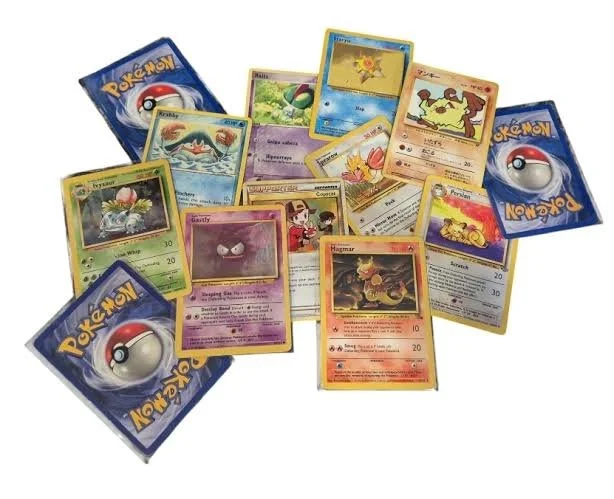
One of the things I find charming about Pokémon cards is just how varied the artwork can be. Behind every actual trading card is an illustrator making choices about how a Pokémon should look and feel; its expression, pose, setting, colours and style. Looking across different cards, the same world can be playful, dramatic, strange, graphic or beautifully detailed depending on the artist behind it.
Within the world of Pokemon, you can create pocket monsters from a variety of inspirations; inanimate objects, animals, sometimes even incorporating weather elements or even environmental textures! I wanted children to notice that creative process and eventually take on the role of illustrator themselves: first learning how Pokémon can be constructed through simple shapes, then designing a card, and finally imagining a Pokémon of their very own.
Starting with simple shapes
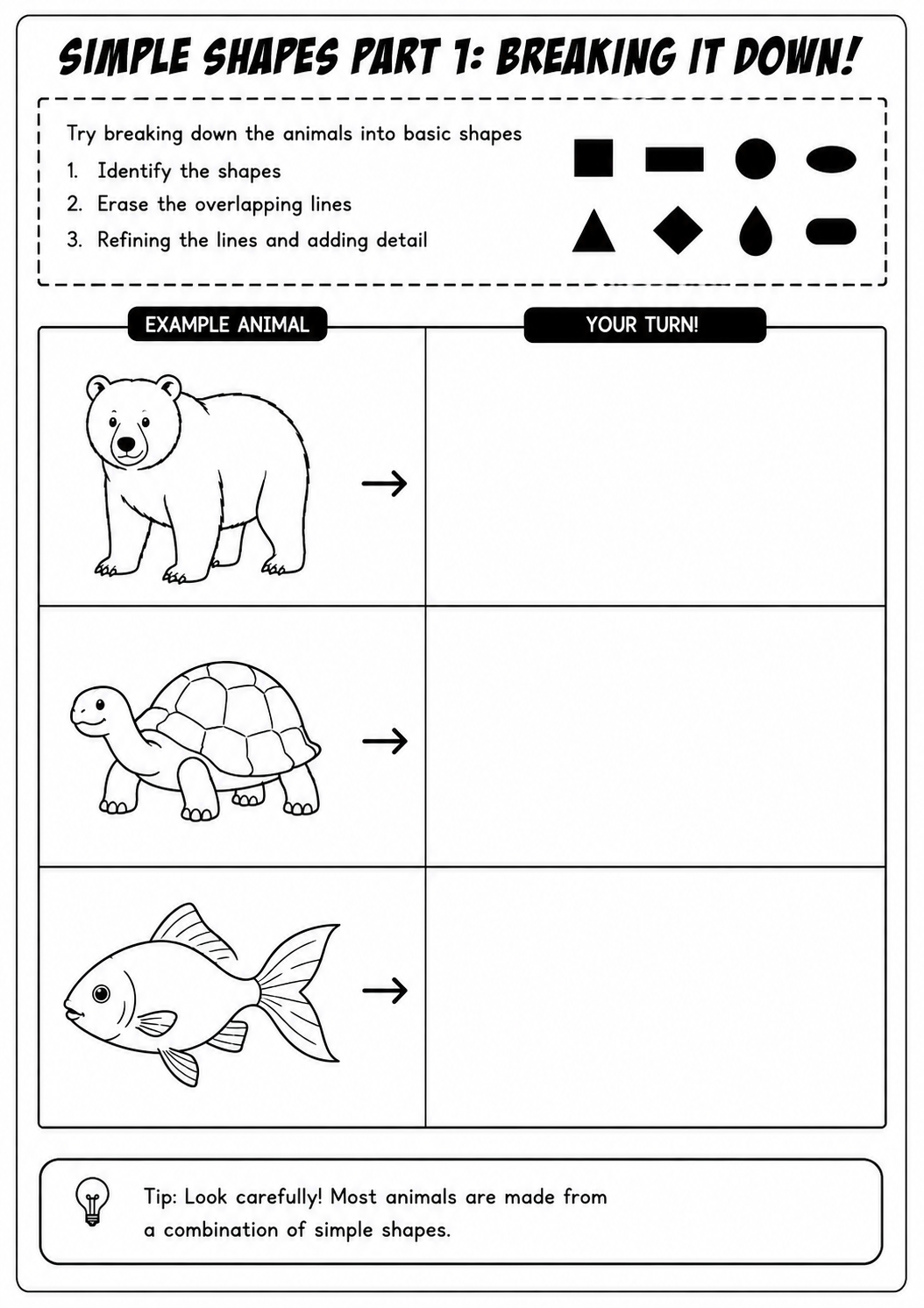
We began by looking at familiar animals and trying to spot the basic shapes hiding underneath them. A bear might be made up of circles and ovals, while a fish could begin with one large oval and a few simple triangles.
Rather than copying the animal straight away, the children practised breaking what they saw into smaller, more manageable parts.
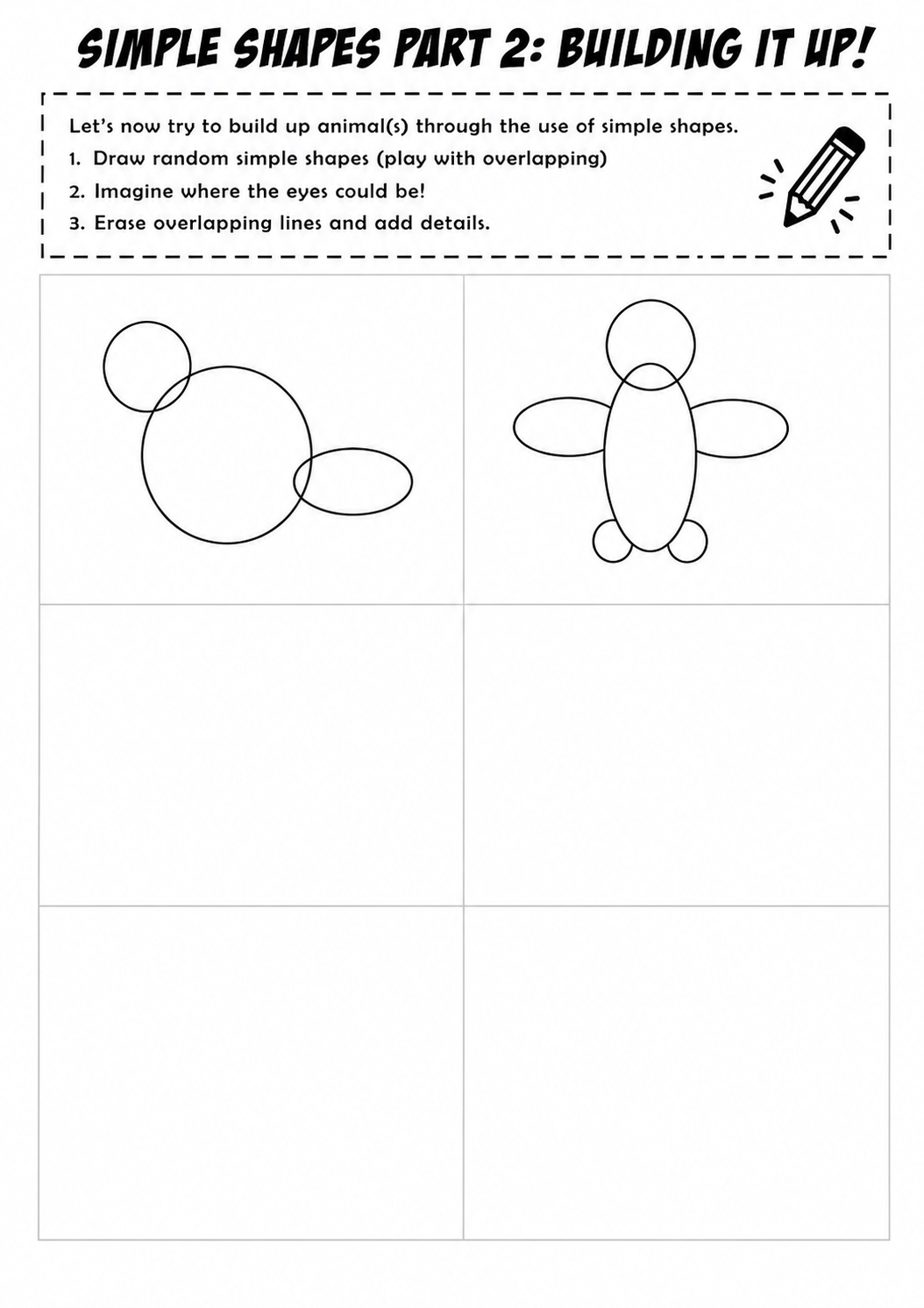
From there, we reversed the process. Starting with a few overlapping shapes, the children experimented with adding eyes, limbs and other details to see what kind of animal or perhaps something entirely new might emerge!
Creating a Pokemon of our own
It was time to invent one of our own.
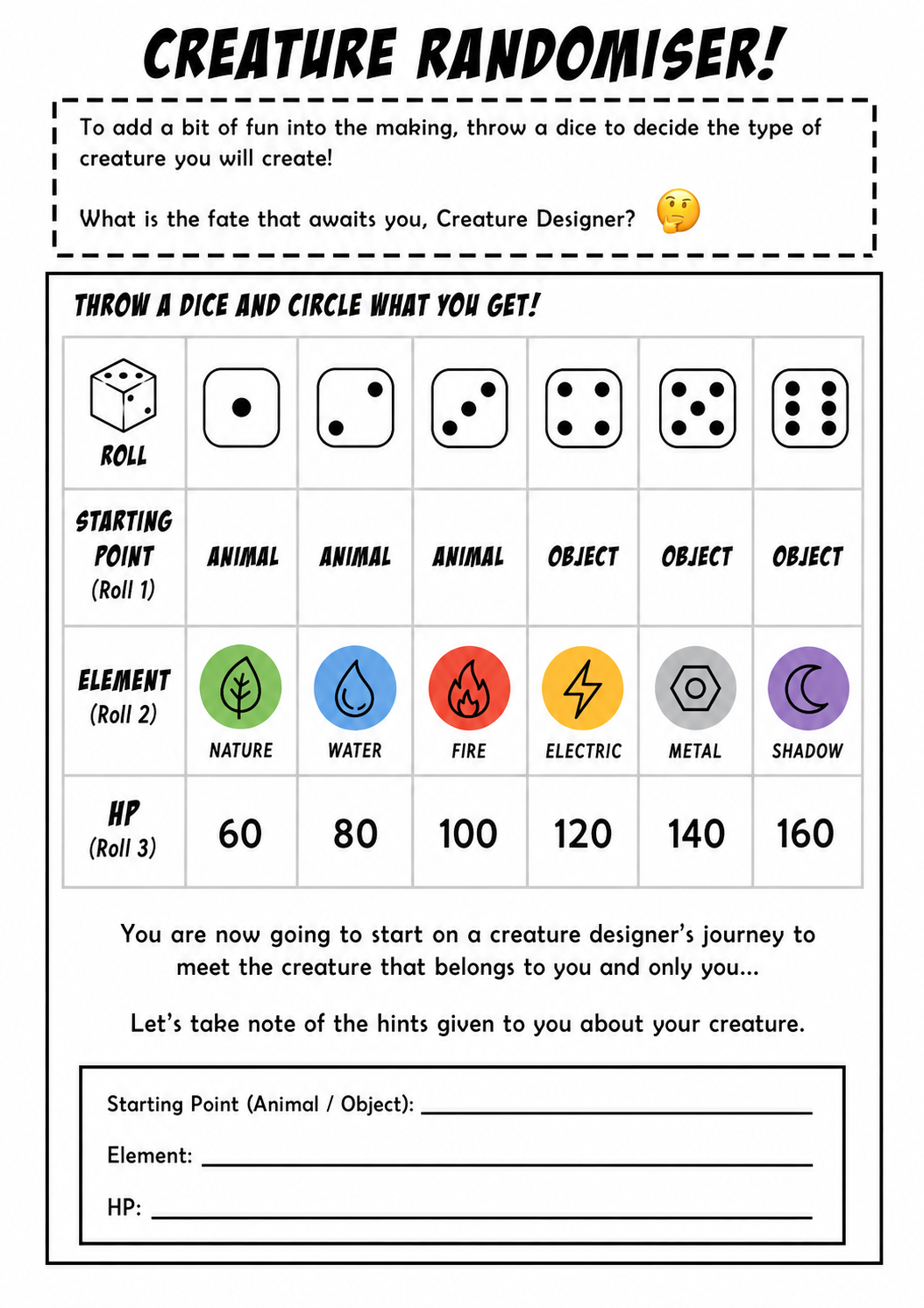
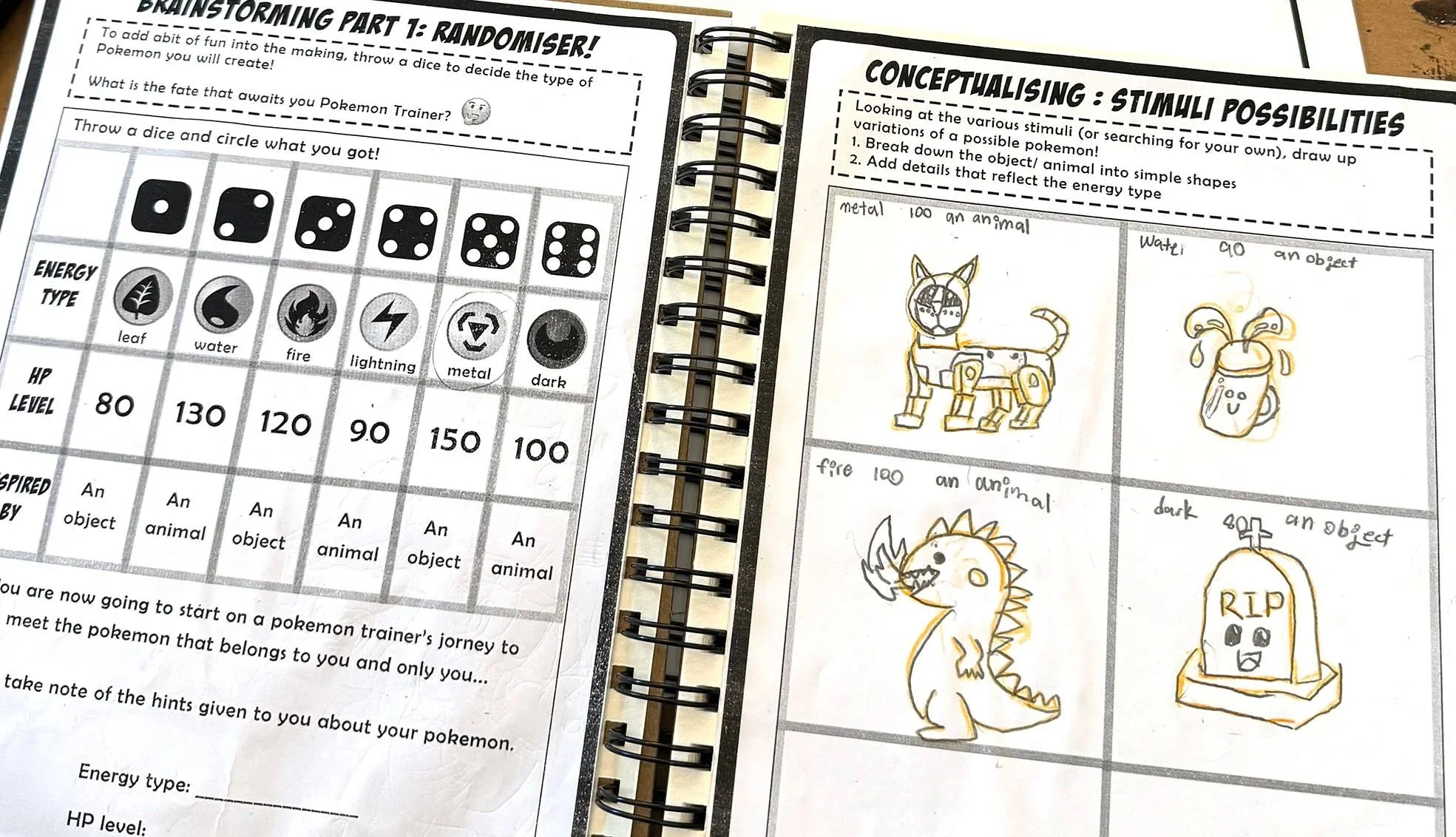
Rather than beginning with a completely blank page, we worked through a series of worksheets that gradually built the Pokémon's characteristics. Along the way, we introduced a dice, allowing chance to make some of the decisions for us.
A roll might determine whether the Pokémon began as an animal or an object. Another could determine its energy type, while another might decide something as specific as its HP.
The idea wasn't necessarily to leave the design to chance. Instead, these became a series of creative constraints.
If the dice tells me that my Pokémon has to begin with an object, what object could it be? If it has a particular energy type, how might that change its appearance or abilities? What happens when I get a combination I wouldn't have chosen for myself?
Sometimes the unexpected combinations were exactly what made the activity interesting.
We often think creativity means having complete freedom, but a blank page with endless possibilities can be surprisingly difficult to begin with, especially for younger artists.
The dice gave us somewhere to start.
Worksheets available for free download below!
Going Against Fixation
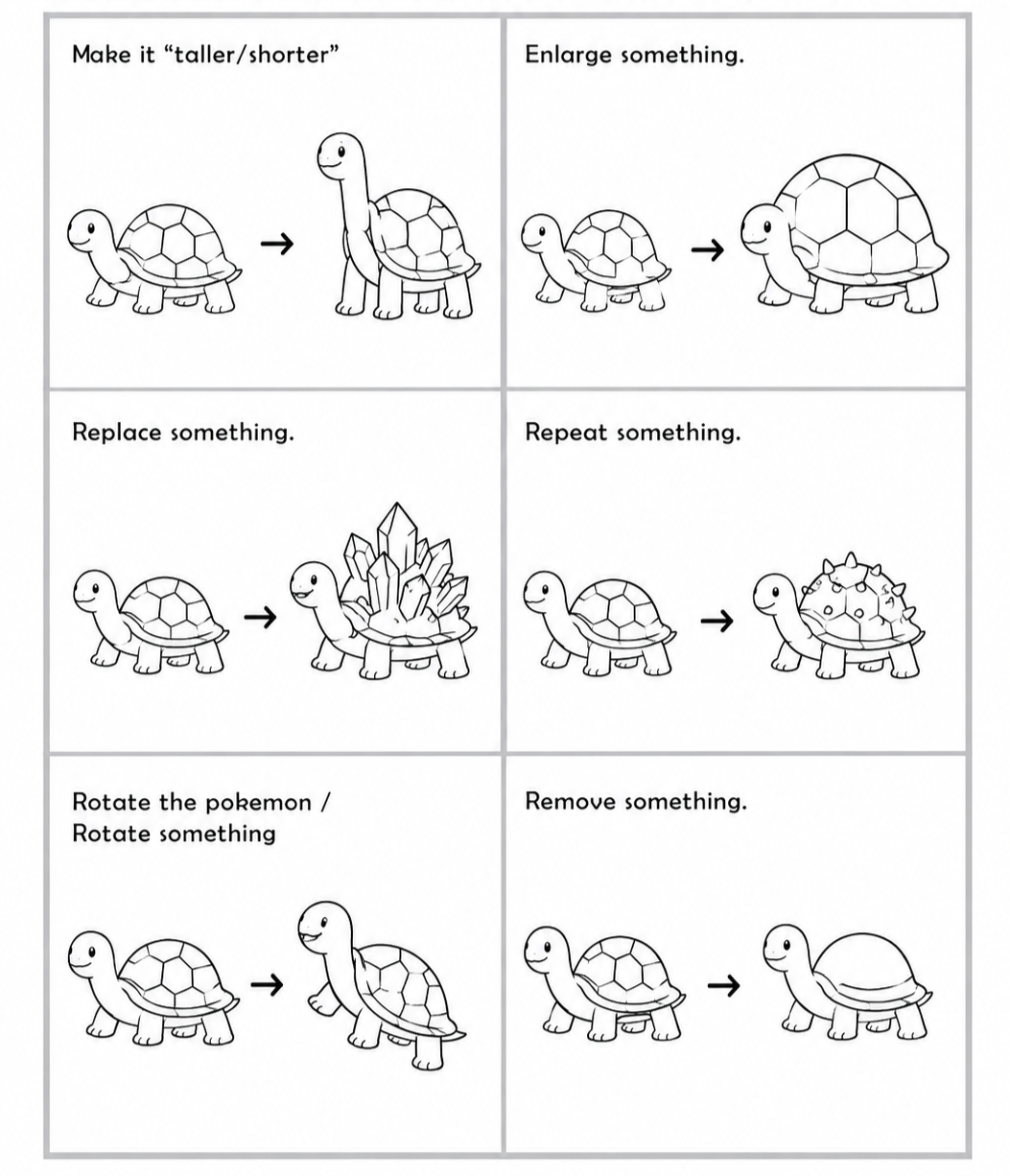
This part of the process I’ve often used to stretch those who seem to have breezed through the previous task. This part of the process I’ve often used to stretch those who seem to have breezed through the previous task. Rather than moving straight on once they have a creature they are happy with, the “Against Fixation” worksheet asks them to keep playing with the design.
Using prompts such as make it taller or shorter, enlarge something, replace something, repeat something, rotate something, or remove something, they have to deliberately alter parts of their creature and see what happens.
Some versions inevitably become strange or funny, but that is part of the exercise. It encourages children to loosen their attachment to their first idea and discover that changing, exaggerating or even removing something can lead somewhere unexpected.
They don’t have to use any of these versions as their final design. Instead, the activity creates a little more space for experimentation before they decide what they want to keep.
Bringing It All Together
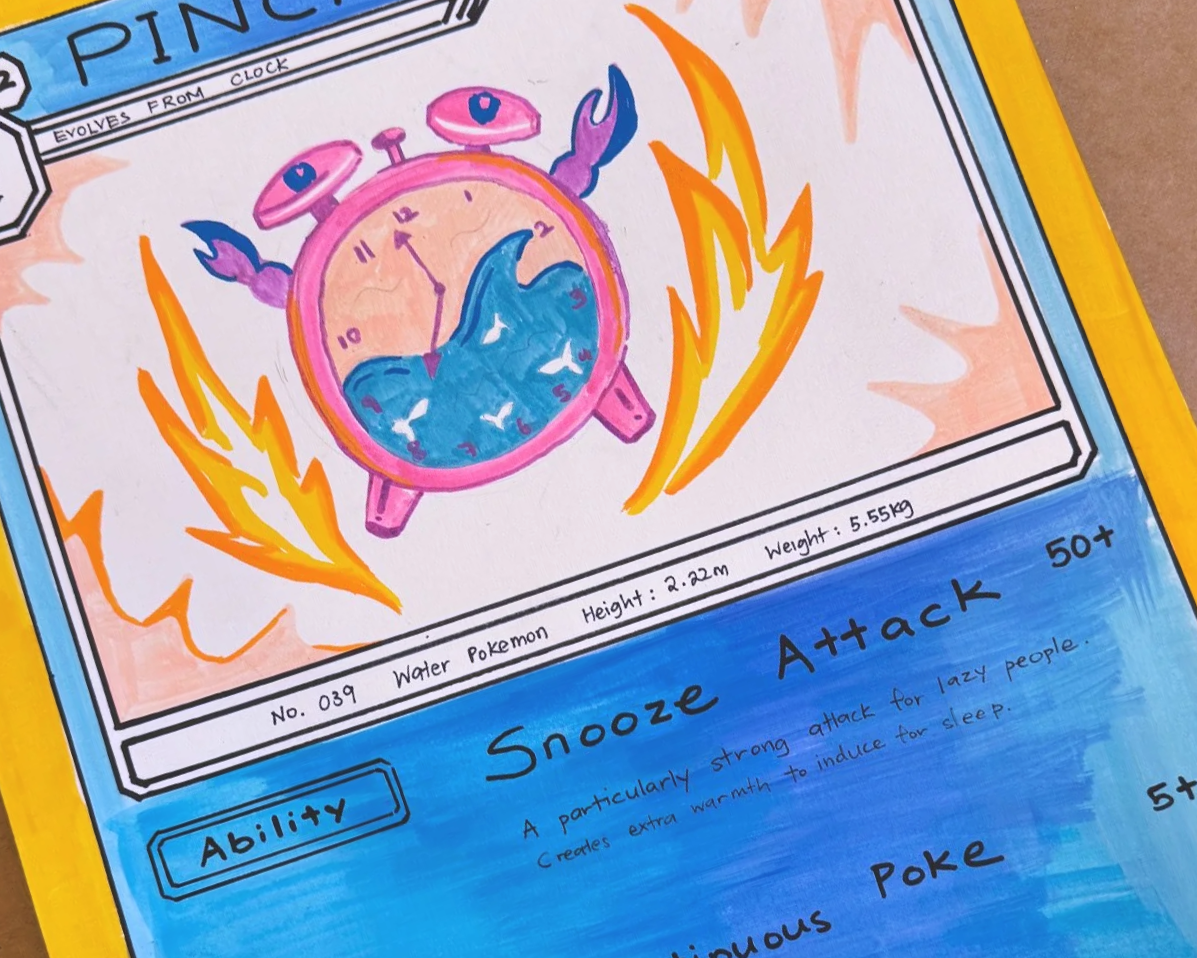
The final step was to bring everything we had explored together in one Pokémon card.
By this point, the children weren't starting from a blank template. Their Pokémon had gradually taken shape through the worksheets and dice rolls: its starting inspiration, energy type, HP and other characteristics had already created a set of possibilities to work with.
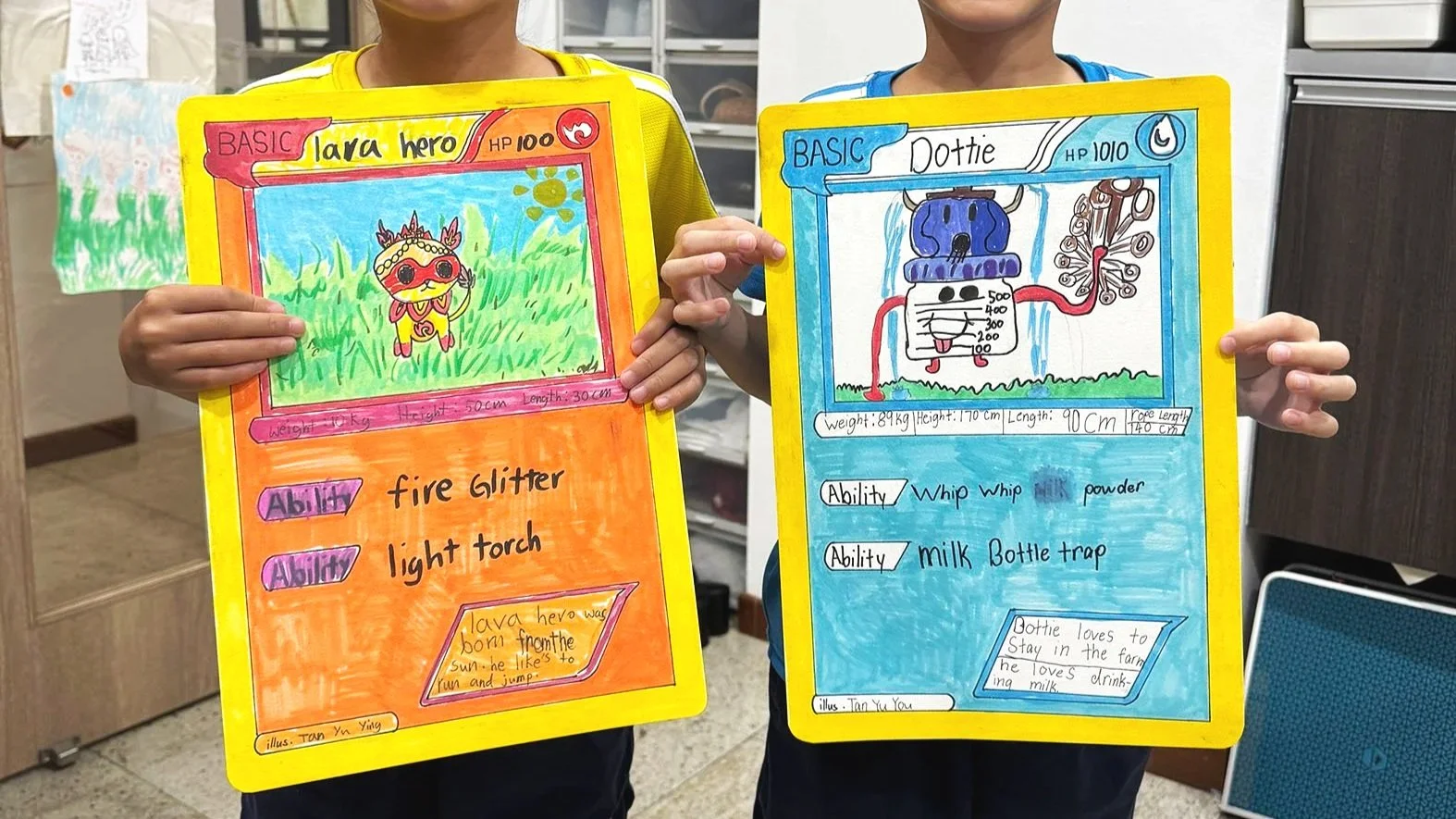
Now they get to freely loosen that imagination gear and imagine their pokemon in different environments. After the different activities, I find that kids enjoy this part of the process intensely. There’s an ownership to what they’ve created, and it’s the peak of that confidence boom.
We also returned to something we had noticed right at the beginning; the illustrator's credit on real Pokémon cards. Once their cards were complete, the children added their own names as the illustrators of their creations. They also choose the abilities for their pokemon(s) and often times it can get really funny!
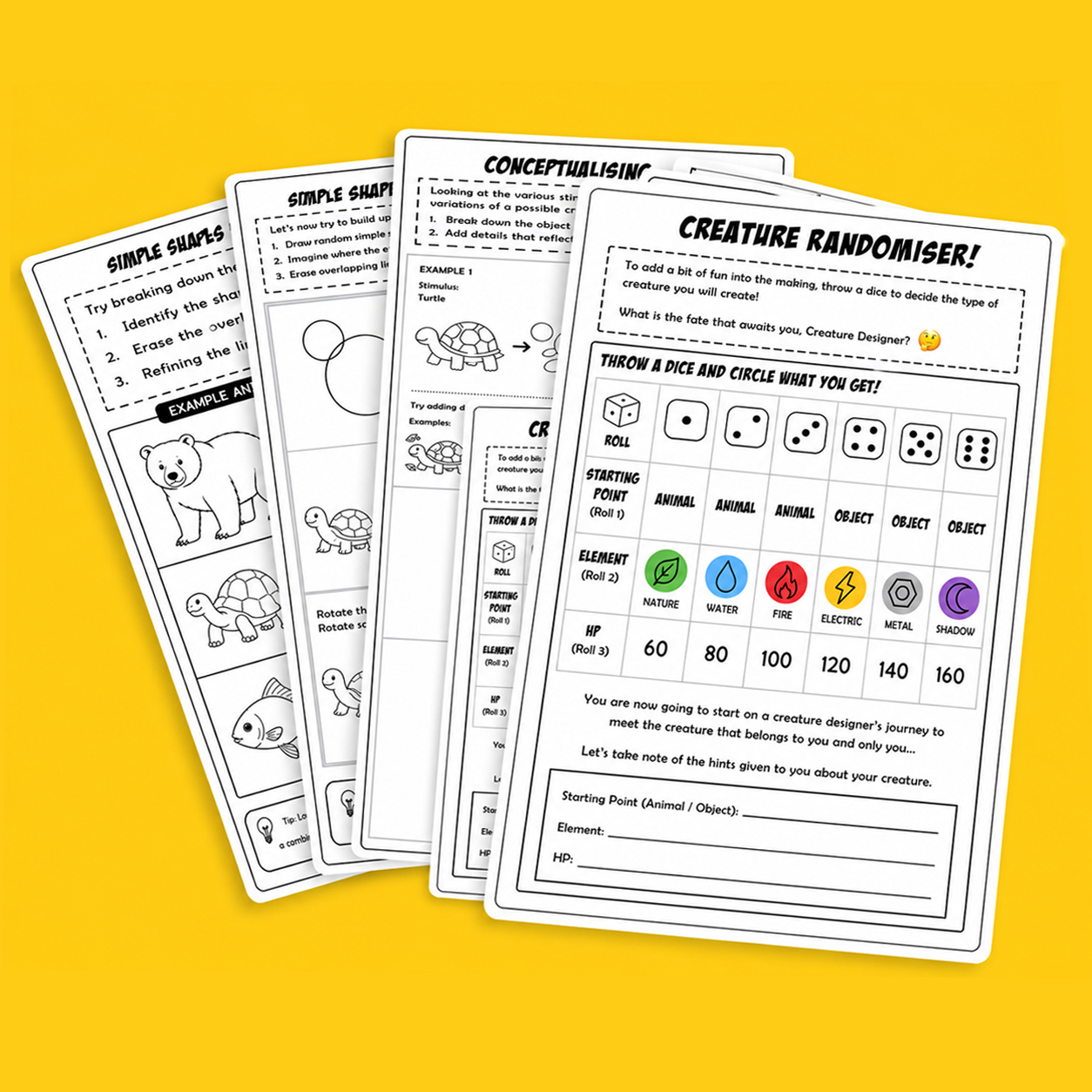
A series of worksheets that will allow you to cater to different age groups that includes step by step processes and a gamification process on how to design their very own pokemon!
Learn about how to use it here!
What began with learning to draw Pokémon through simple shapes had moved through gameplay, observation, chance and creative constraints, before arriving at something entirely their own.
You can download the free worksheets here to try it out yourself!
