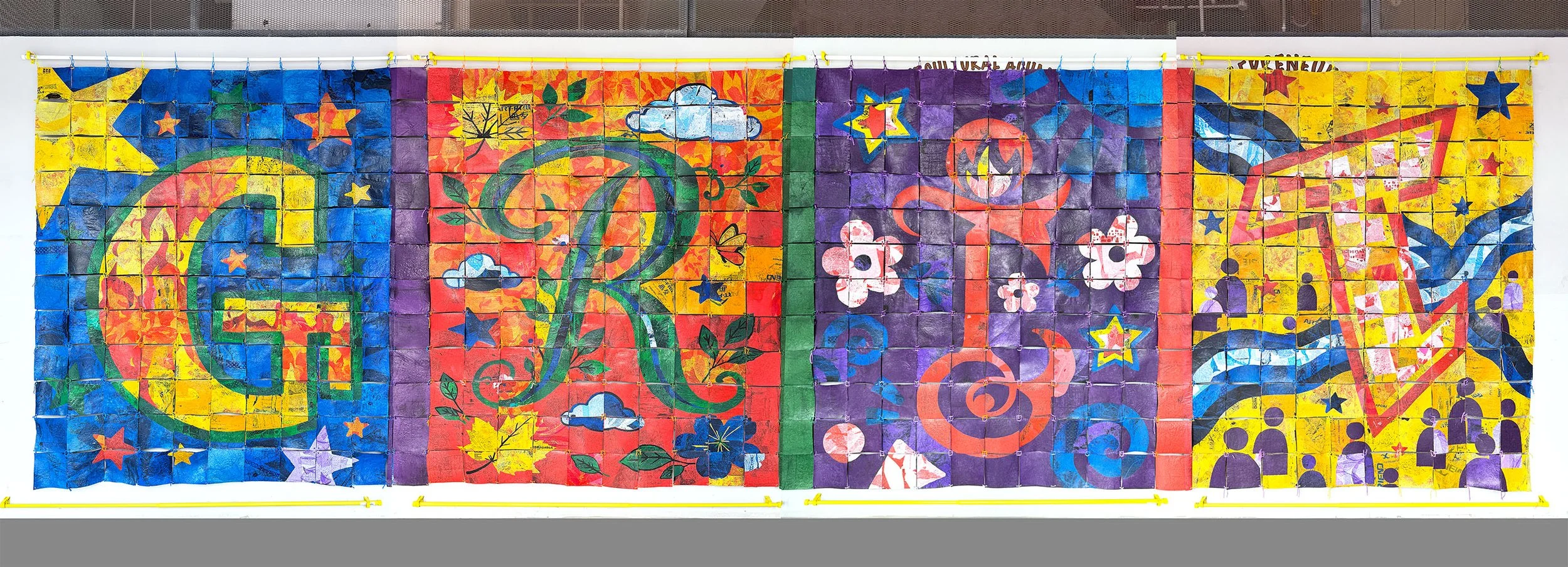
Plastic to Pixels: A Fused Plastic Mural
Making at scale with Fused Plastic
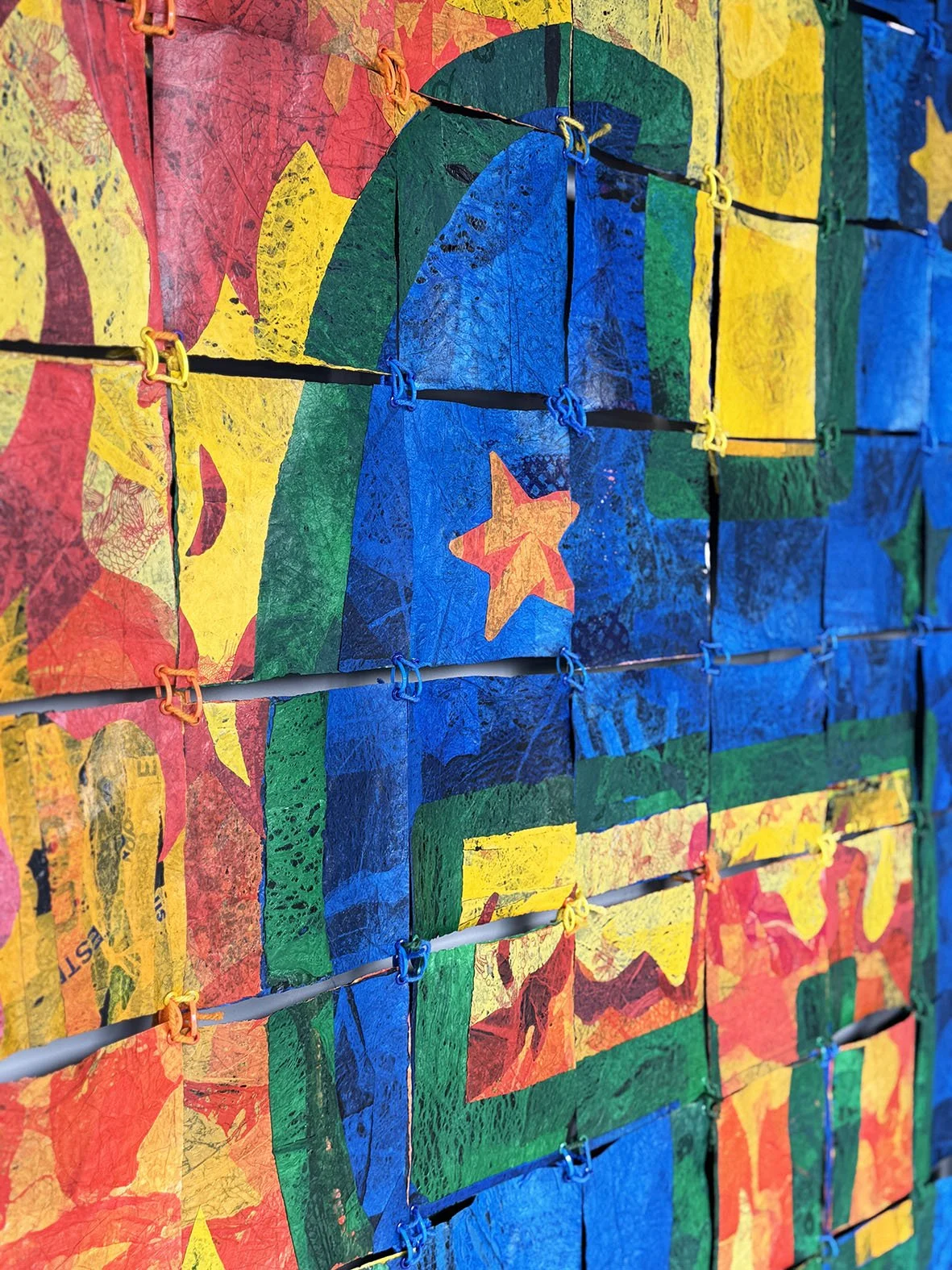
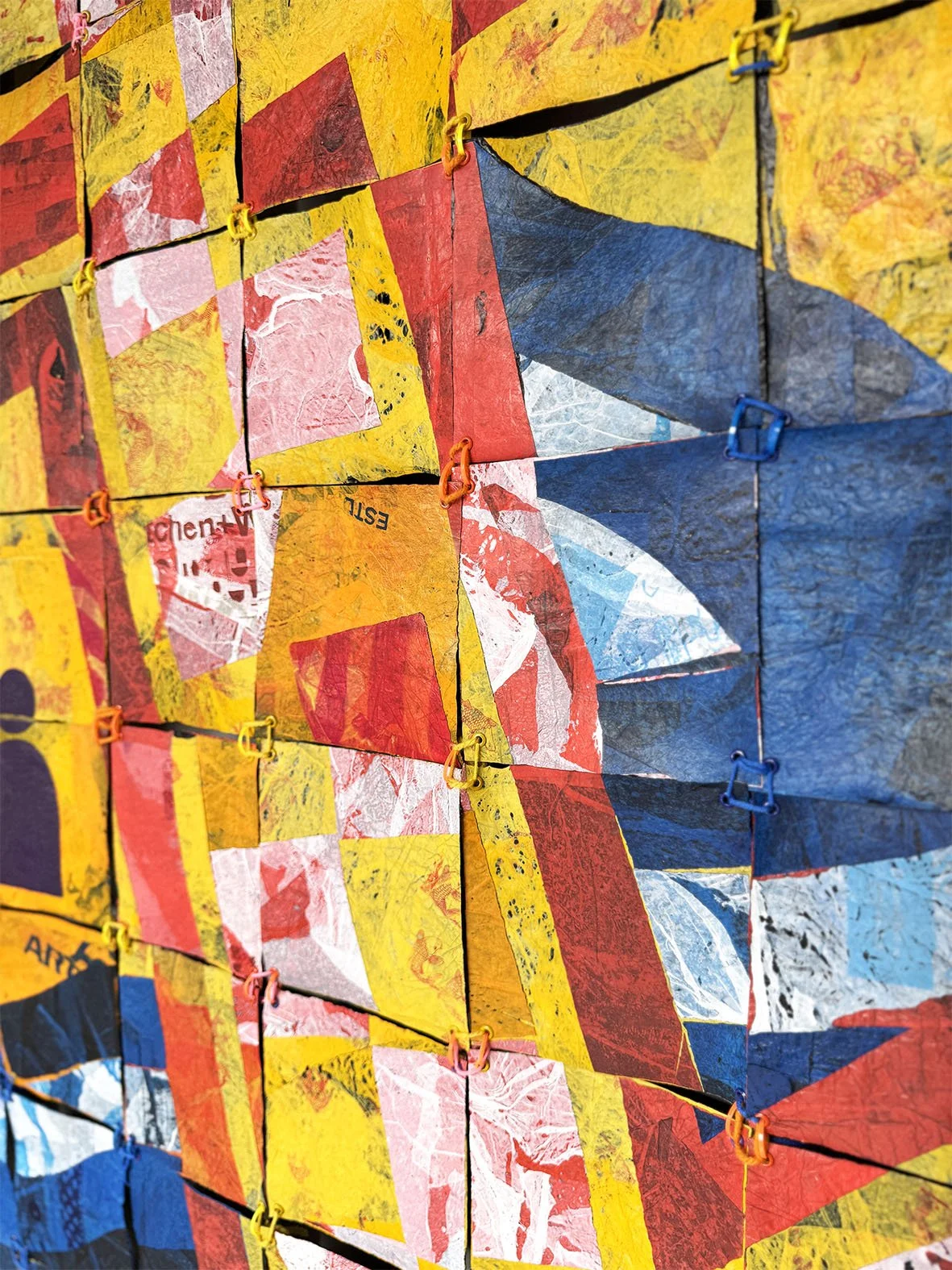
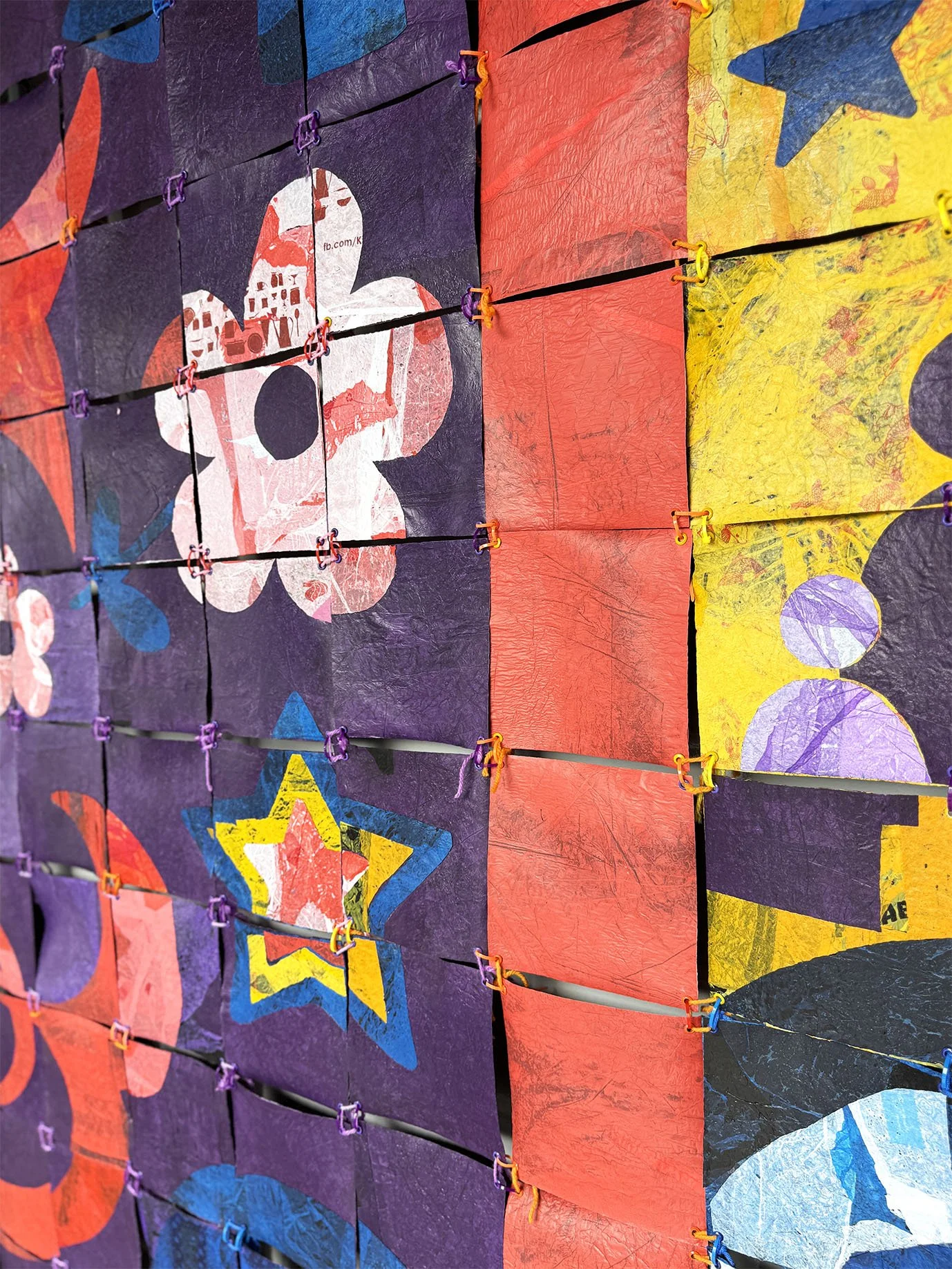
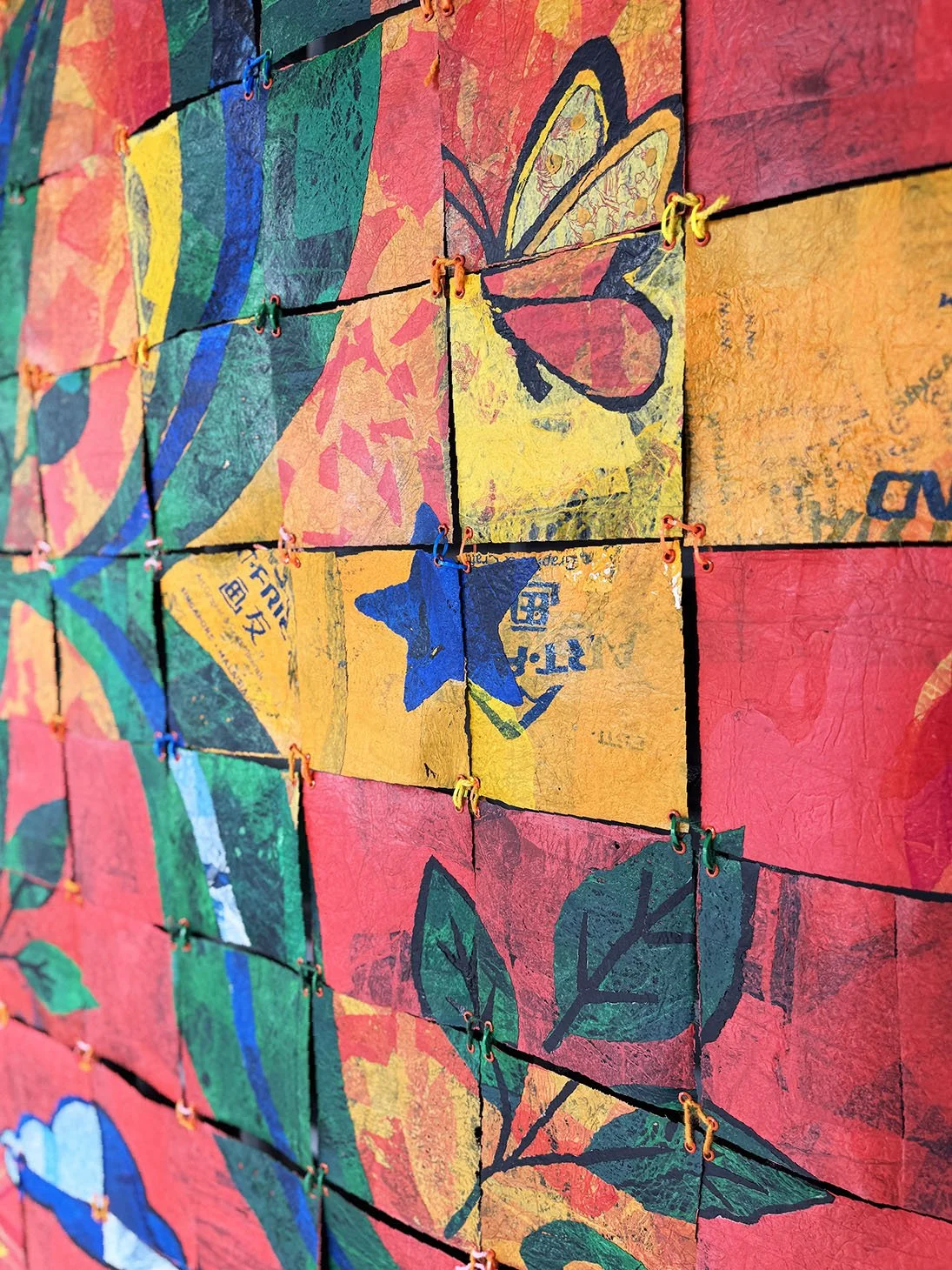
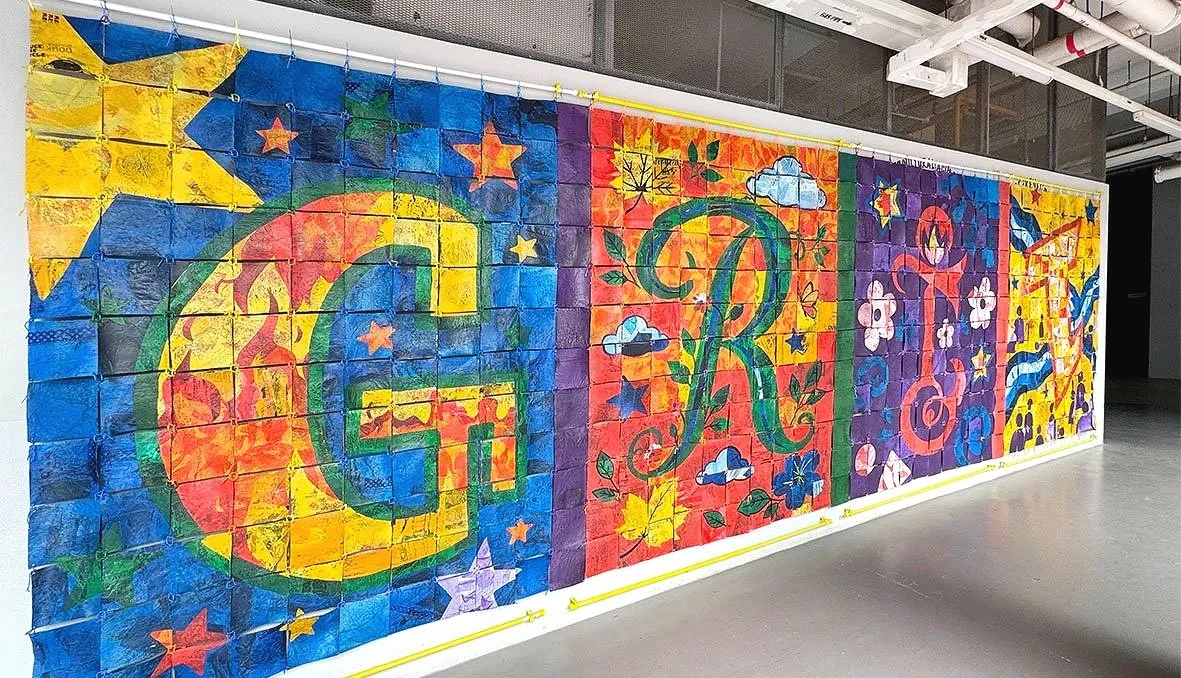
Fused plastic is a beautifully textured material to work with. Once layers of plastic are bonded together with heat, colours overlap, surfaces wrinkle and unexpected patterns begin to emerge. No two sheets are quite the same, and it was this variety of colour and texture that we wanted to bring into a much larger artwork.There is also something particularly satisfying about building a large-scale mural together. Small pieces that don't seem like very much on their own gradually accumulate, connect and begin to reveal a much bigger image.For this mural project, students worked together to create a large-scale pixel-inspired artwork around four letters: G, R, I and T . These letters have a particular significance to the school. It also gave us an opportunity to introduce some typography design into the process as well. Students explored how each letter could have its own shape, character and surrounding composition before their different ideas were brought together.From designing letters to experimenting with fused plastic textures, cutting individual shapes and eventually assembling the mural, the project became an exploration of material, scale and what it means to make one artwork collectively.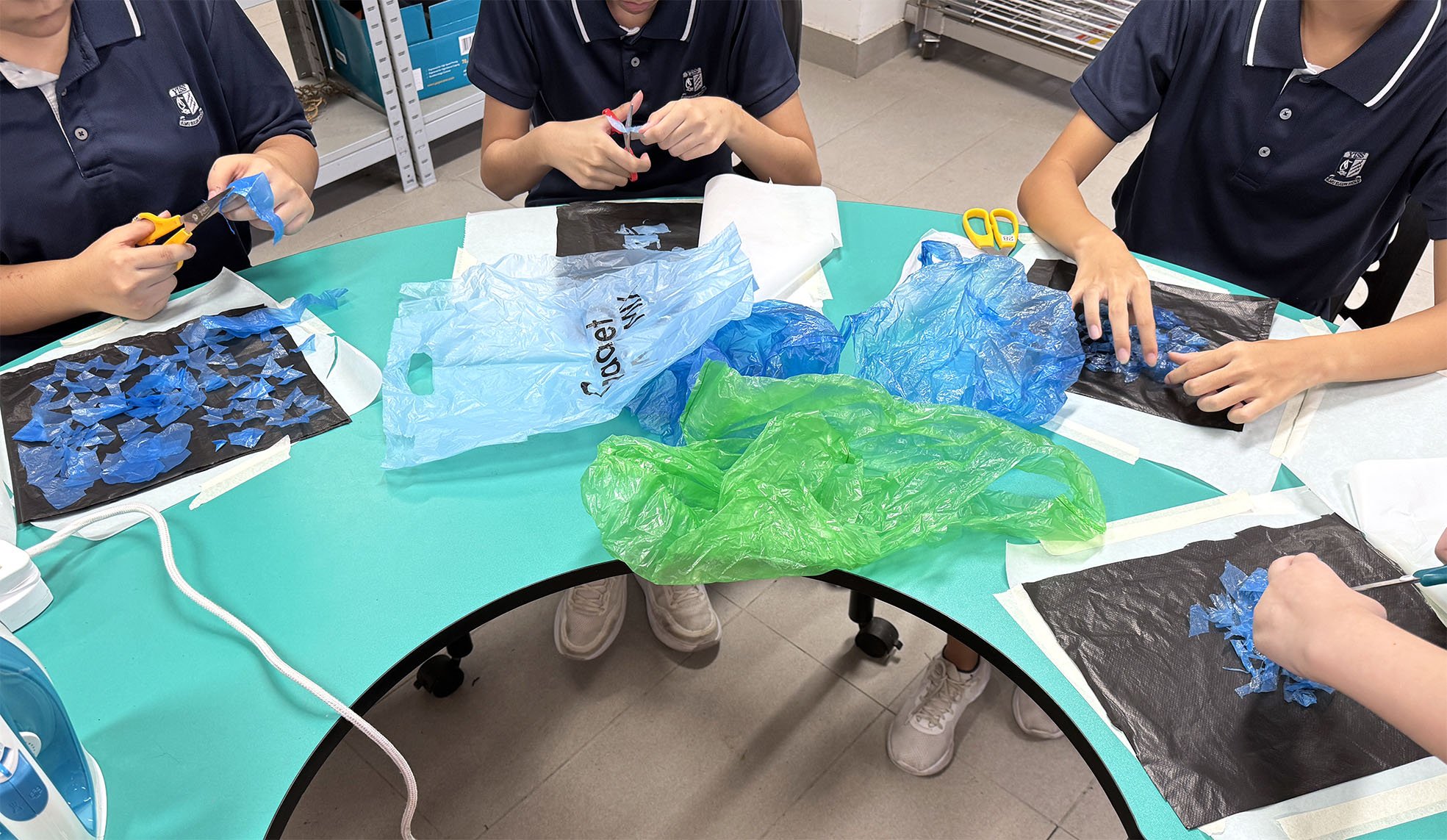
Starting with Fused Plastic
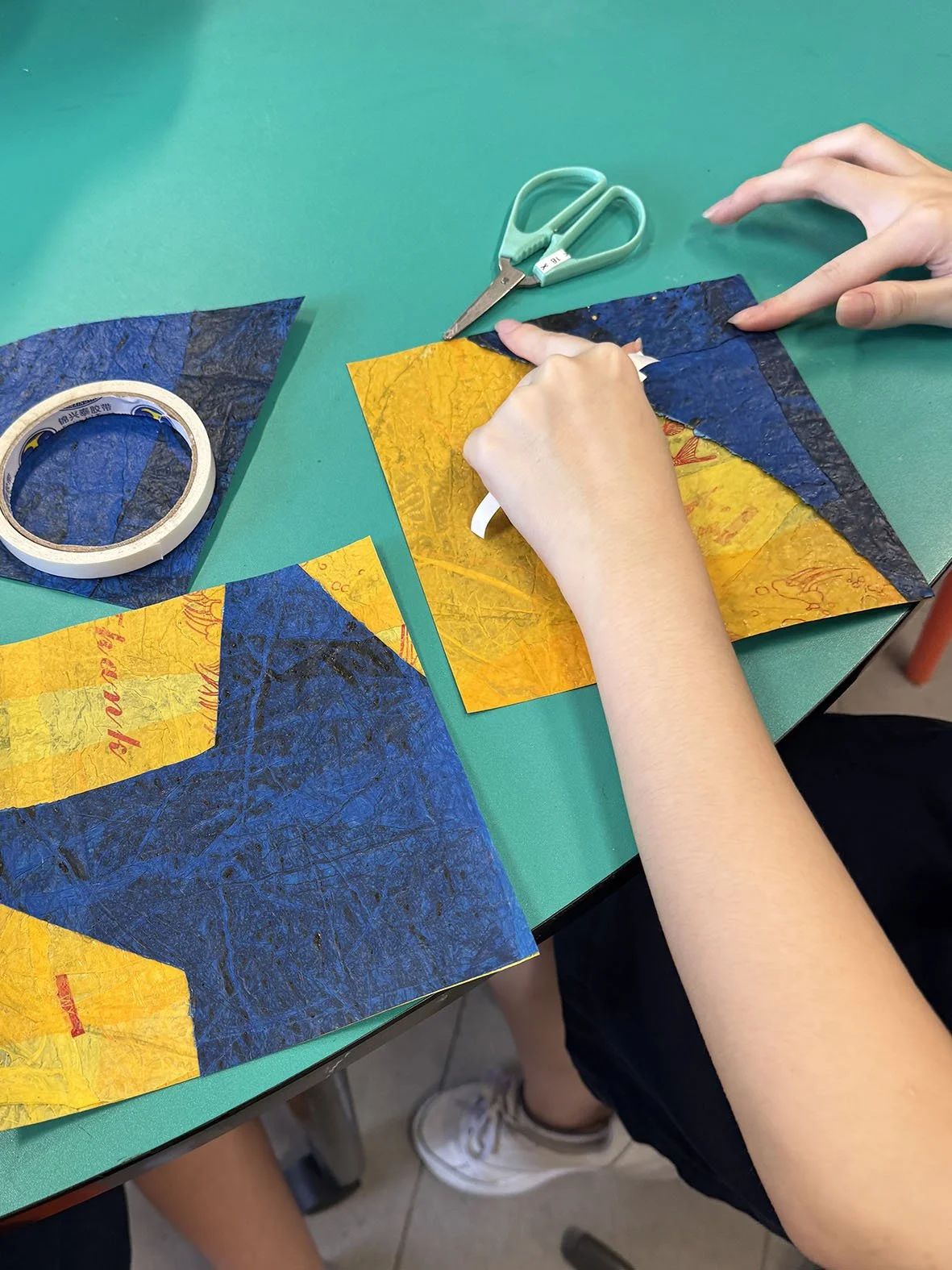
We began by introducing students to the process of fusing plastic. Using heat to bond layers of plastic together to create a new sheet of material.

Some of the materials included in part of collected plastic bags, which gave us an interesting starting point for looking at something very ordinary in a different way.

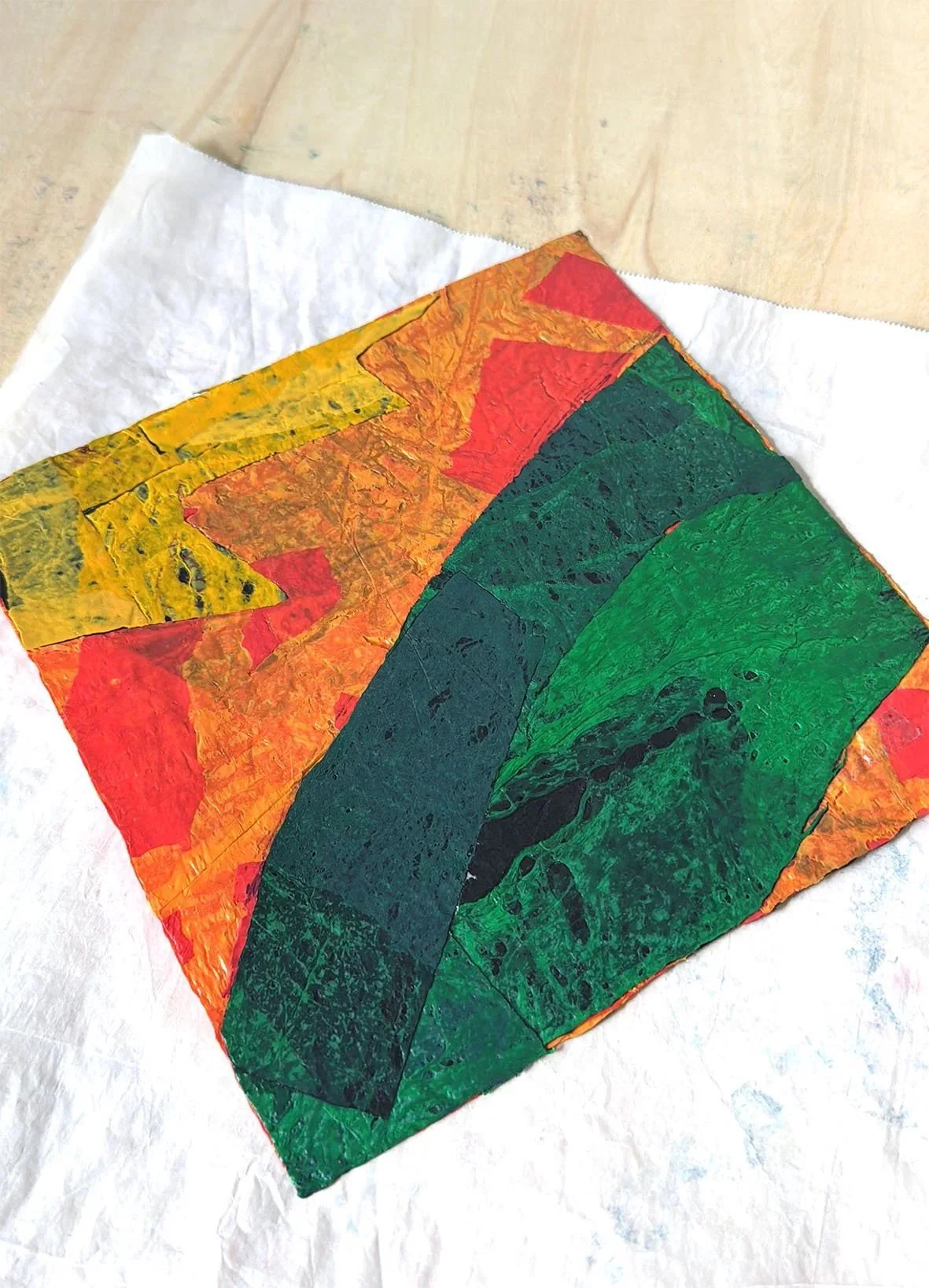
Once layered and fused, colours overlap, printed graphics become fragmented, translucent areas interact with one another, and wrinkles and folds become part of the surface.

Due to the large scale nature of the installation, we also had to be particular about controlling how colours overlapped. Not all of the colours were always available, but when "mixed" intentionally, you can create swatches like these : 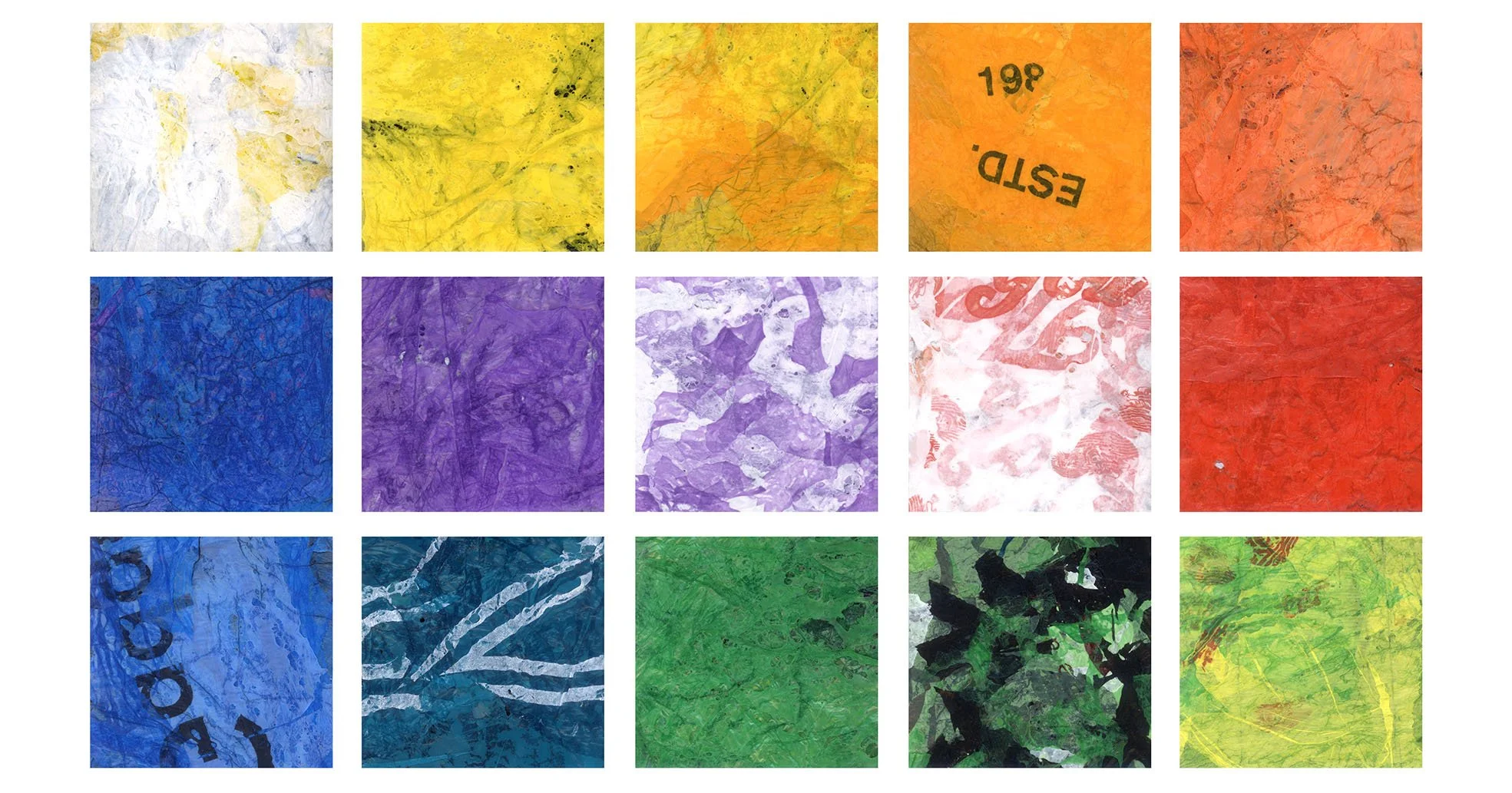
Designing G, R, I and T
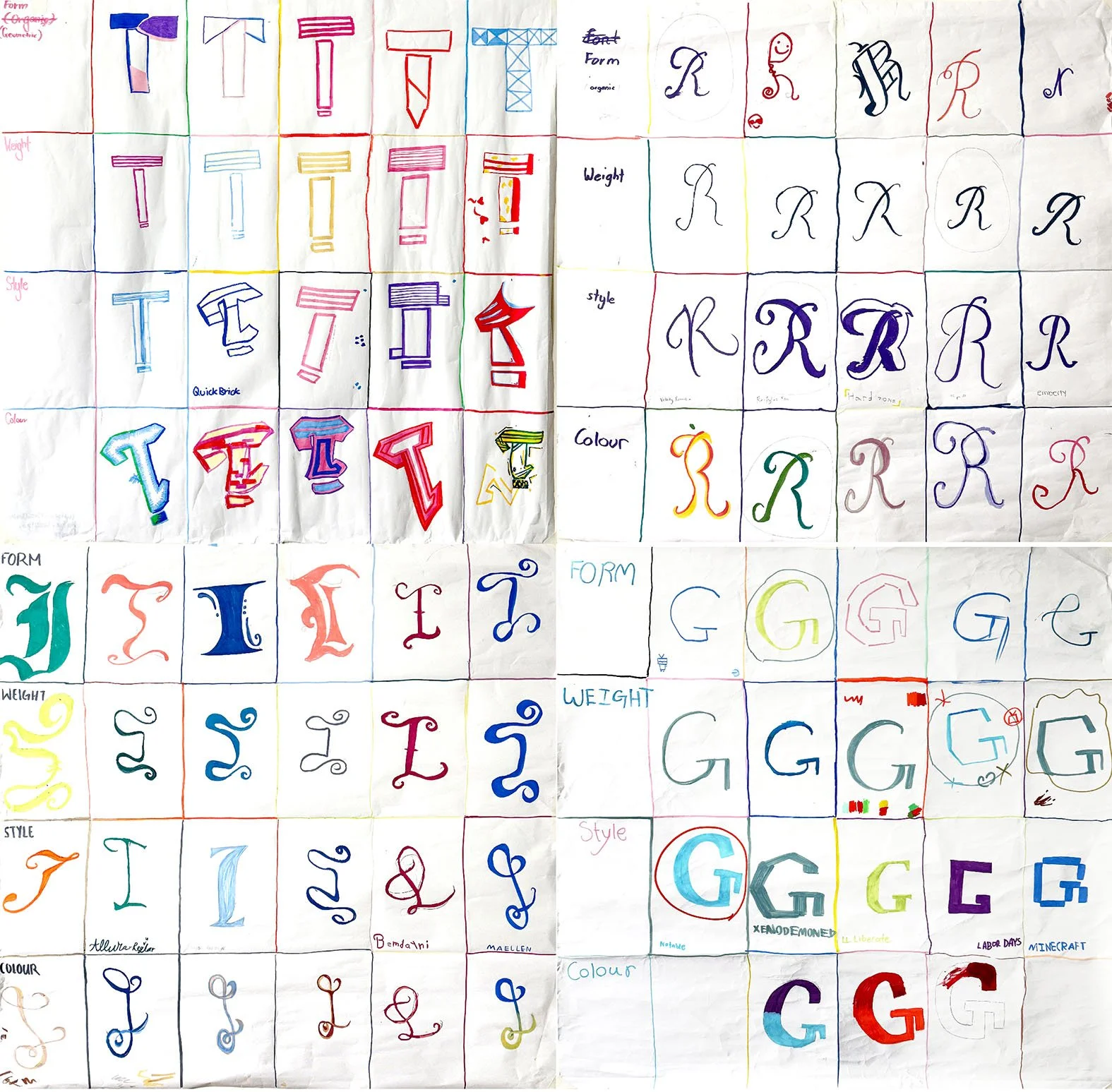
Before making the mural itself, we spent some time looking at typography and letterforms.

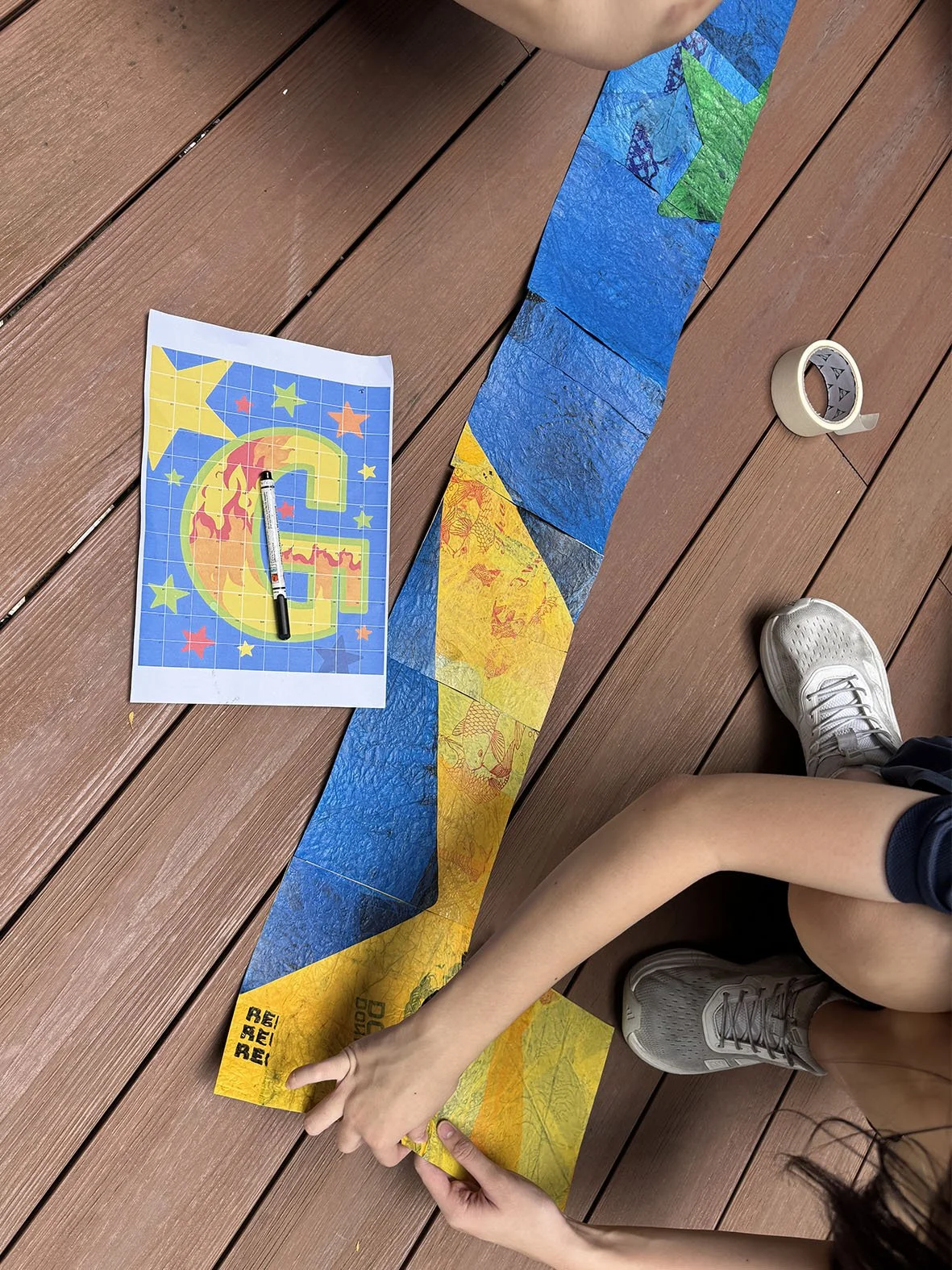
Working in groups, students were assigned one of the four letters and began developing their own interpretation of its shape. Once the main letterform was established, they could turn their attention towards the surrounding composition, thinking about shapes, patterns and how the background might interact with the letter.

Because this was a large collaborative project involving many students, not every design could exist independently in the final mural, so we had to combine some of the designs. 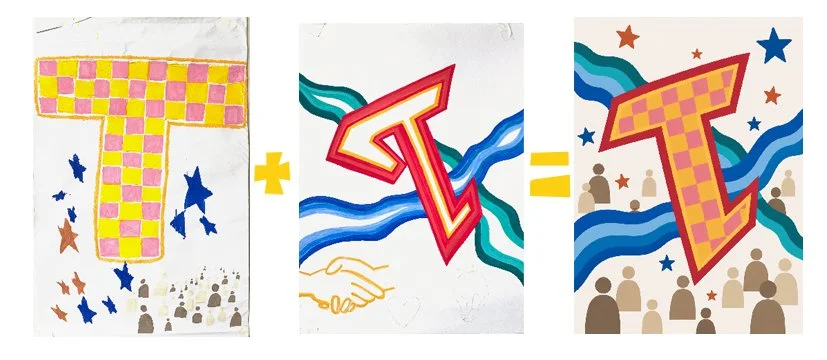
Building the Mural by Hand
Then came the making.

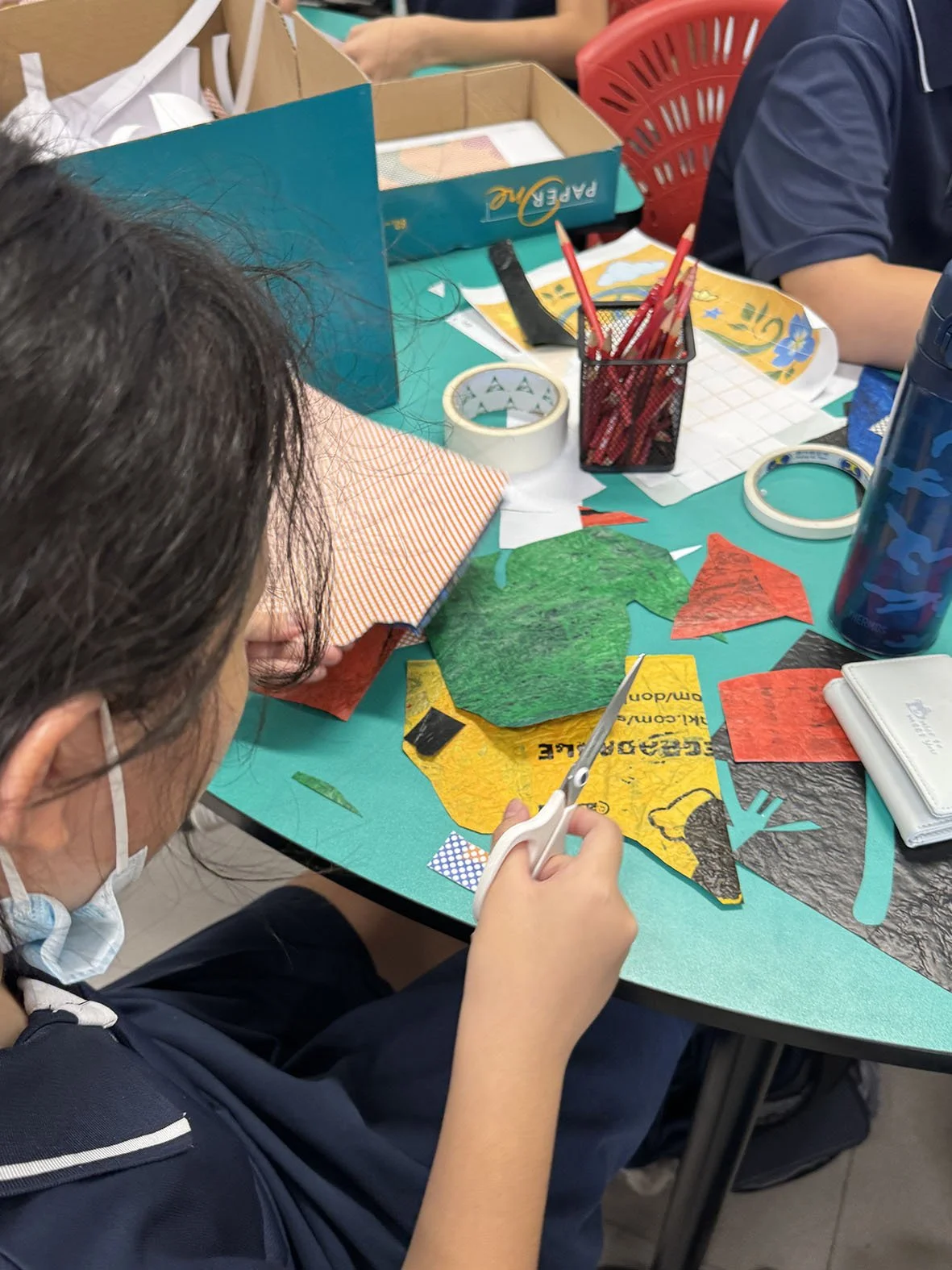
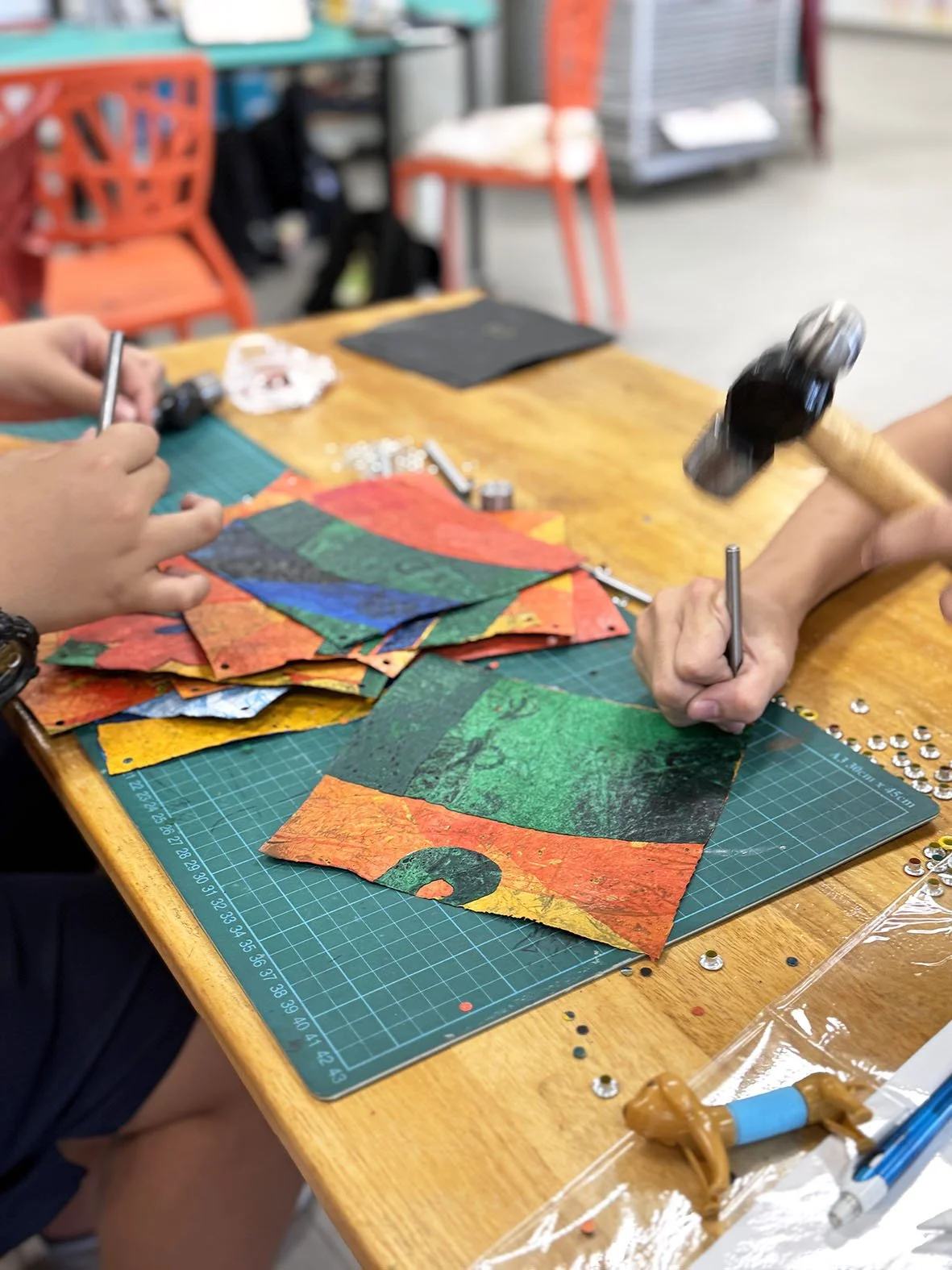
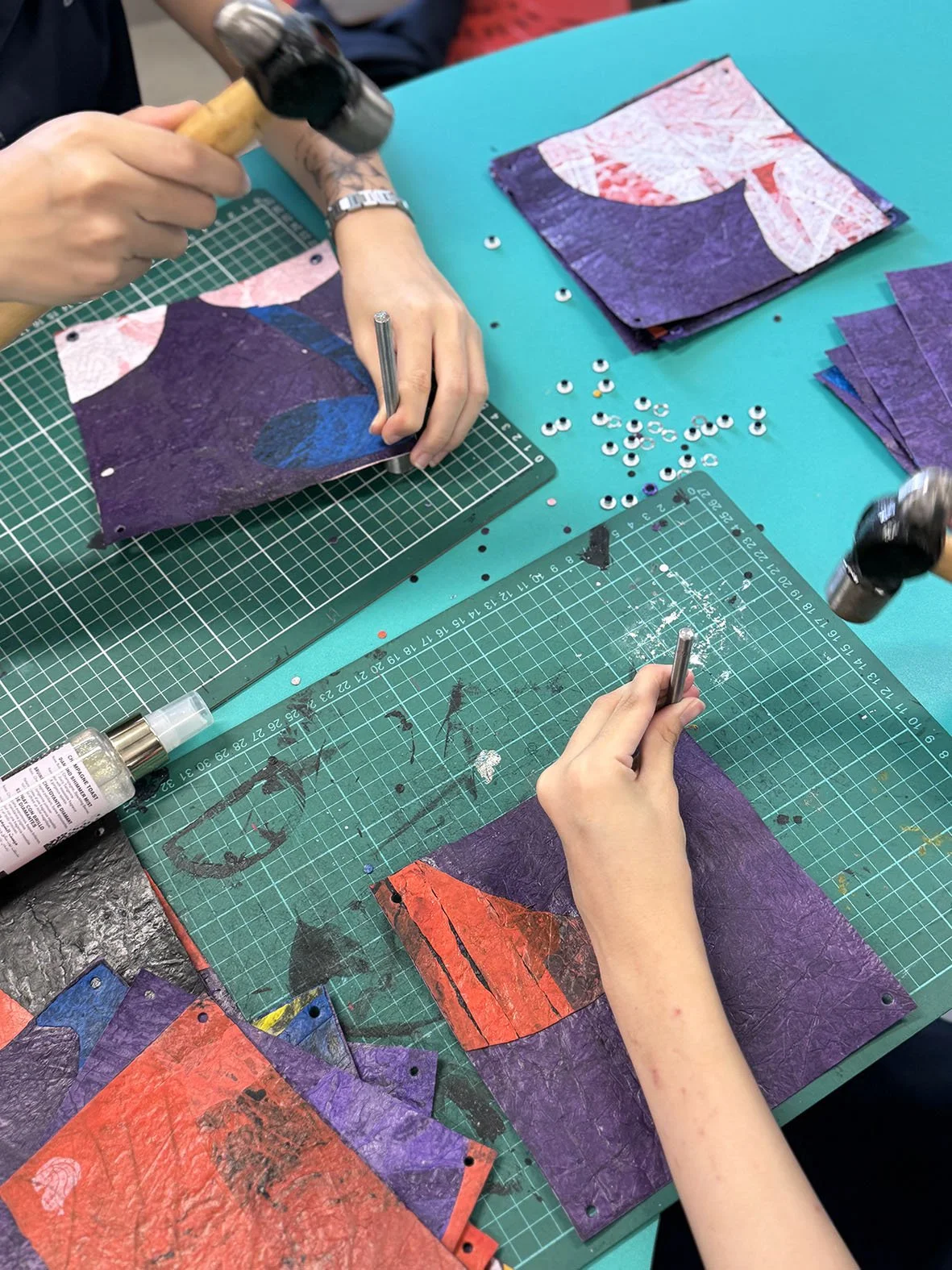
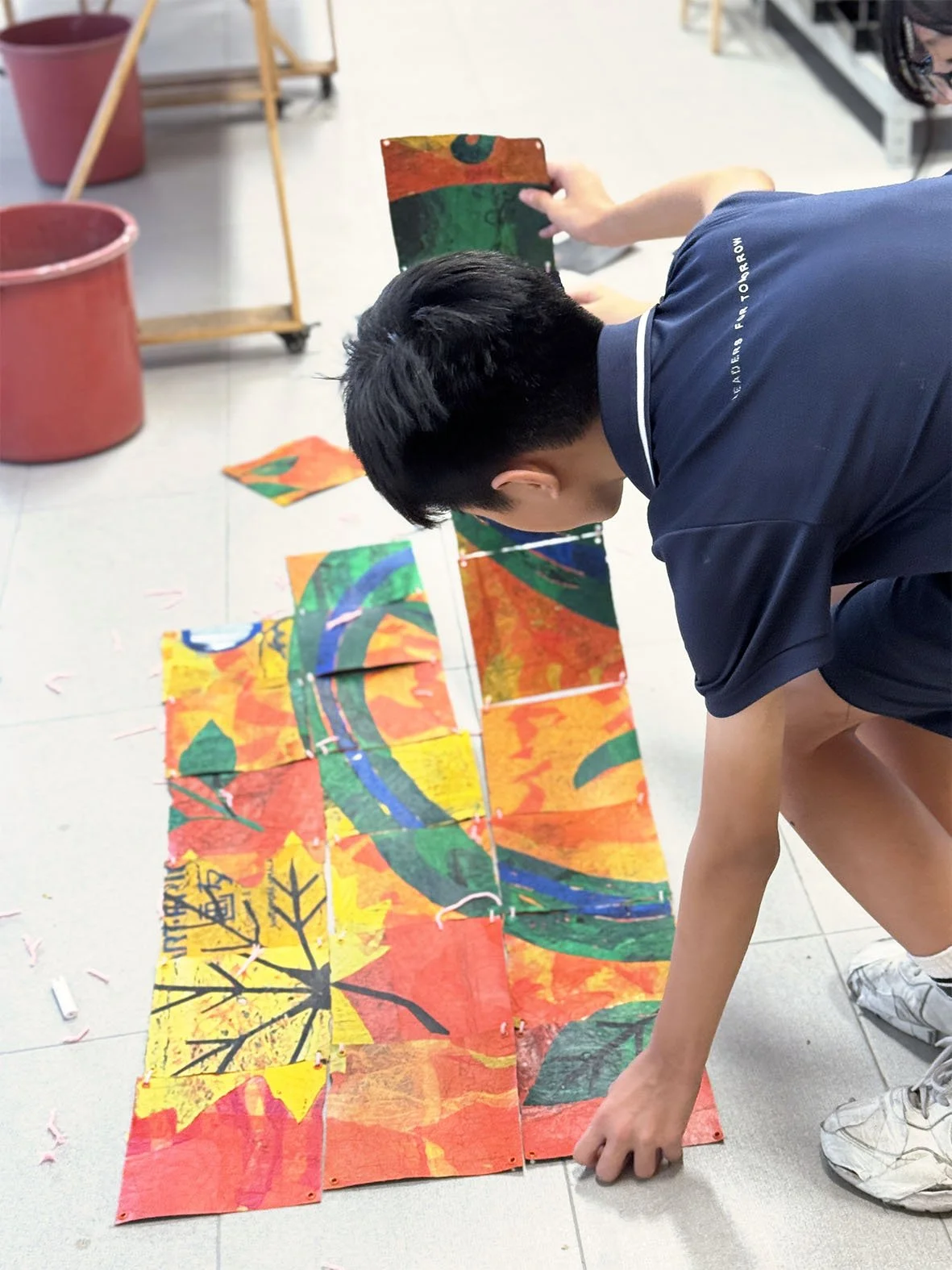
Sheets of fused plastic were gradually built up through layering, cutting and arranging different coloured shapes. These became the individual components that would eventually form the much larger pixel composition.

At this stage, the scale of the final artwork isn't immediately apparent when you're working. At any one moment, someone might simply be cutting a purple square, arranging a few pieces of plastic or figuring out how two shapes should meet.

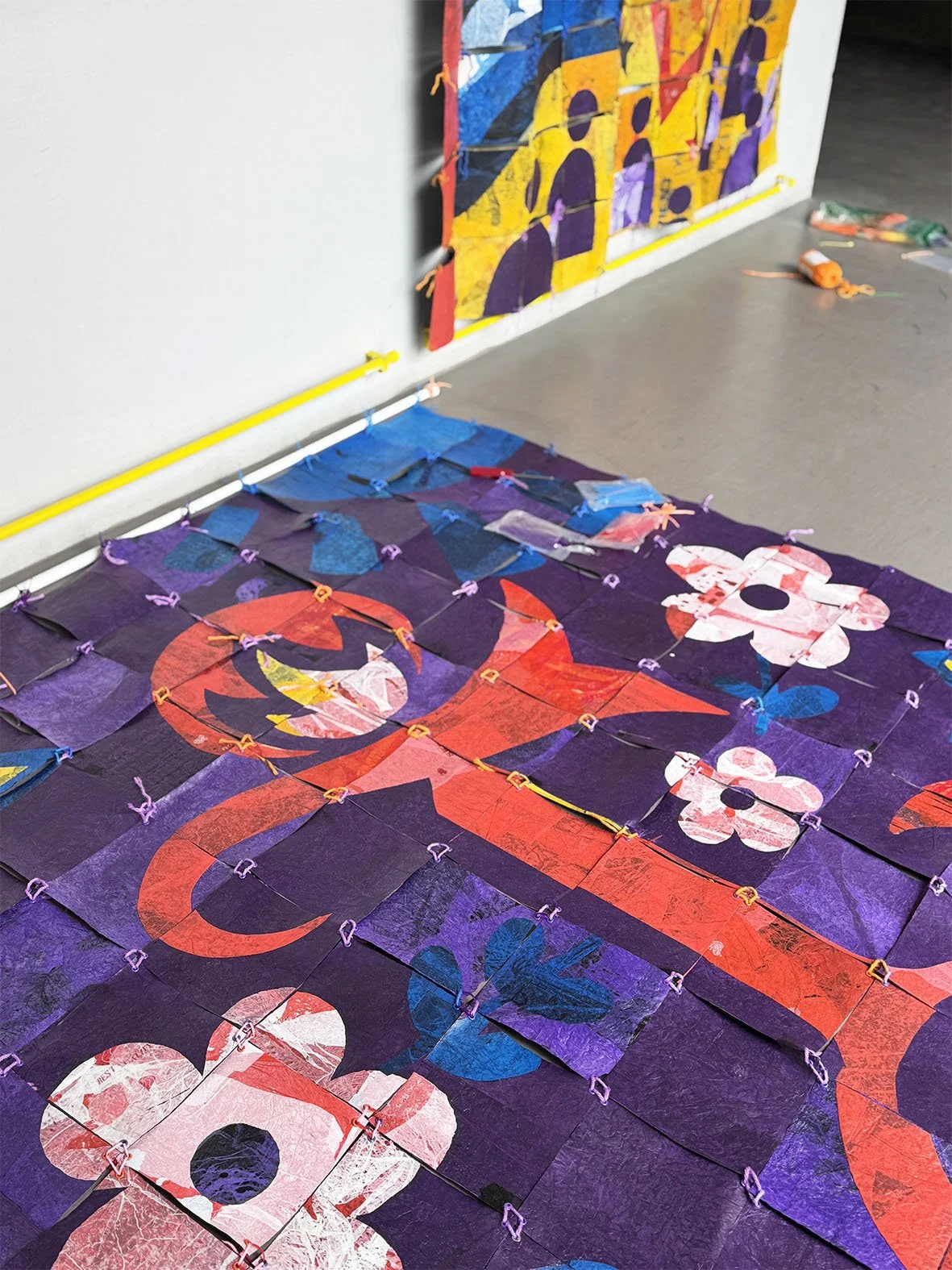
On its own, that contribution can seem very small. But once the pieces begin to accumulate and are installed together, you start to see the letters emerge.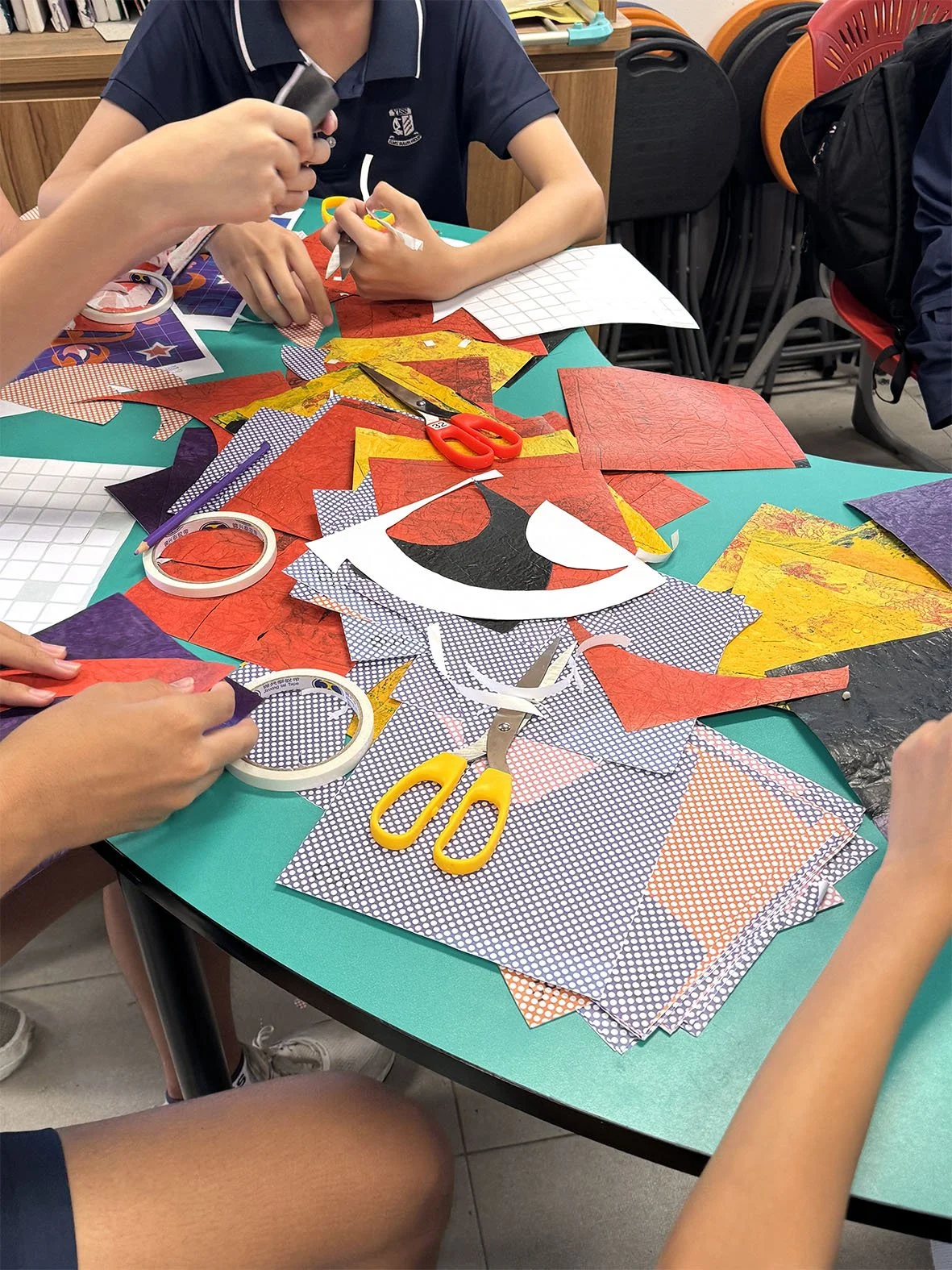
Bringing It All Together
The final stage was installation, where all the individual sheets, colours and designs were finally brought together at scale. What had previously existed as separate pieces of fused plastic gradually became one large pixel mural, revealing the four letters G R I T. Seeing the work installed was particularly satisfying — many small contributions, made by different hands, now connected as a single collective artwork.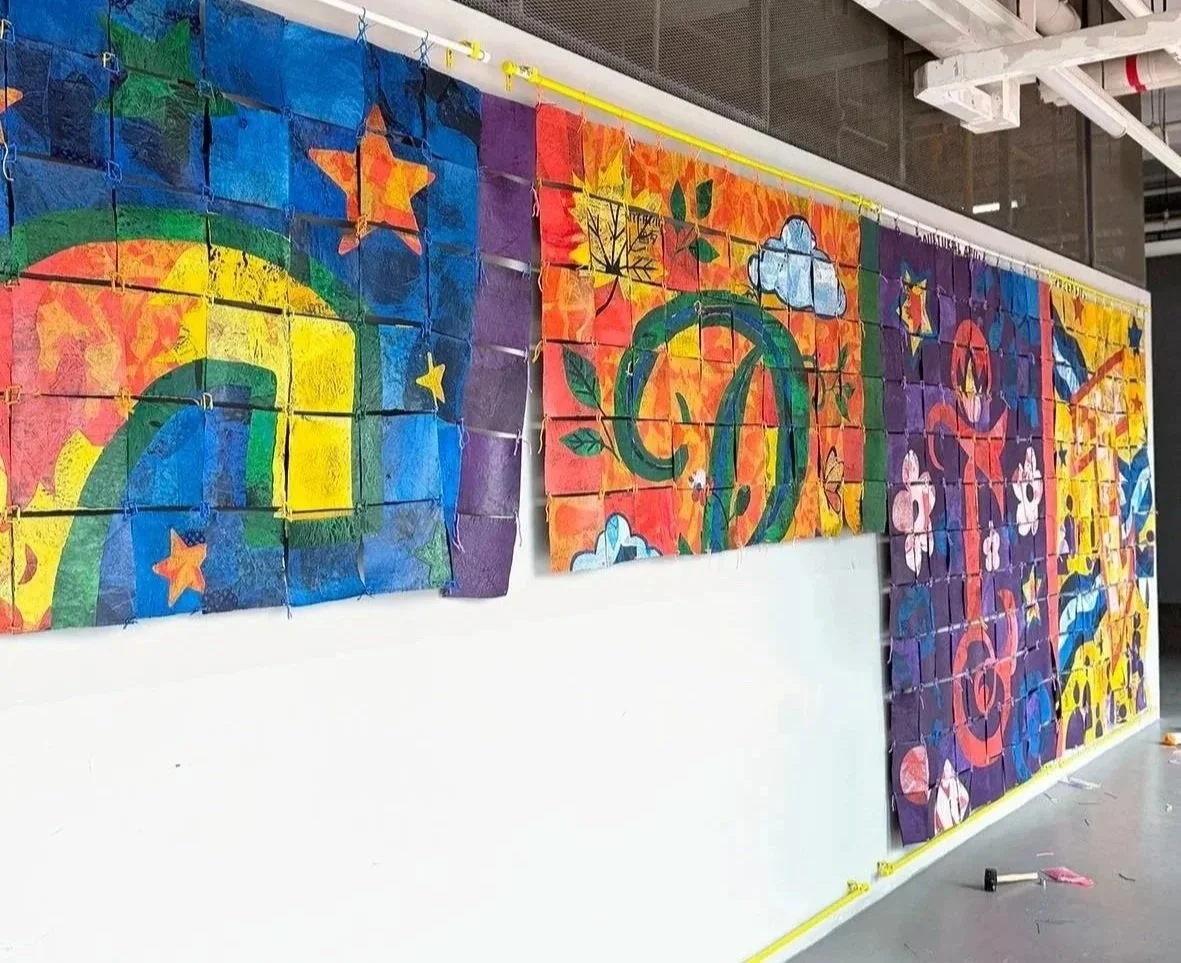
Beauty of Fuse plastic mural