Collaborative Corporate Gift Through Art
School Programme ; Corporate Gifting
A corporate gift doesn’t always have to be something made for an organisation. It can also be something made with its community.
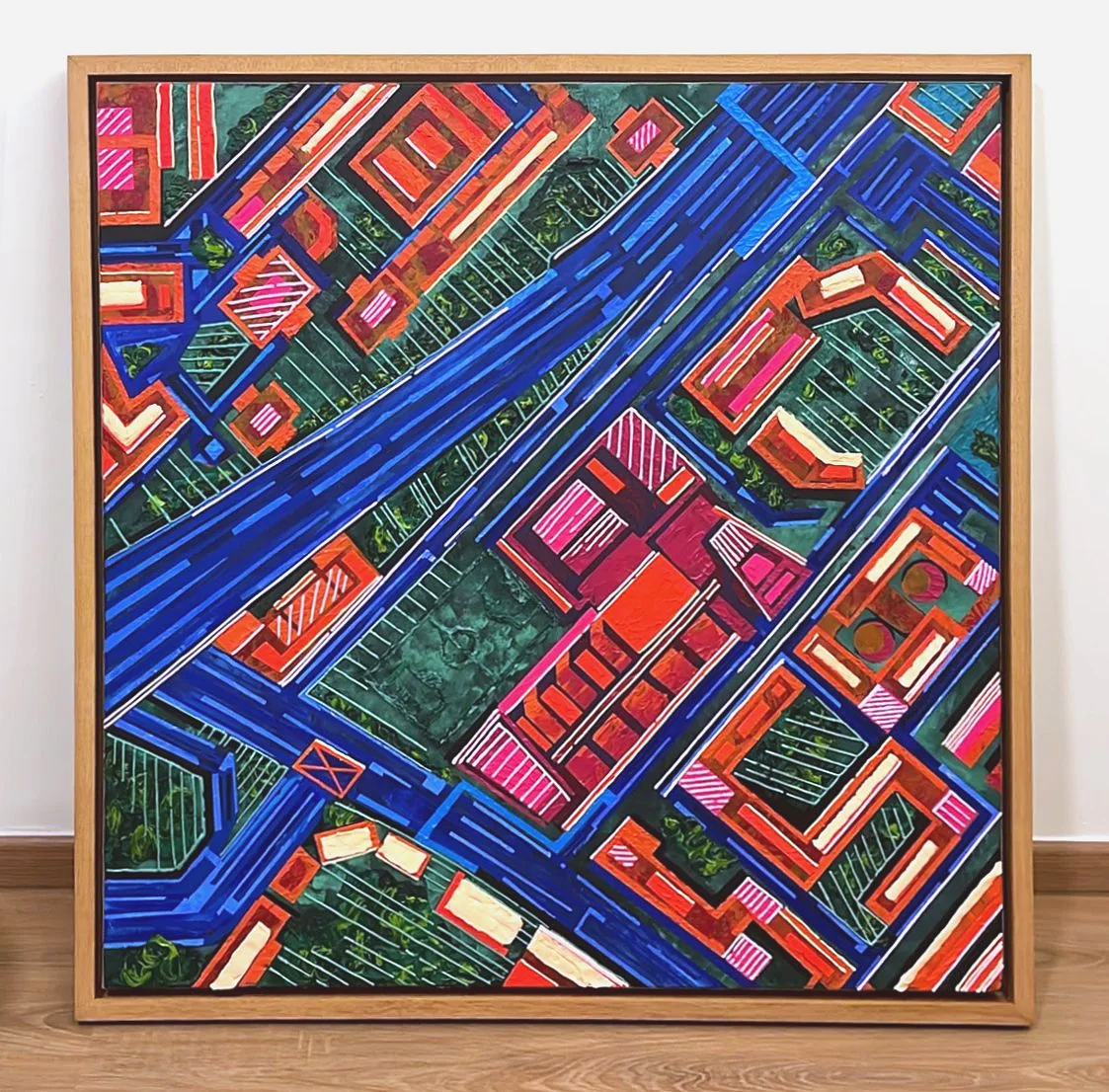
Collaborative art creates opportunities for students, staff or members of an organisation to contribute to the making process, whether through painting, mark-making, texture or other creative elements. These individual contributions can then be brought together and developed into a cohesive final piece.The result is a corporate gift that carries something of the people and place it represents. It can commemorate an anniversary, celebrate a milestone or be created for a special guest, while giving the community a chance to be part of its making.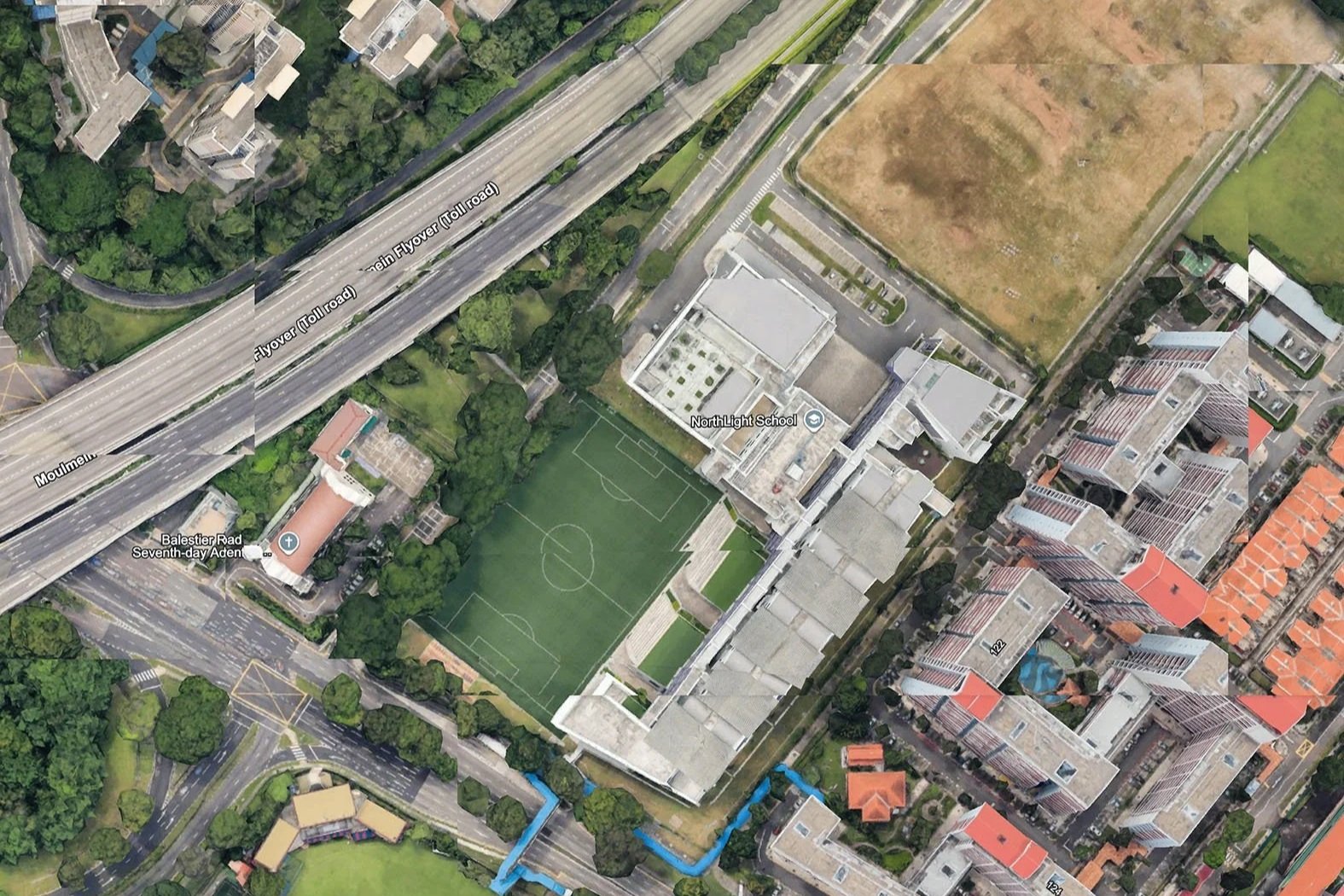
Beginning with a Map
The starting point for the painting was surprisingly familiar: a Google Maps view of the school and its surrounding area.

Seen from above, familiar places begin to look very different.Buildings become blocks of colour. Roads turn into lines. Green spaces become irregular shapes. Paths, boundaries and structures intersect to form an almost abstract composition. We began extracting shapes and forms from it, playing around and identifying different geometric and organic shapes. These were rearranged and translated onto the canvas, allowing the geography of the school to provide the underlying structure of the work.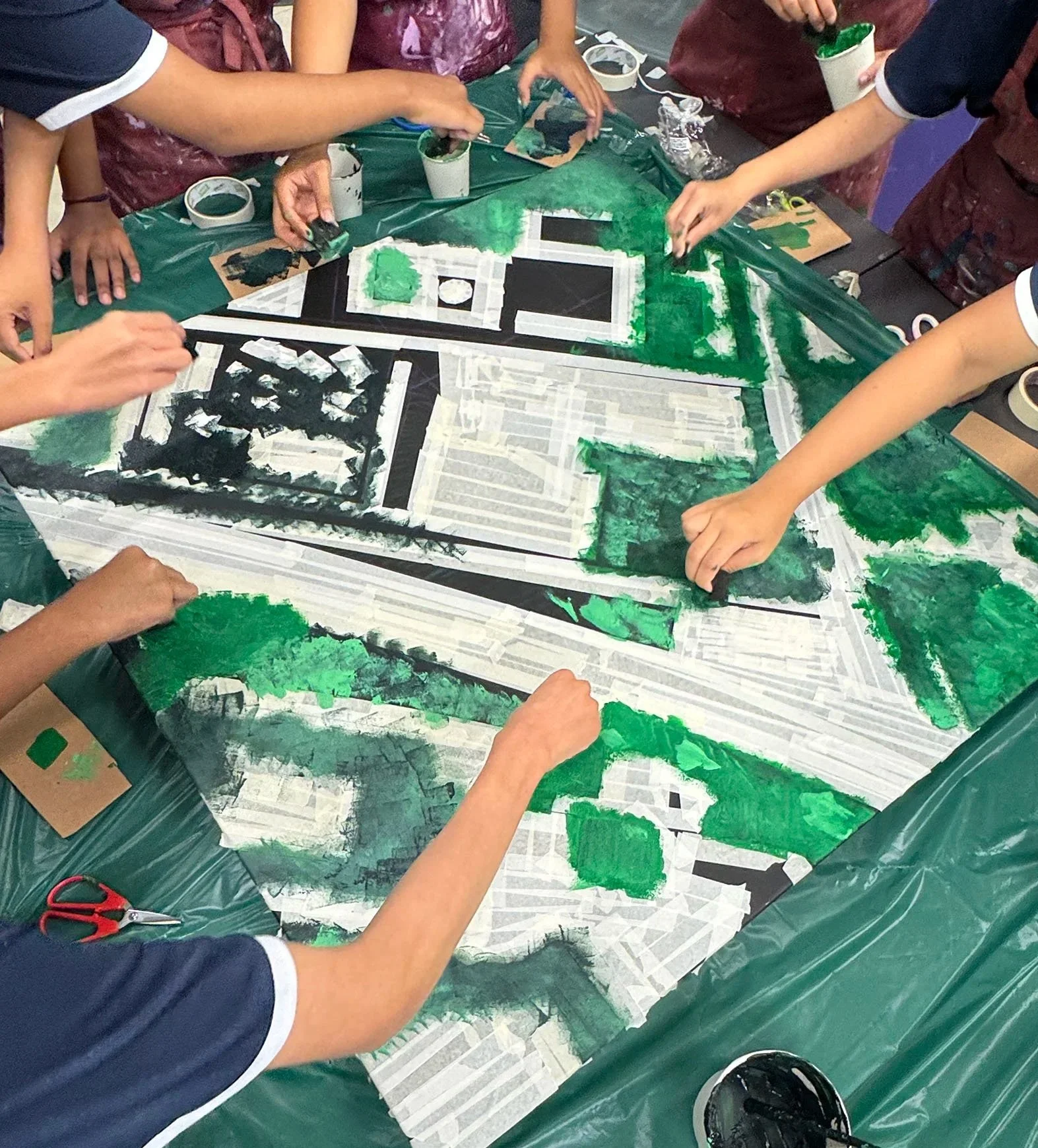
Building the First Layer Together
Once the composition had been established, it was time to bring the students on board.Students worked on the base layer of the painting, filling the mapped-out shapes and beginning to establish the different areas of the composition. And even though an abstract work might appear "simple" initially, a work like this requires time in stencilling the shapes.At this stage, we also started experimenting with texture. Rather than building everything upwards immediately, we played first with flatter surface textures; allowing marks, shapes and variations in the paint to begin giving the surface some character.The complexity of the work began to show itself in the building of different layers. It wasn't meant to finish the painting. Instead, it created something for all the later stages to respond to. Like the map underneath it, much of this base would eventually be partially covered, interrupted or transformed by subsequent layers.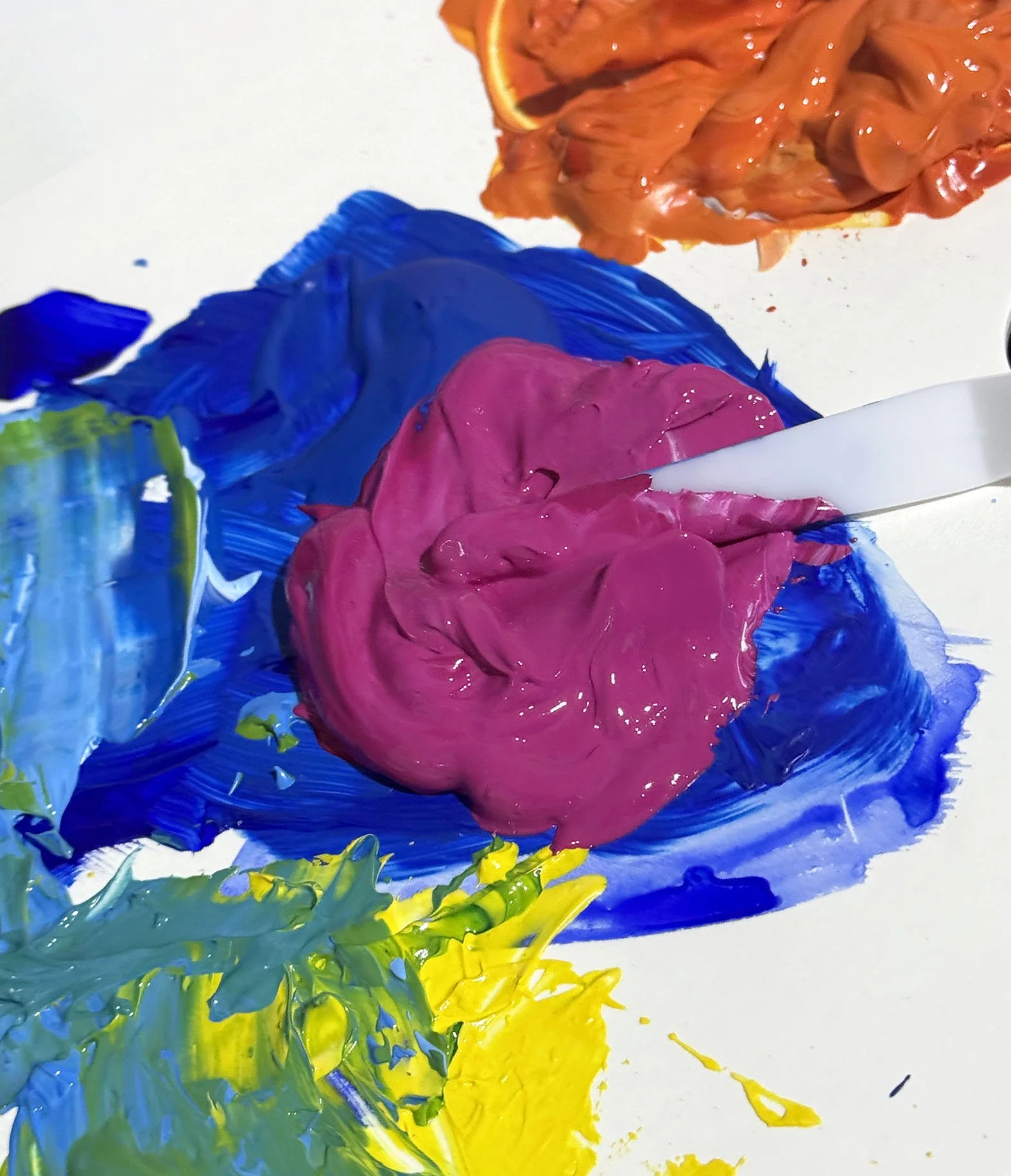
Finding the Colours of the Painting
Colour became one of the biggest considerations as the painting developed. The palette took its starting point from the key colours of the school, but we didn't want the painting to feel overly restrained by them.The intention was to create something vibrant and strongly saturated; a work with enough visual presence to hold its own as a commemorative piece, and yet was able to still recall hints of the school through it's colours. That meant balancing much brighter colours, including neon tones, into a composition that already contained deeper colours, and this became one of the trickier parts of the process. Too much neon and the painting could become visually overwhelming. Too little and the brighter colours would feel disconnected from the rest of the work.We also had to think about where each colour appeared across the canvas. A bright colour concentrated in one area could pull the entire composition in that direction, so colours had to be distributed and balanced across the work.Slowly, the palette began to settle.The deeper colours gave the painting weight, while the brighter colours brought energy into it.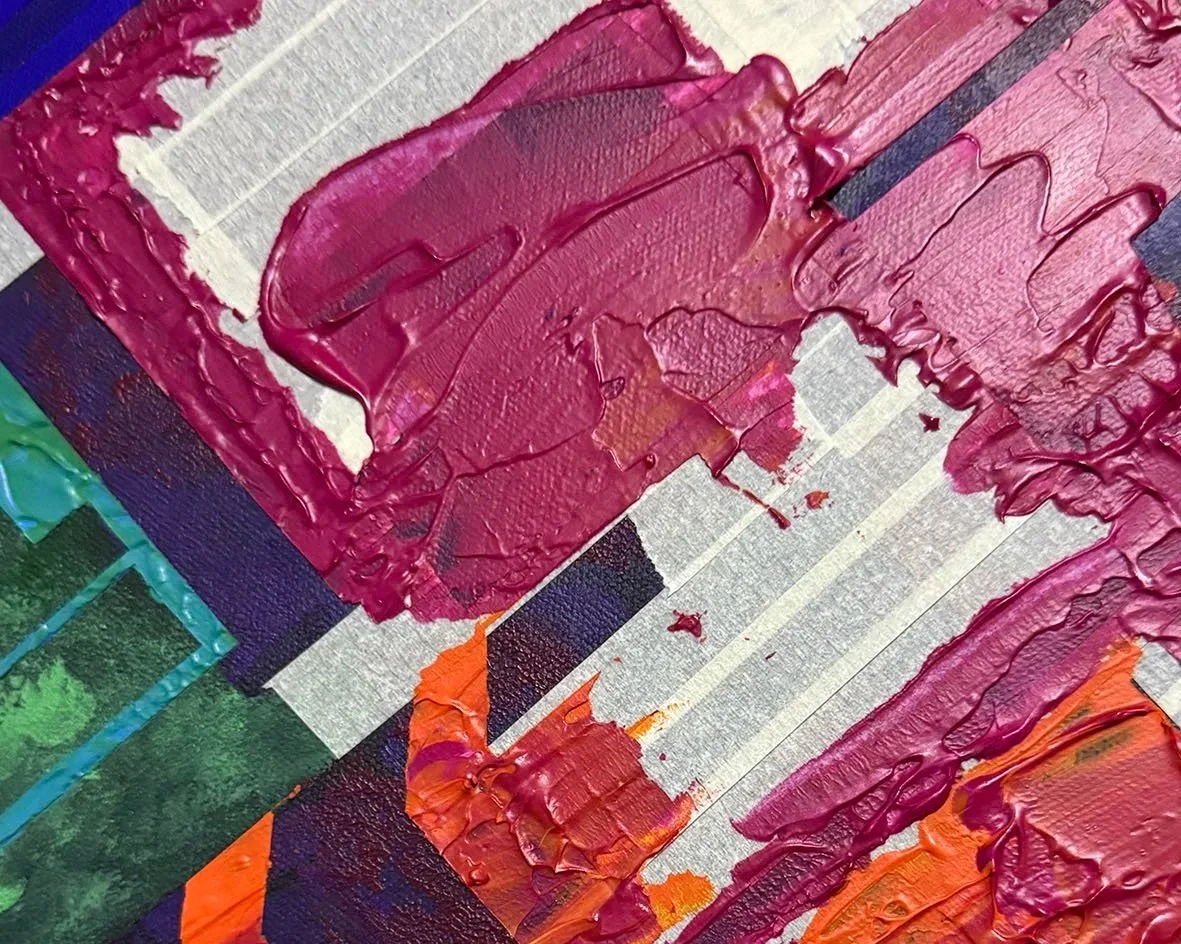
From Flat Shapes to Raised Surfaces
Once the overall colours and composition had begun to take shape, we started introducing another dimension: physical texture.Impasto paint was used to create raised shapes and surfaces. Some of these were allowed to dry before being worked over again with spray paint.This created an interesting interaction between the two processes. But getting there required patience. Splitting the process like this inevitably created more "spills". Marks that the spray paint could not reach, or areas that the impasto had not been covered would be very evident in a painting that had a clean, abstract composition. Each section had to be taped well, if not time had to be taken for refinement.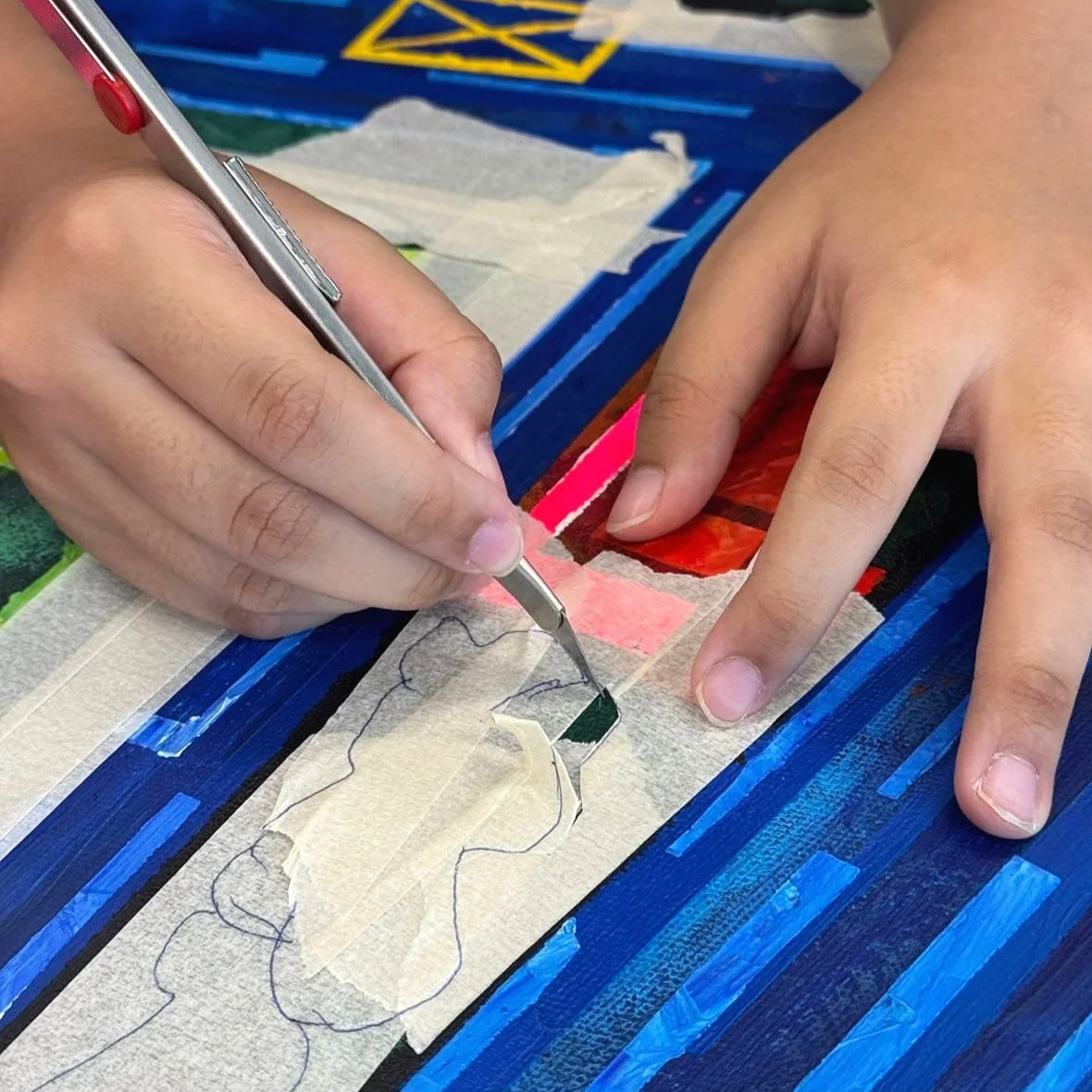
Bringing the Students Back In
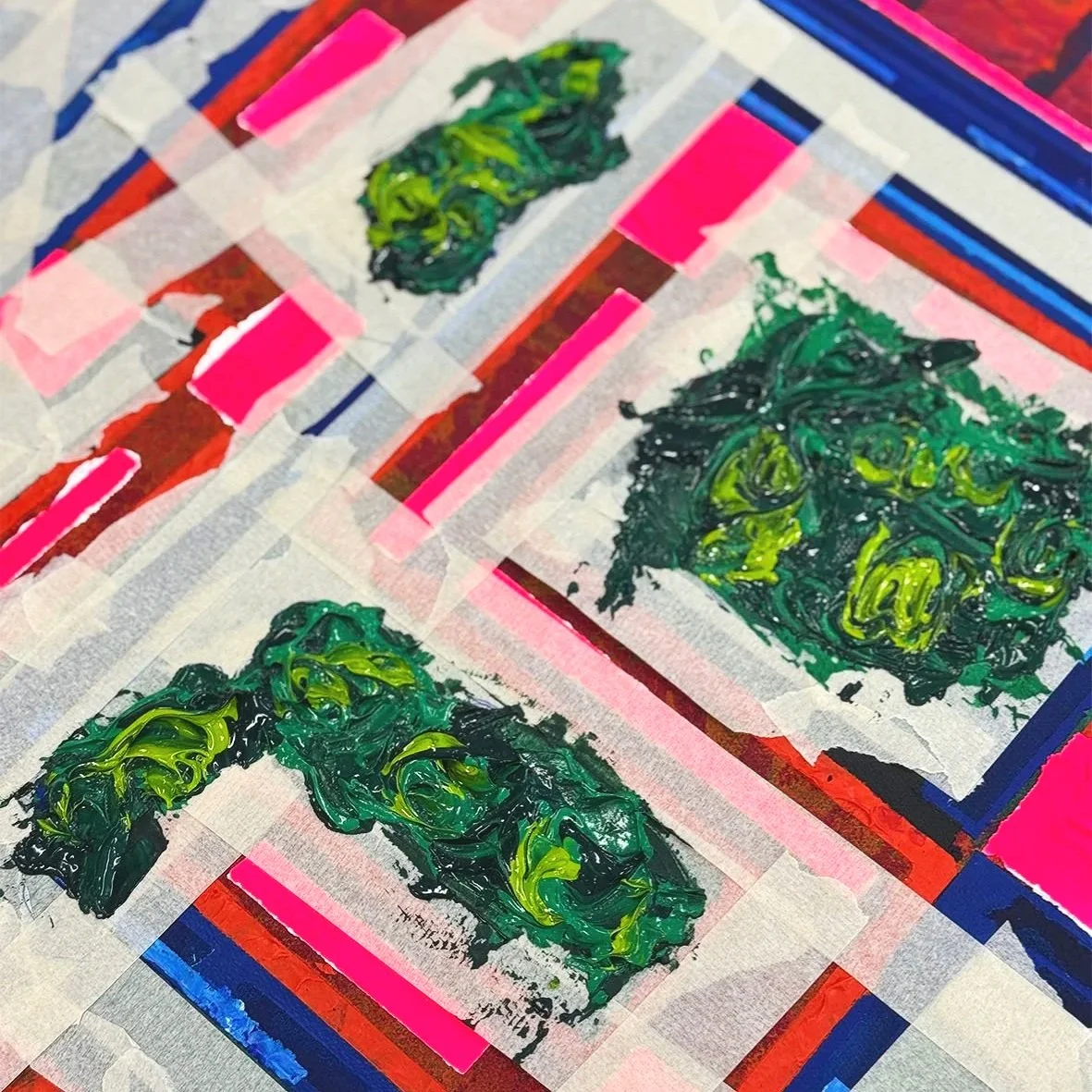
Once the major shapes, colours and raised textures had been established, the painting returned to the students. This time, we focused on the vegetation within the mapped landscape. It was also a bigger play on organic shapes as a way to represent the vegetation.

Students worked with coloured impasto paste, mixing and swirling different colours together before applying them to the painting. The interesting part was knowing when to stop mixing. Somewhere in between was a much more exciting moment, where individual colours were still visible but began swirling and folding into one another.

It became an exercise in playful control. There was an intention behind the process, but there was also room to let the material create something unexpected.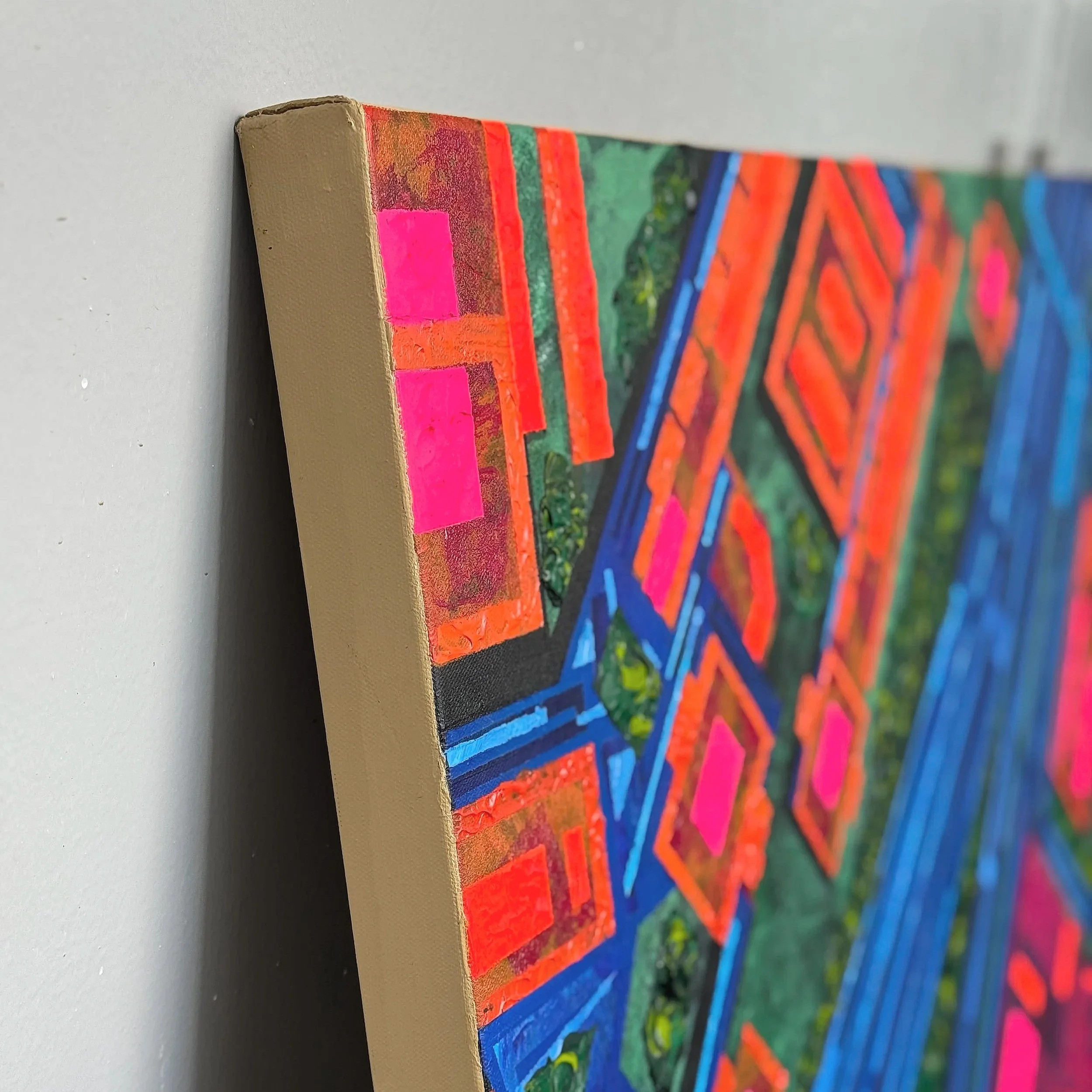
Finishings
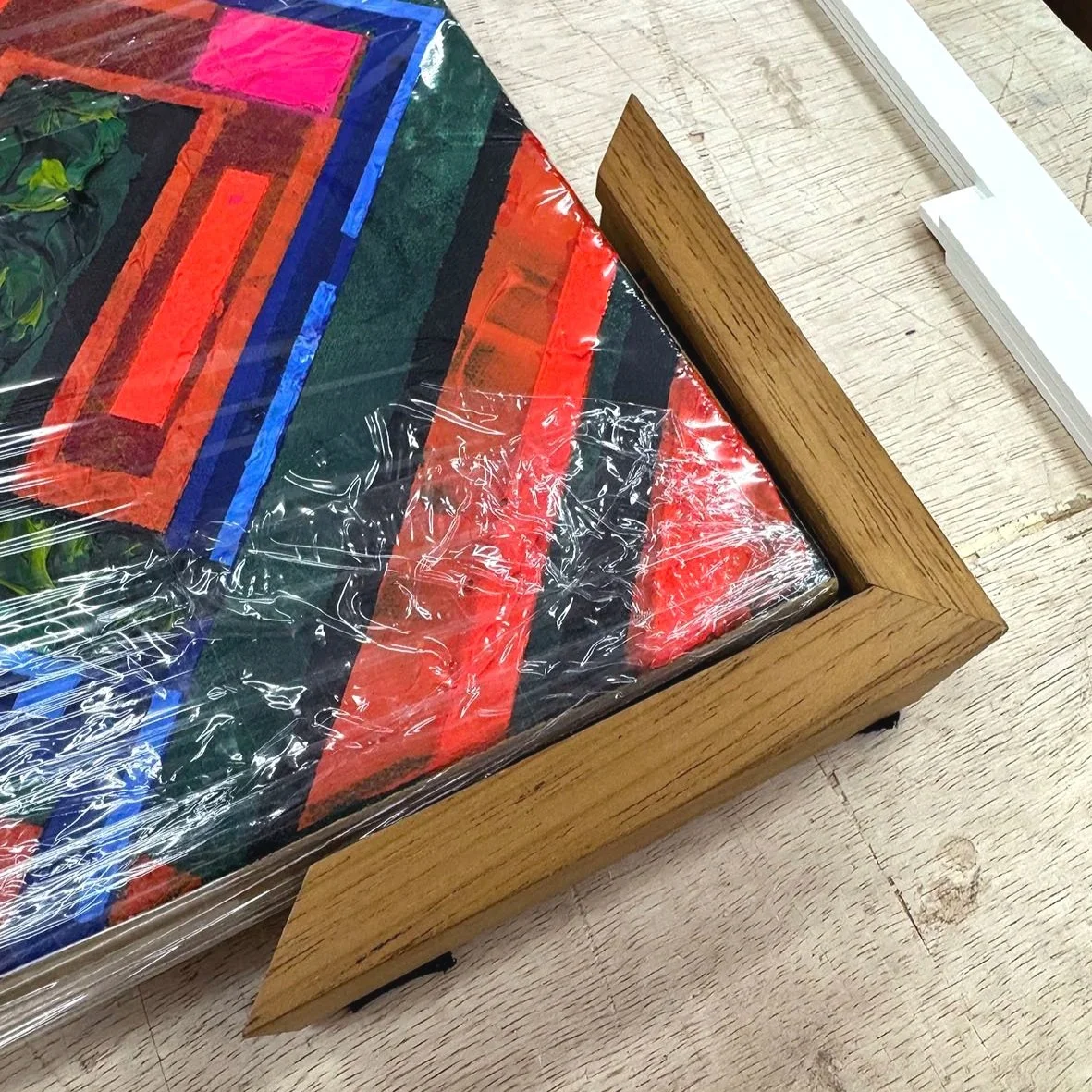
An additional layer of details was added by the school's team that wanted lighter lines on the painting as well. The finishings of a piece includes addressing the corners of the painting, but also framing it with a suitable colour. Here, we opted for a floating box frame, without glass, so that you’ll be able to fully admire the painting and it’s textures. 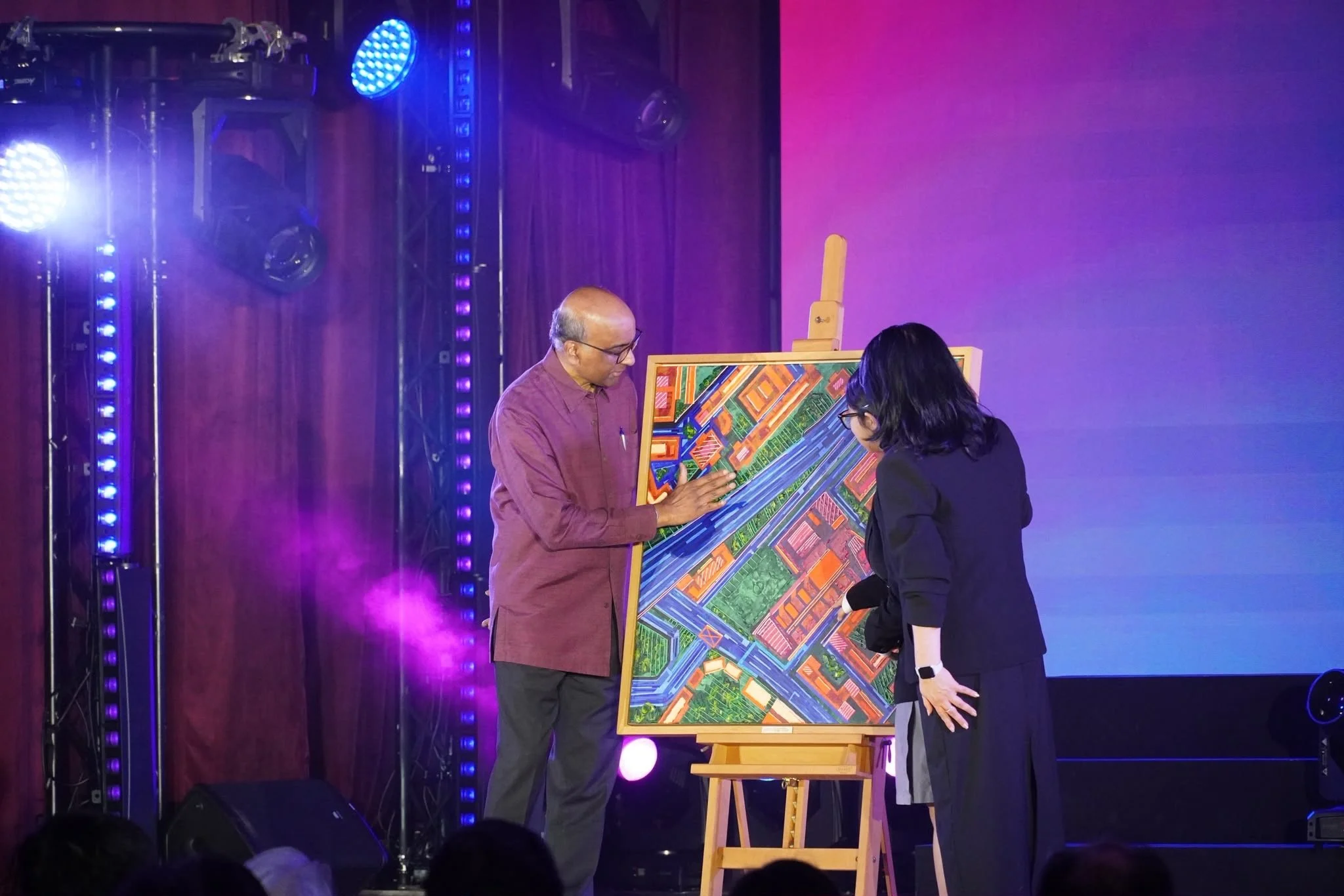
The work was presented as a gift to Mr. Tharman Shanmugaratnam during the school’s 20th Anniversary Celebrations
A Corporate Gift, Made Together
A corporate gift doesn’t always have to be something made for an organisation; it can also be something made with its community.

Collaborative art creates opportunities for students, staff or members of an organisation to contribute to the making process, whether through painting, mark-making, texture or other creative elements. These individual contributions can then be brought together and developed into a cohesive final piece.

The result is a corporate gift that carries something of the people and place it represents. It can commemorate an anniversary, celebrate a milestone or be created for a special guest, while giving the community a chance to be part of its making.

Have an occasion or corporate gift in mind? Get in touch with Nimble Thumbs to explore how we can create something together.