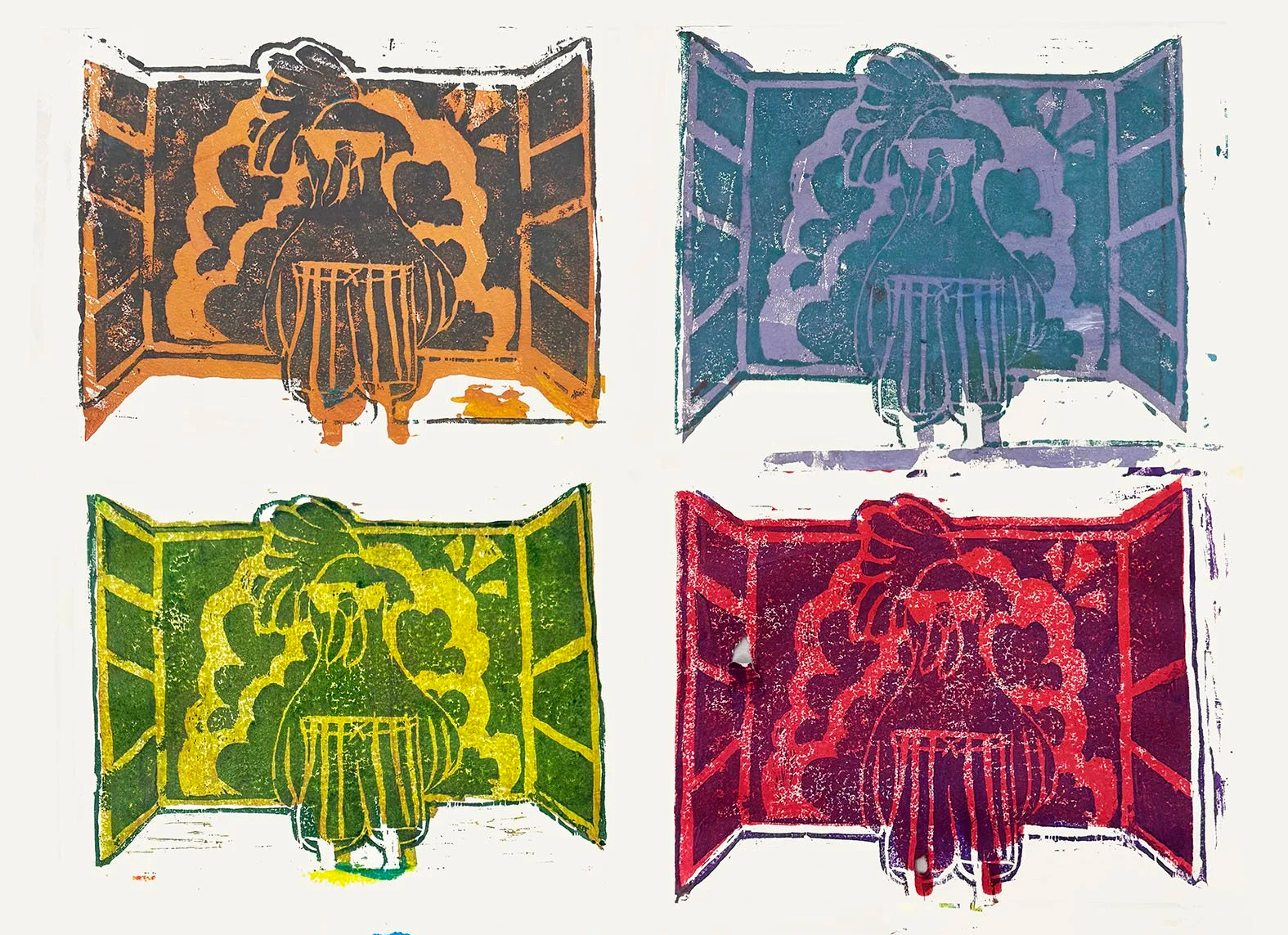
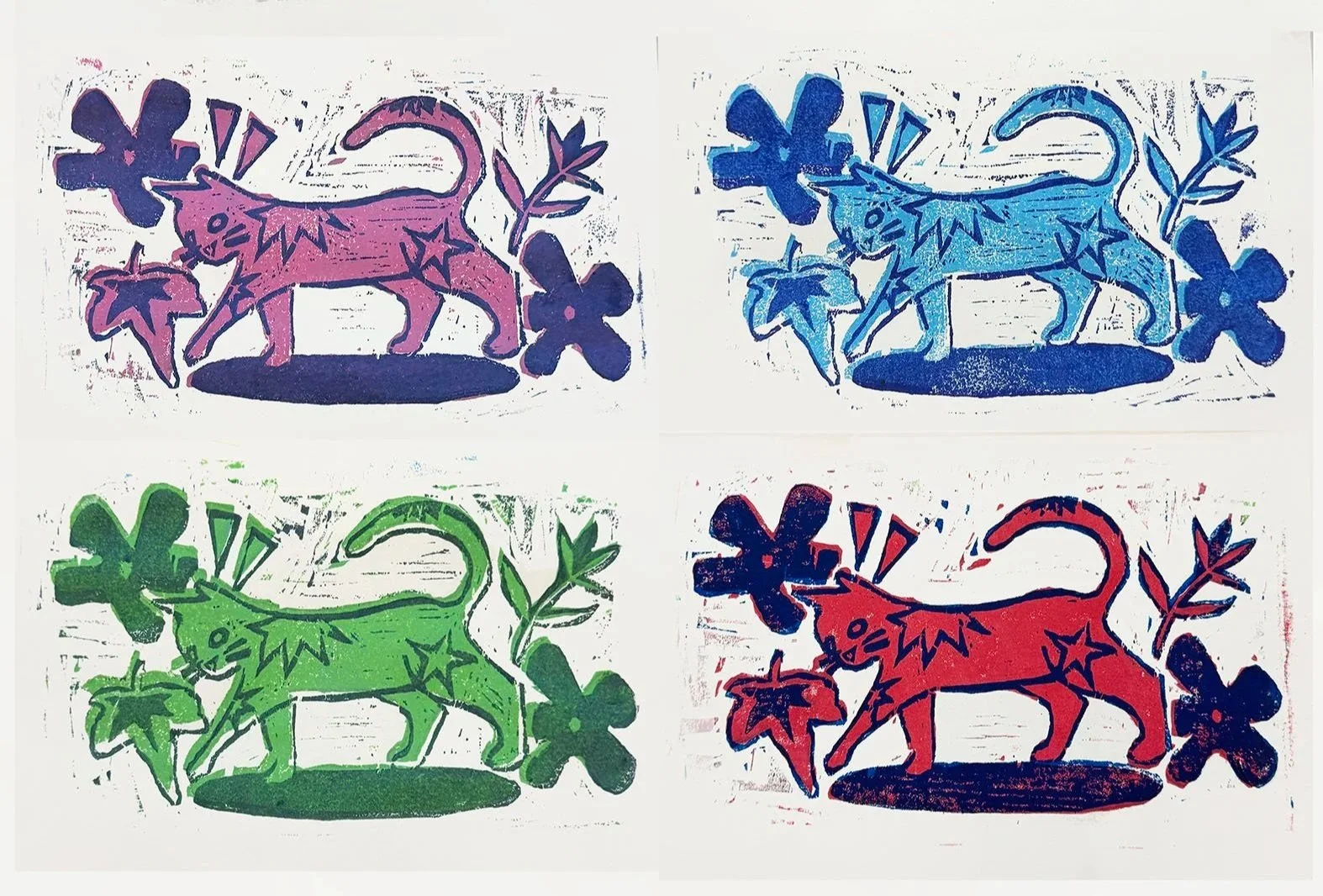
Papercutting, Woodcut and Thinking in Layers
Papercutting and woodcut both encourage us to think about an image in layers rather than simply as a flat drawing. We begin to notice what sits in front, what falls behind, what needs to remain, and what can be removed. In papercutting, this might mean separating a composition into overlapping shapes and physical planes; in woodcut, it means deciding which areas of the surface will remain to receive ink and which will be carved away. Both processes ask us to take an image apart in our minds before putting it back together through material.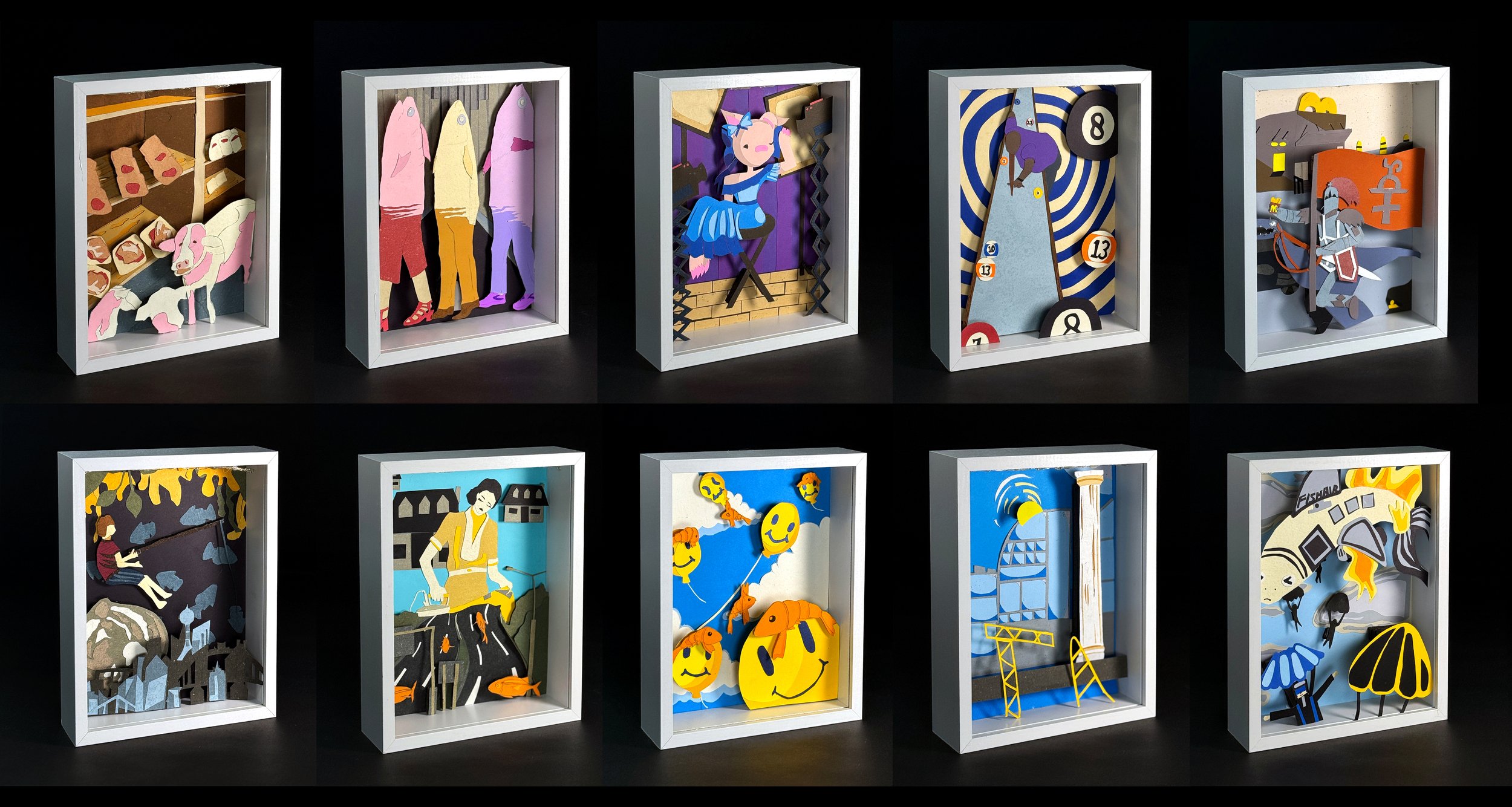
Thinking in Shapes
Papercutting encourages us to see an image as a collection of shapes rather than relying entirely on drawing. Drawing is still fundamental as it helps us observe, plan and understand form, but with papercutting we're less reliant on it building the language of details. Instead, the use of shapes and the qualities of the paper help build the visual platter.  A tree might become a cluster of irregular shapes, hair a repeated pattern of curves, or a landscape a series of overlapping silhouettes. A rough surface, a translucent sheet, a bright block of colour or a repeated cut shape can each suggest something different and contribute to the story of the image.

Repeated shapes can become patterns; different colours can separate spaces or subjects; textures can suggest particular surfaces or moods. The image is gradually built up through these relationships, almost like assembling a visual puzzle.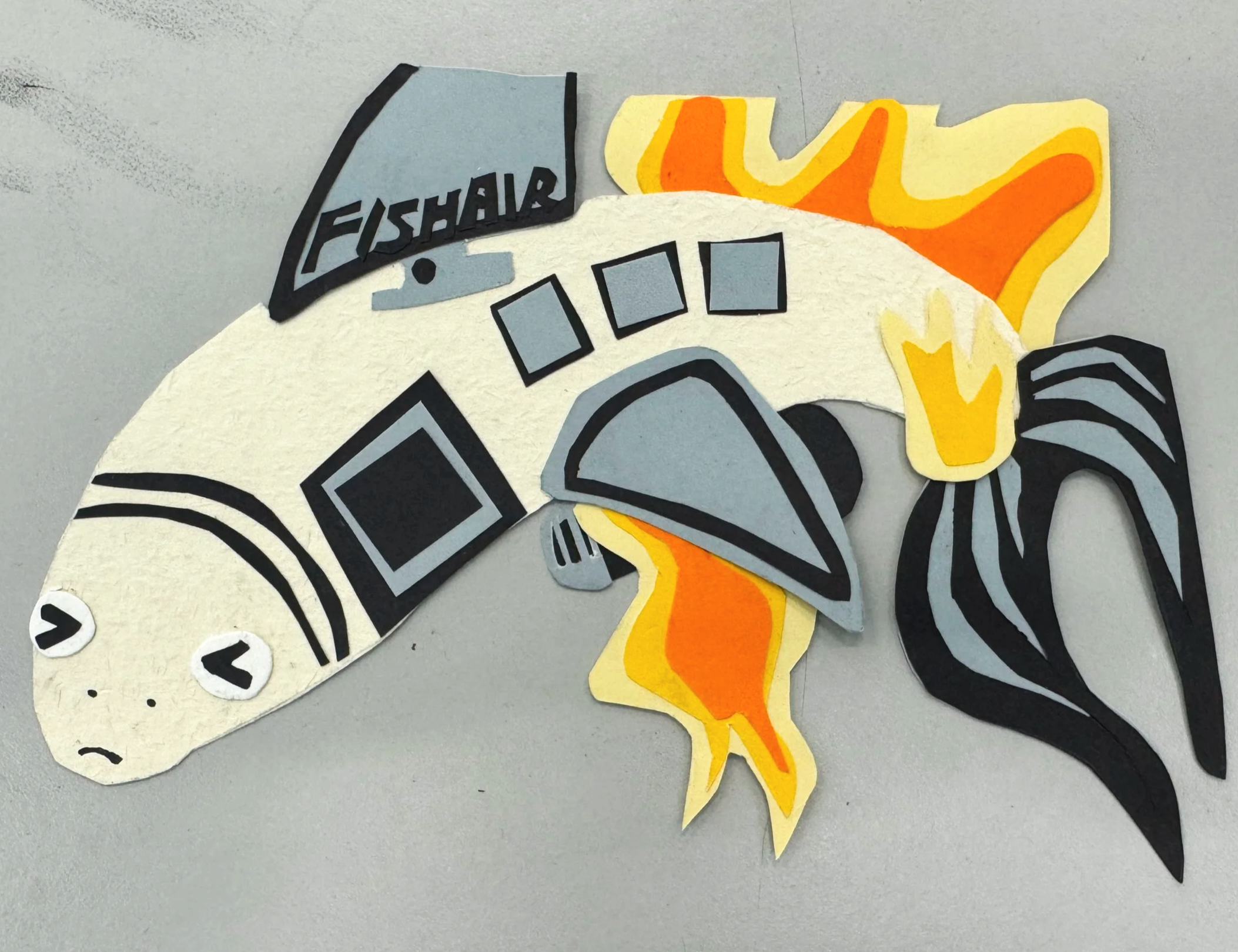
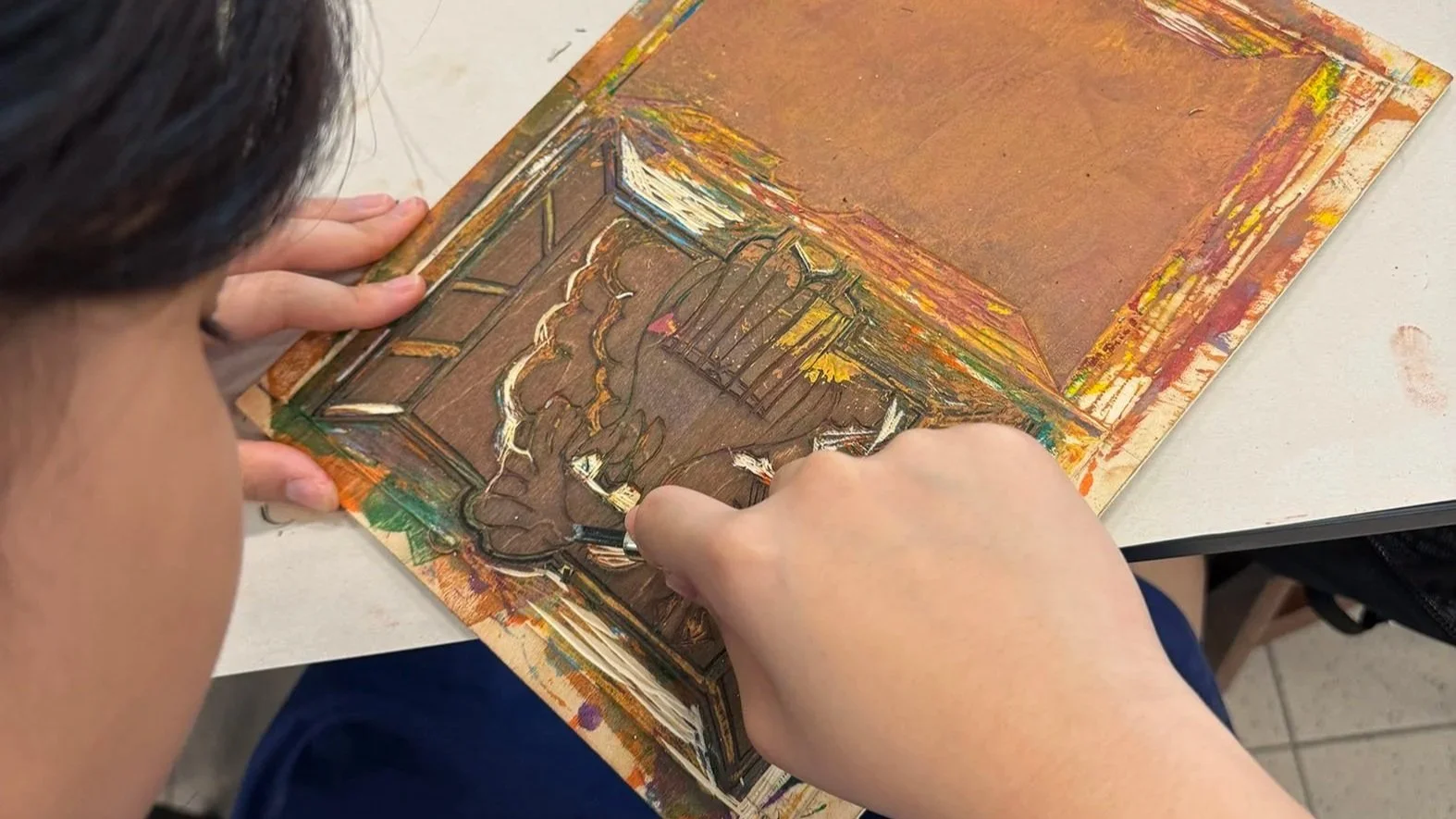
Thinking in Bold Lines
Moving into woodcut introduces a very different relationship with the image. Among the many materials and processes available in printmaking, wood can be one of the more difficult surfaces to navigate. It has a natural grain direction that you need to work with, it resists the carving tool more than other materials, and it does not always allow us to make the precise marks we might initially have imagined.

But that difficulty is also what gives woodcut its distinctive character. The rawness of the wood, the carved textures and the tendency towards stronger, bolder lines all begin to influence how the final image looks.

There is a certain confidence that comes with learning to work this way. Rather than holding onto every intricate detail from the original drawing, we have to decide which lines really matter. Small details might disappear altogether, while important shapes and gestures become thicker and more pronounced.

In this way, the limitations of the material become part of its visual language. Instead of trying to make the wood behave like a pencil, we begin to let bold lines, simplified shapes and the marks of carving tell the story instead.