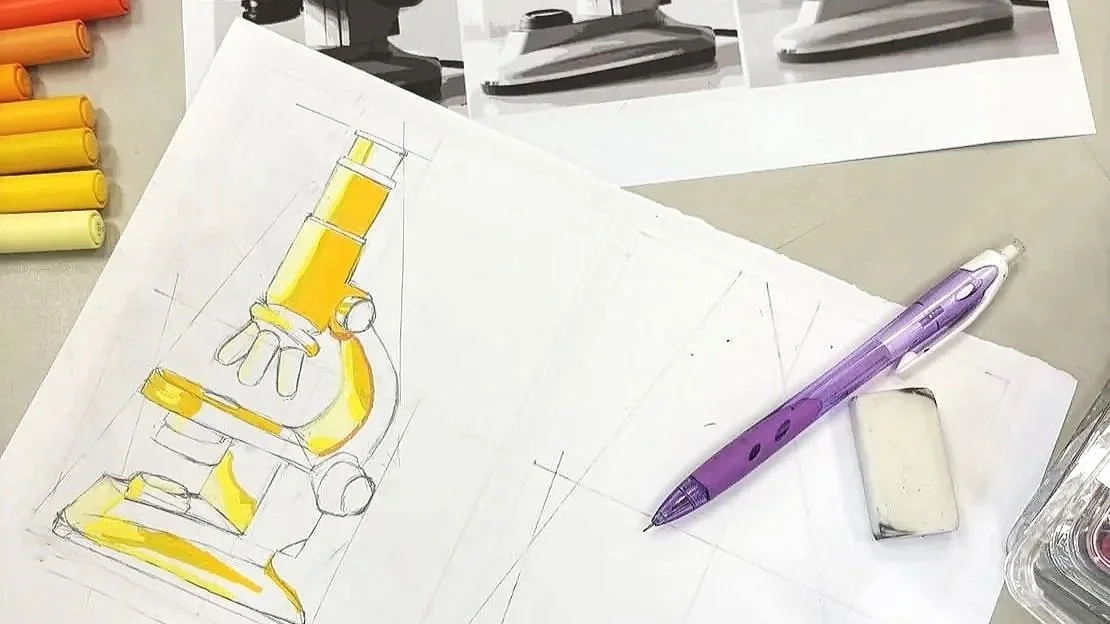
Learning to See: From Drawing to Tone Building
School Programme ;
Over a series of lessons, we explored two foundational skills; drawing and rendering images in different tones.The intentions of going through this workshop was to encourage students to be able to logically break down a complex image into more general "frames" first, and using that to guide the building of general shapes before diving straight first into detail work. Students have a tendency to dive straight first into detail, and use that instead as mapping points. It’s an over enthusiastic reaction that can put off the general accuracy of the drawing.
Drawing: Start with a Map
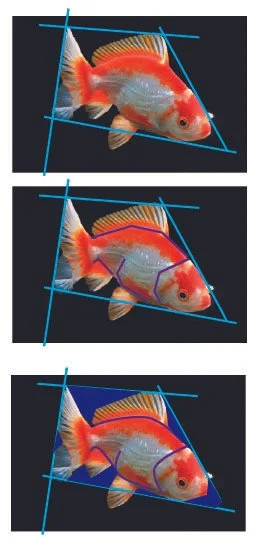
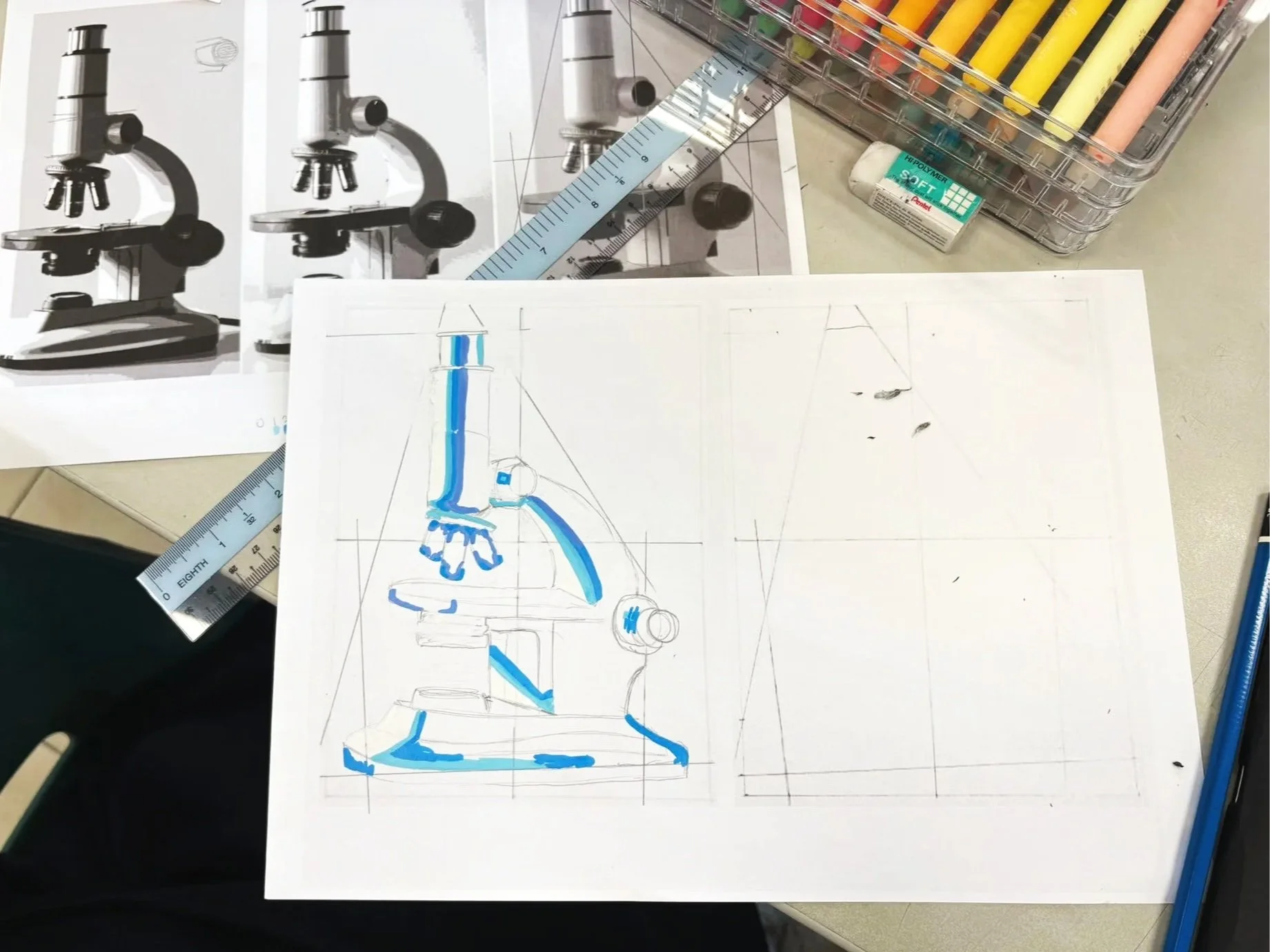
Drawing something accurately can sometimes feel overwhelming because we see everything at once; the outline, details, shadows, textures and all the little things that make an image recognisable. For these sessions, we tried to put those details aside at the beginning and instead create a "frame"Within this larger frame, students could then identify simpler shapes and plot important points against what they had already drawn. The second key aspect to this, is to avoid thinking about curves first, and establish "key nodes" of intersection points. A complicated curve might become several smaller lines, while the position of one feature could be judged in relation to another. It became a little like plotting locations on a map: one point provides a reference for the next, and gradually those individual observations begin connecting into a drawing.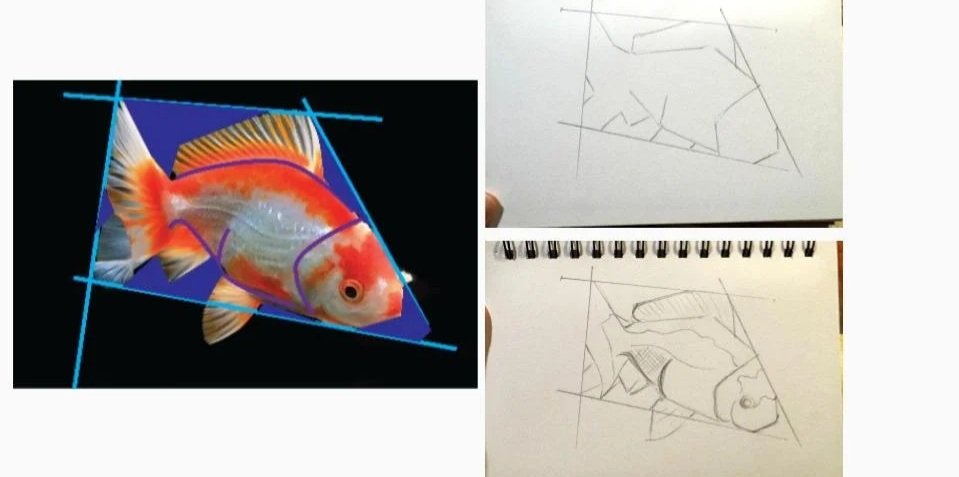
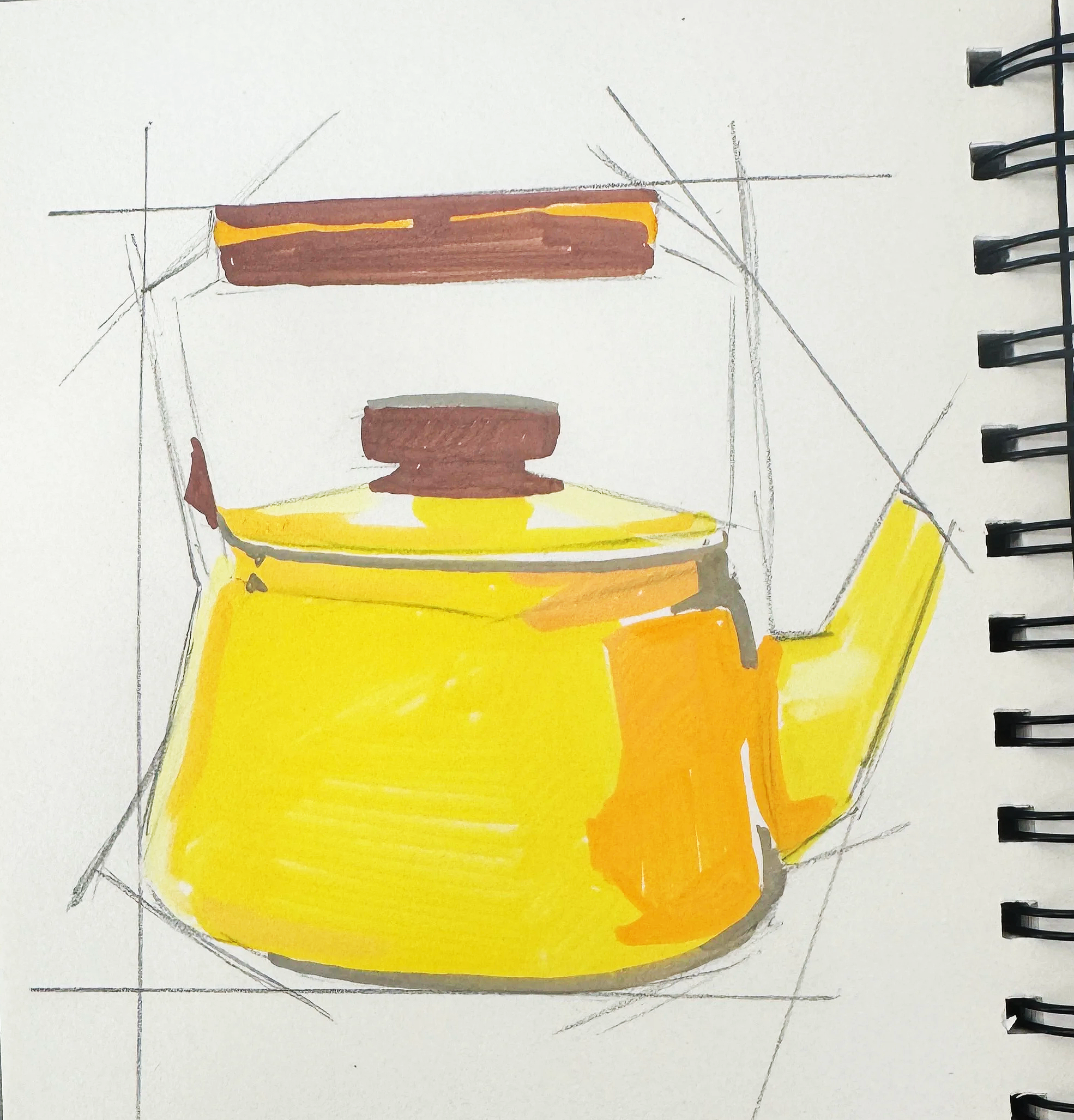
From Lines to Tones
We then took a similar approach with markers. This time, instead of concentrating primarily on proportion, we began looking at tone.

Photographs can contain countless subtle changes between light and dark, and trying to reproduce all of these at once can quickly become complicated. So again, we simplified. Students looked for distinct areas of light, mid-tone and shadow, treating each area almost like a shape of its own.
The trick to this activity is to work with black and white images. What this does is it removes again unnecessary distractions and details.
This was an important shift because a shadow isn't simply an area that needs to be “shaded in.” If we look carefully, it has a shape, boundary, size and position in relation to everything around it. By identifying these areas first, students could establish the basic tonal structure of the image before worrying about smooth transitions and finer details.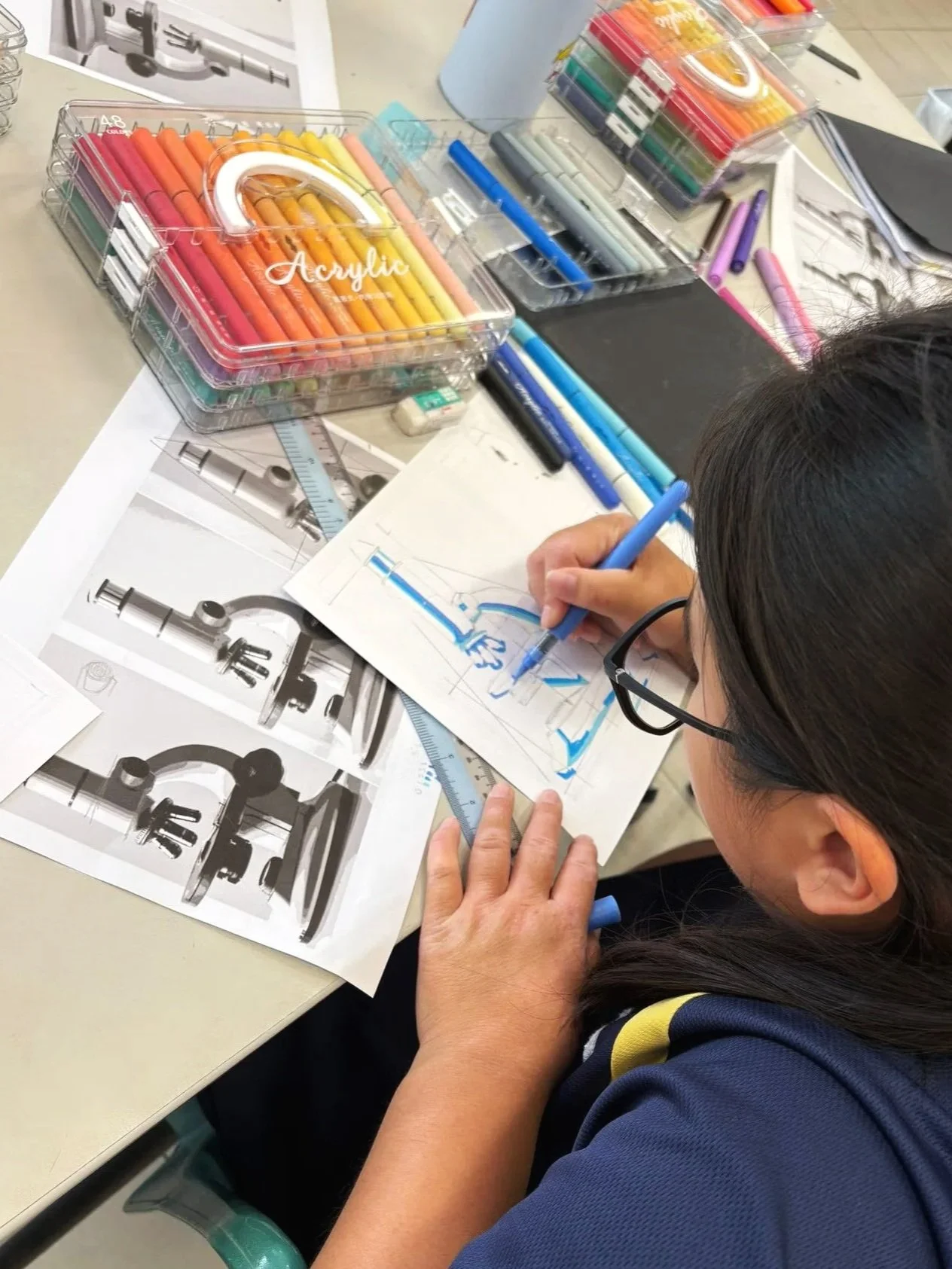
Learning to Observe
These sessions were ultimately as much about looking as they were about drawing or marker rendering. Students were learning to notice proportion, boundaries, spaces, tonal changes and the relationships between different parts of an image.

Perhaps most importantly, we were exploring the idea that a complicated image doesn't necessarily need to be tackled all at once. We can break it apart, find a few landmarks, establish the larger shapes and gradually work our way towards the details.

These exercises would eventually lead us somewhere much larger. In particular, this series of drawing workshop led towards the end point of a mural.
Drawing, being the foundation of everything in Visual Art, can lead to so many different pathways of further exploration.