What is Cyanotype?
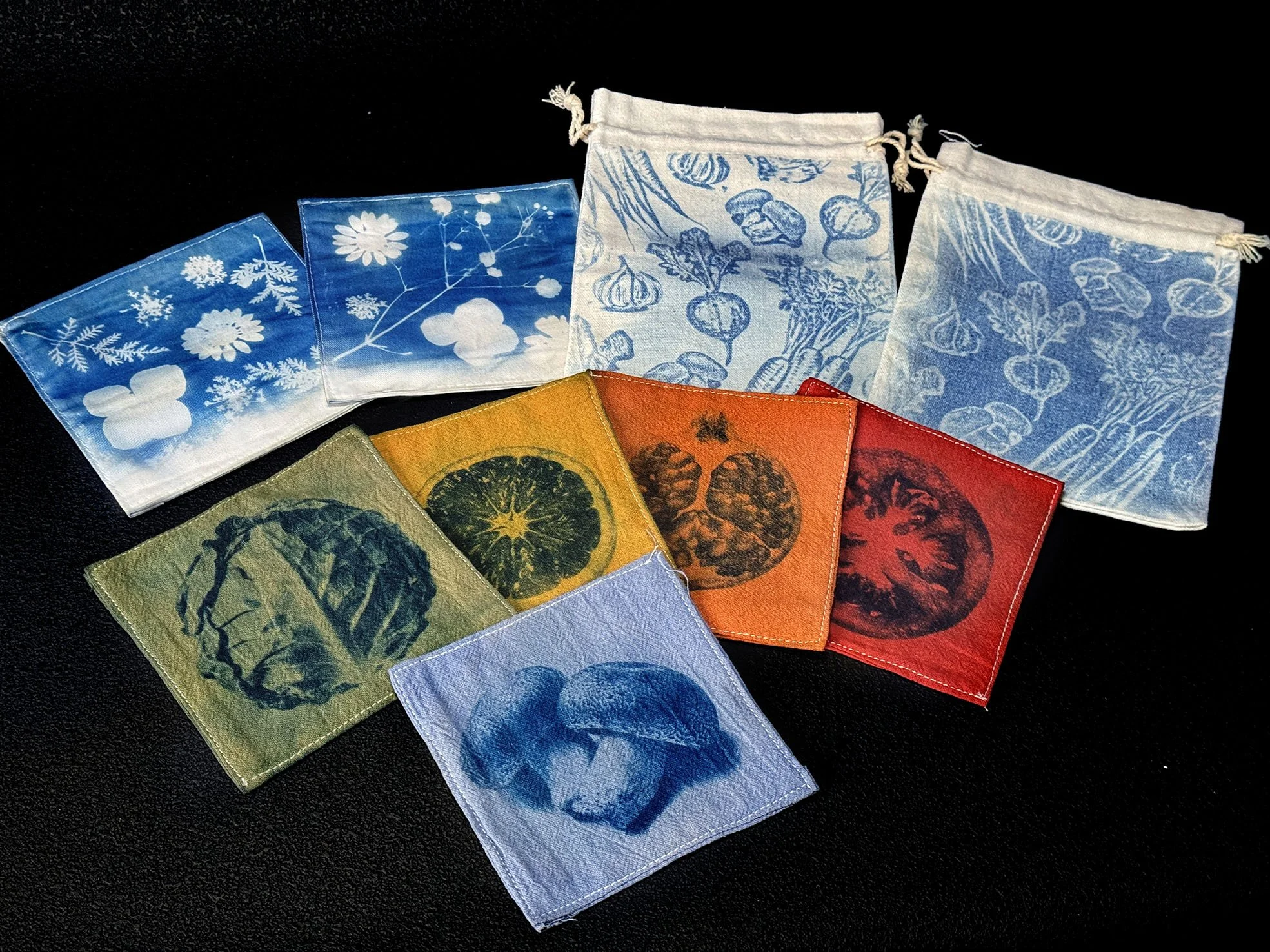
Image by Nimble Thumbs
Cyanotype is a photographic printing process that uses uv light to create beautiful cyan (blue) images. It’s an amazingly hands on process, utilising objects or transparencies onto a prepared surface, exposed to sunlight, and then washed in water to create the beautiful reveal. It’s an artistic process that has a strong scientific story behind it, and is a lovely process if you’re looking for something experimental and a little unpredictable.
A Little History
Cyanotype is actually a very old process.
It was invented in 1842 by English scientist and astronomer Sir John Herschel, who developed it as a way of making copies of notes and diagrams. The process produces an intense blue colour known as Prussian blue.
Not long after its invention, botanist and photographer Anna Atkins began using cyanotype in a much more visually interesting way.
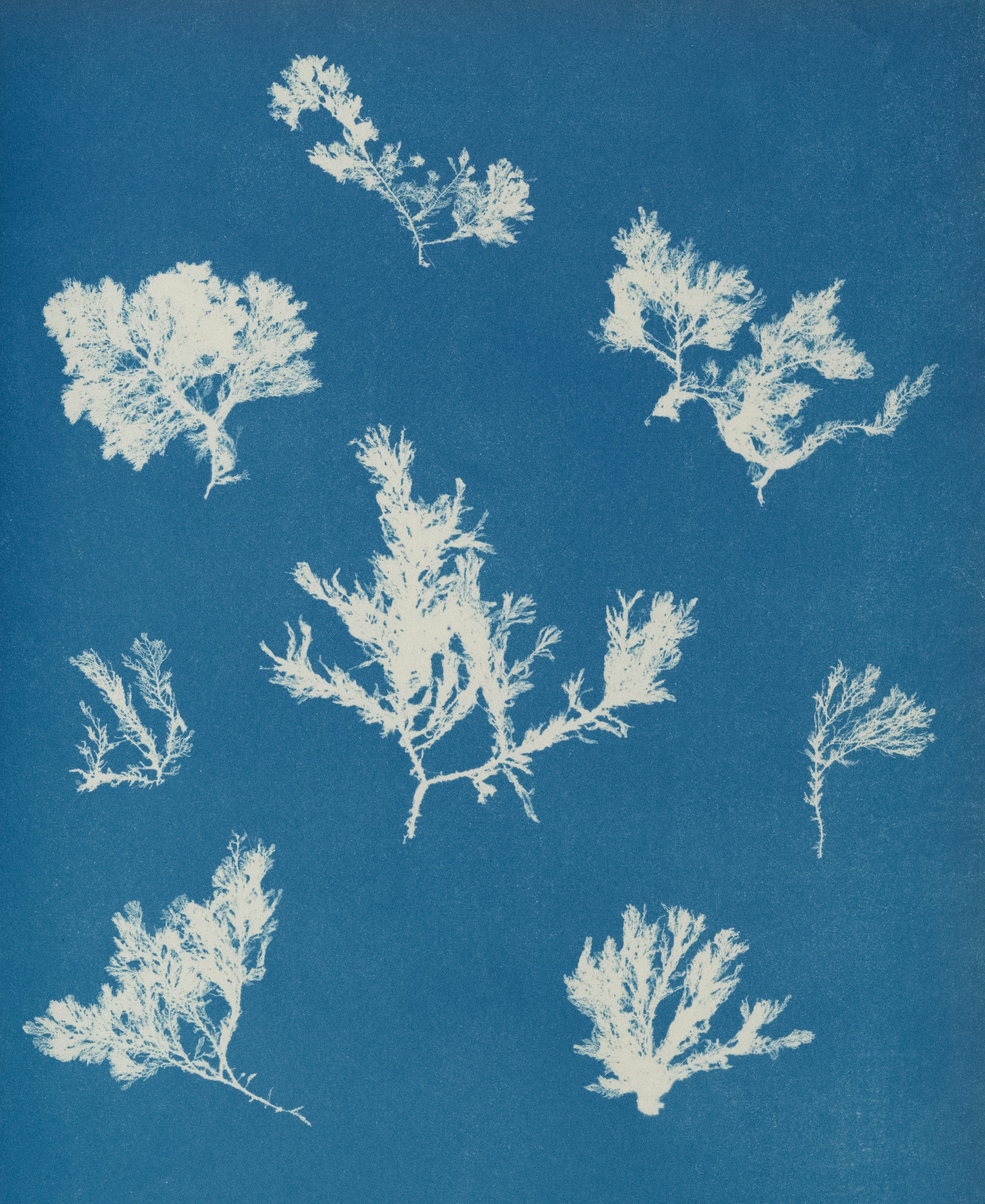
Atkins placed specimens of algae and plants directly onto sensitised paper before exposing them to light. The objects blocked the light, leaving behind pale silhouettes surrounded by rich blue. Her book Photographs of British Algae: Cyanotype Impressions, first issued in the 1840s, is regarded as one of the earliest books illustrated using photographic images.
So while cyanotype began as a scientific process, it soon became a way of recording, observing and creating images from the world around us.
<cyanotype print by Anna Atkins
So, How Does Cyanotype Work?
The basic idea is surprisingly simple.
A surface (usually paper or fabric)is coated with a light-sensitive cyanotype solution. Once dry, objects or images are placed on top of the prepared surface. The whole arrangement is then exposed to ultraviolet (UV) light. Sunlight works wonderfully, which is why cyanotype is sometimes described simply as sun printing.
The areas exposed to UV light undergo a chemical reaction, while areas covered by objects receive less or no light.
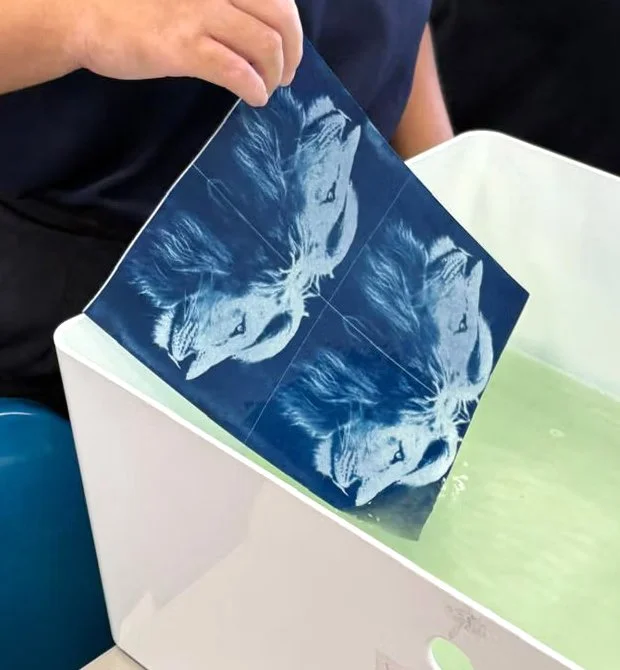
After exposure, the print is rinsed in water. At first, the colours may look quite different from the finished result. As the print is washed and exposed to air, however, the familiar blue begins to develop and deepen.
Eventually, you are left with a blue image containing lighter areas where your objects blocked the light.
And that is the basic magic of cyanotype.
What Can You Use to Make a Cyanotype?
This is where cyanotype becomes particularly fun.
Dried leaves and flowers are popular choices because their shapes, veins and edges can create beautiful silhouettes. But you certainly don't have to limit yourself to plants.
You might experiment with:
Leaves, flowers and grasses
Feathers
Lace and fabric
Paper cut-outs
String and thread
Mesh and netting
Found objects
Transparent or translucent materials
Drawings or printed images on transparent sheets
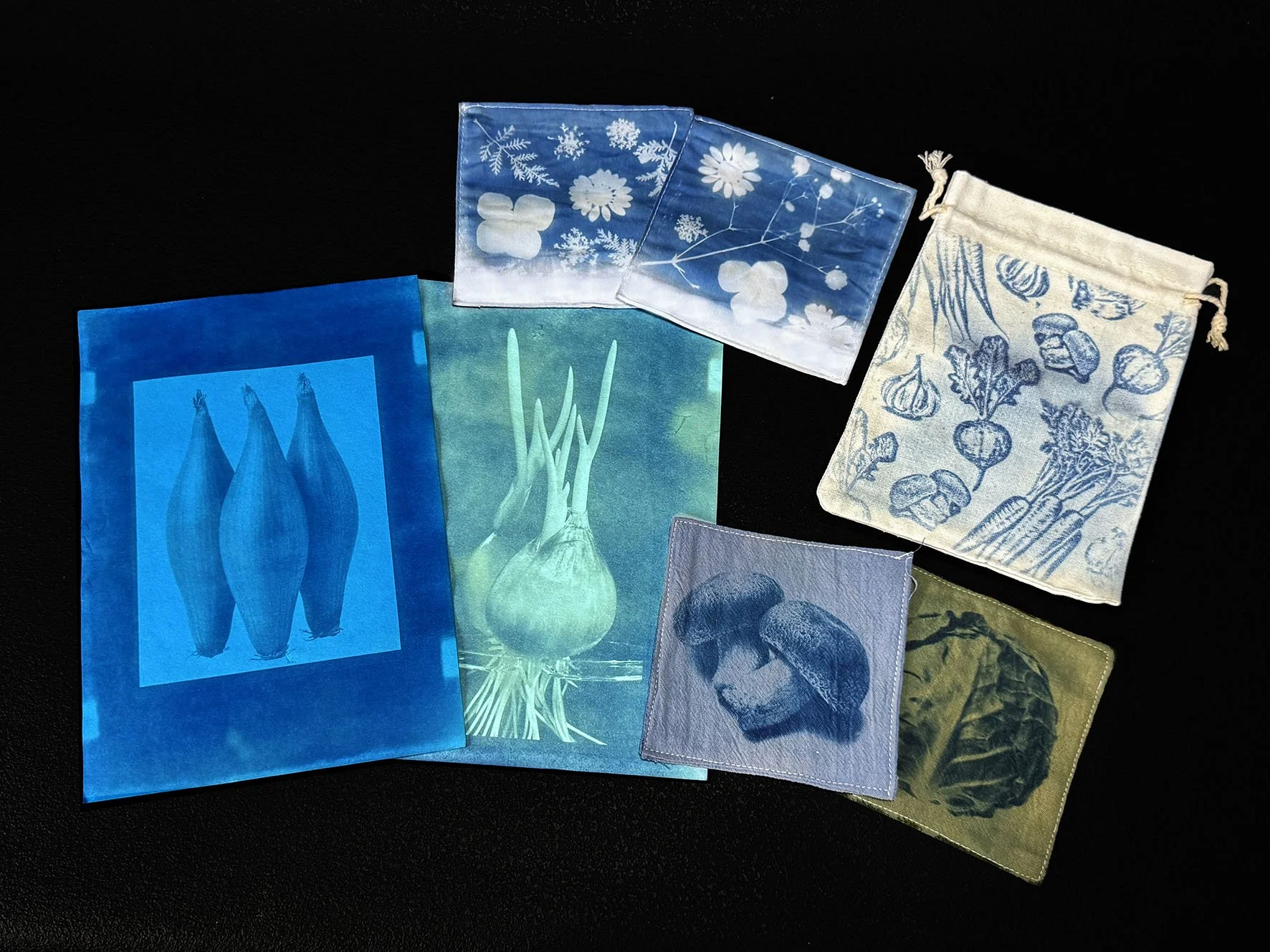
Examples of different ways to play with the cyanotype process
Make Something Together
Cyanotype is simple to pick up, but leaves plenty of room for experimentation, conversation and play, making it a great activity to experience as a group.
At Nimble Thumbs, we run hands-on cyanotype workshops for corporate teams and organisations. Participants are guided through the process of composing, exposing and developing their own cyanotype prints, while having the freedom to explore materials and create something uniquely their own.
Whether you're planning a team bonding session, wellness activity or simply looking for a different kind of creative experience, we'd be happy to explore how the workshop can be adapted for your group.
Interested in organising a cyanotype workshop for your team? Get in touch with us to find out more.
Come make something with us
