Tessellation X Character Design
Starting with M.C. Escher
Tessellation might sound like a rather mathematical place to begin an art activity, but the works of M.C. Escher show just how imaginative it can become. Repeating shapes turn into birds, fish and swans, fitting together to create patterns that seem to shift between geometry and illustration.
Escher was a Dutch graphic artist who became known for playing with ideas around mathematics, symmetry and repeating forms. In works such as Day and Night, Sky and Water II and Swans, he explored how recognisable images could fit together and repeat across a surface.
I thought this would make an interesting starting point for an art activity with kids, not necessarily to recreate an Escher artwork, but to borrow that simple idea of looking at a shape and asking:
What else could this become?
But first… what exactly is a tessellation?
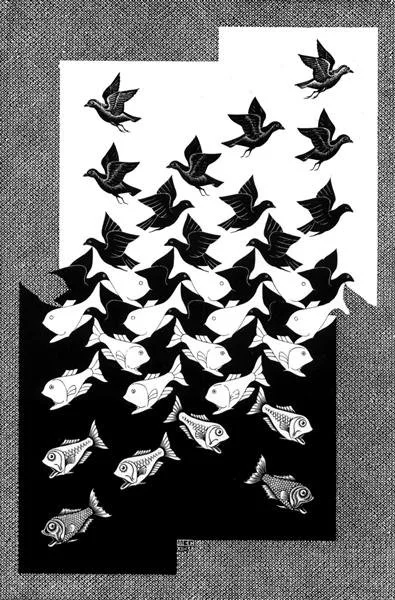
Sky and Water II/ M.C. Escher
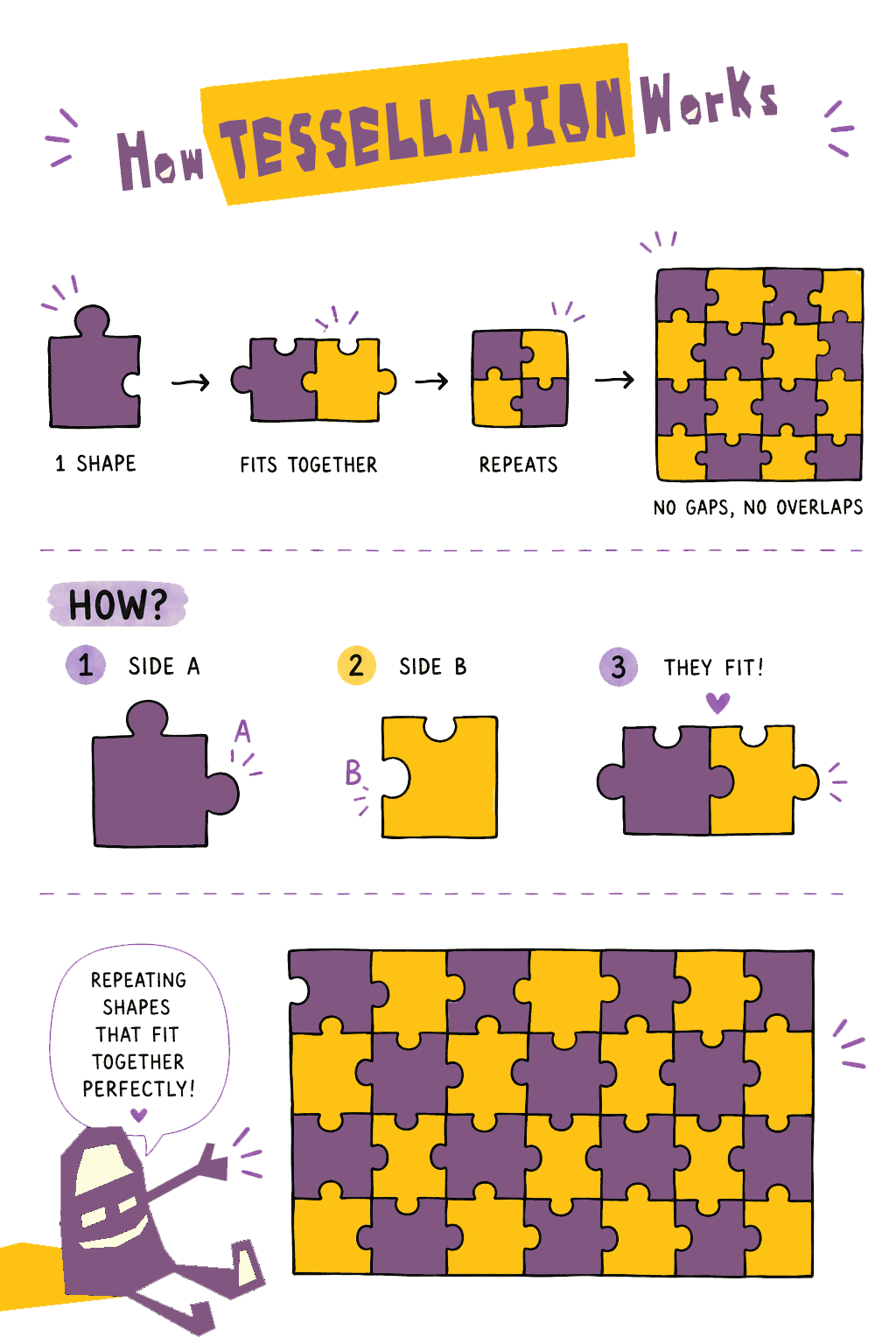
At its simplest, a tessellation is an arrangement of shapes that fit closely together without leaving gaps or overlapping one another.
Once you know what you're looking for, there are plenty of examples around us. Brick walls, tiled surfaces and honeycombs all give us different ways of seeing how a shape can repeat and fill a surface.
For this activity, however, I wanted to take that idea one step further.
Instead of simply creating a repeating geometric pattern, we are going to make our own tessellating shape and then turn that shape into a character.
Turning the shape around
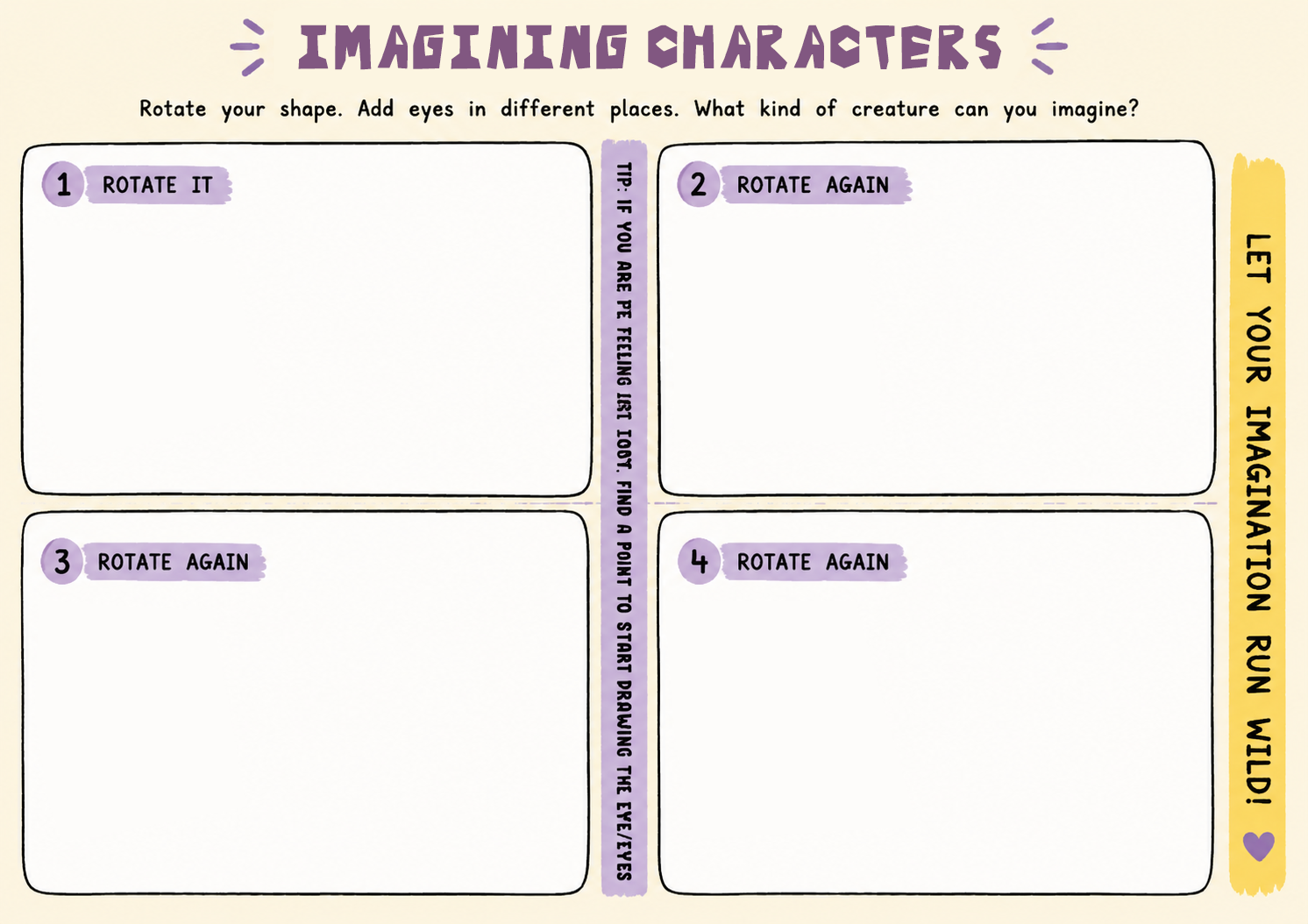
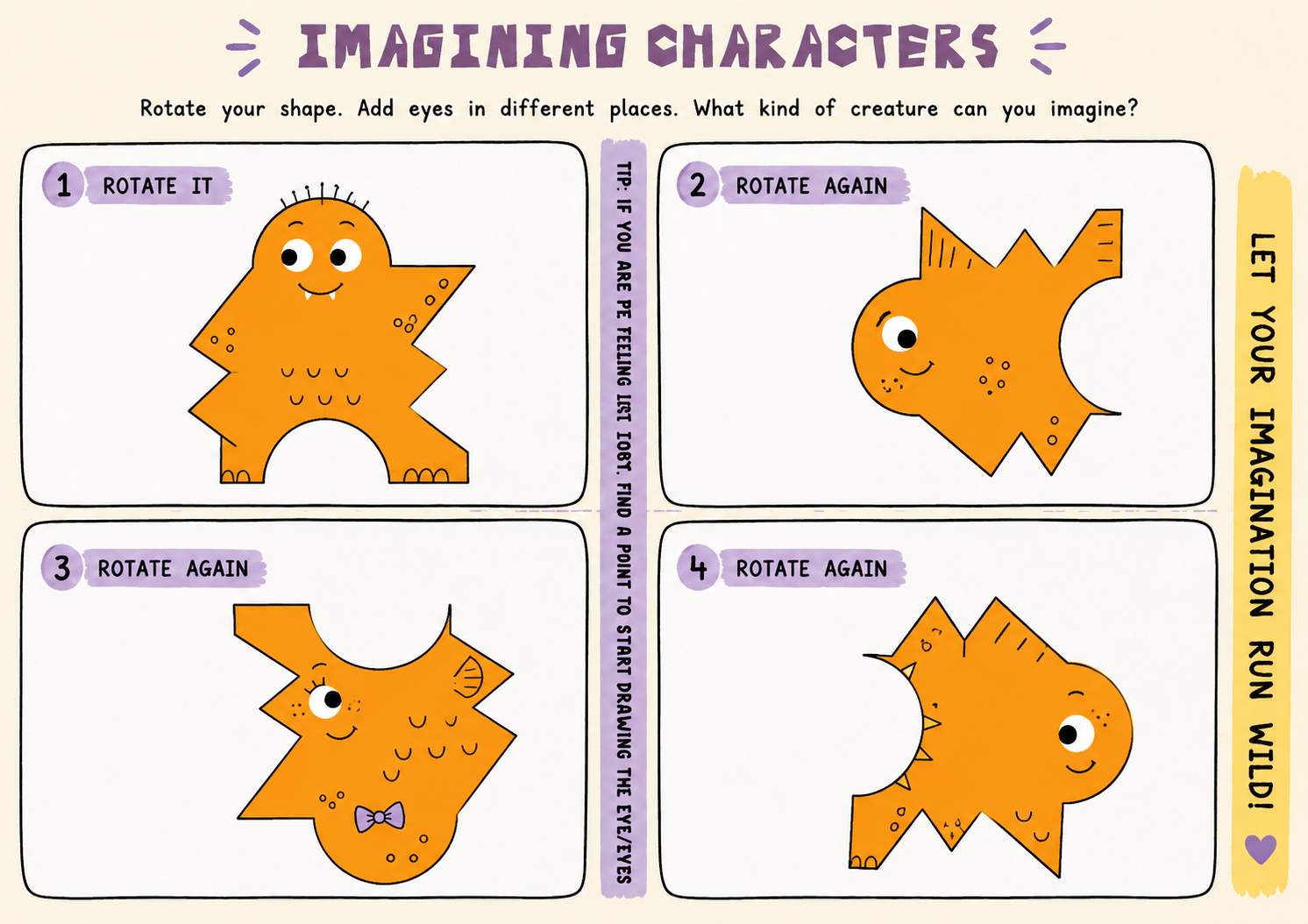
Once the tessellation shape is ready, the next step is to play around with what it could become. Instead of settling on the first idea, I get the children to trace the same shape four times, rotating it into a different position each time. From there, they can start by placing an eye, or a pair of eyes, somewhere within each shape and see what begins to emerge. A curve might suddenly look like a mouth, a point could become a nose, while other areas might suggest hair, scales, teeth or even a bow tie. The characters don't necessarily have to make sense! The idea is simply to see how many different possibilities can come from exactly the same shape, without changing its outline.
Repeating the character
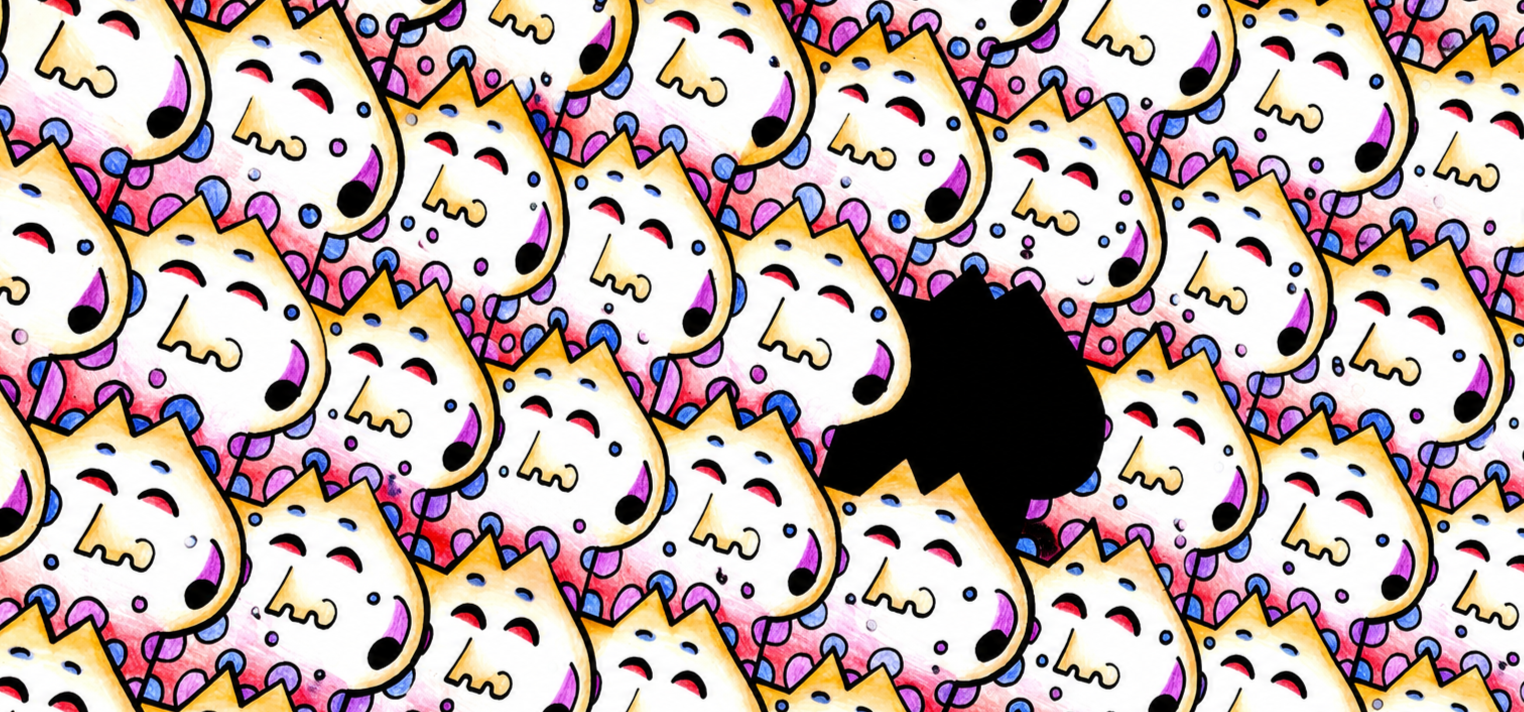
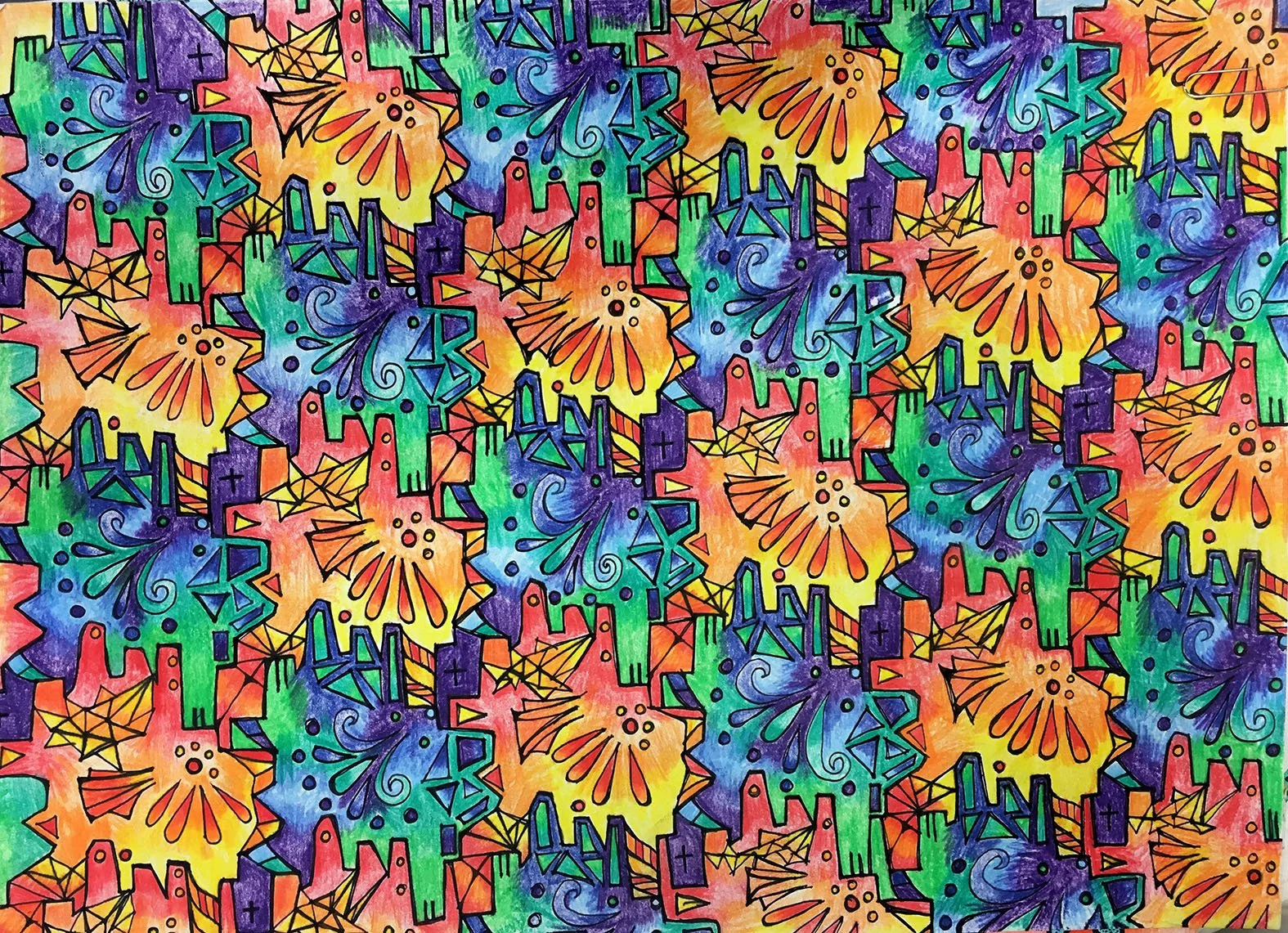
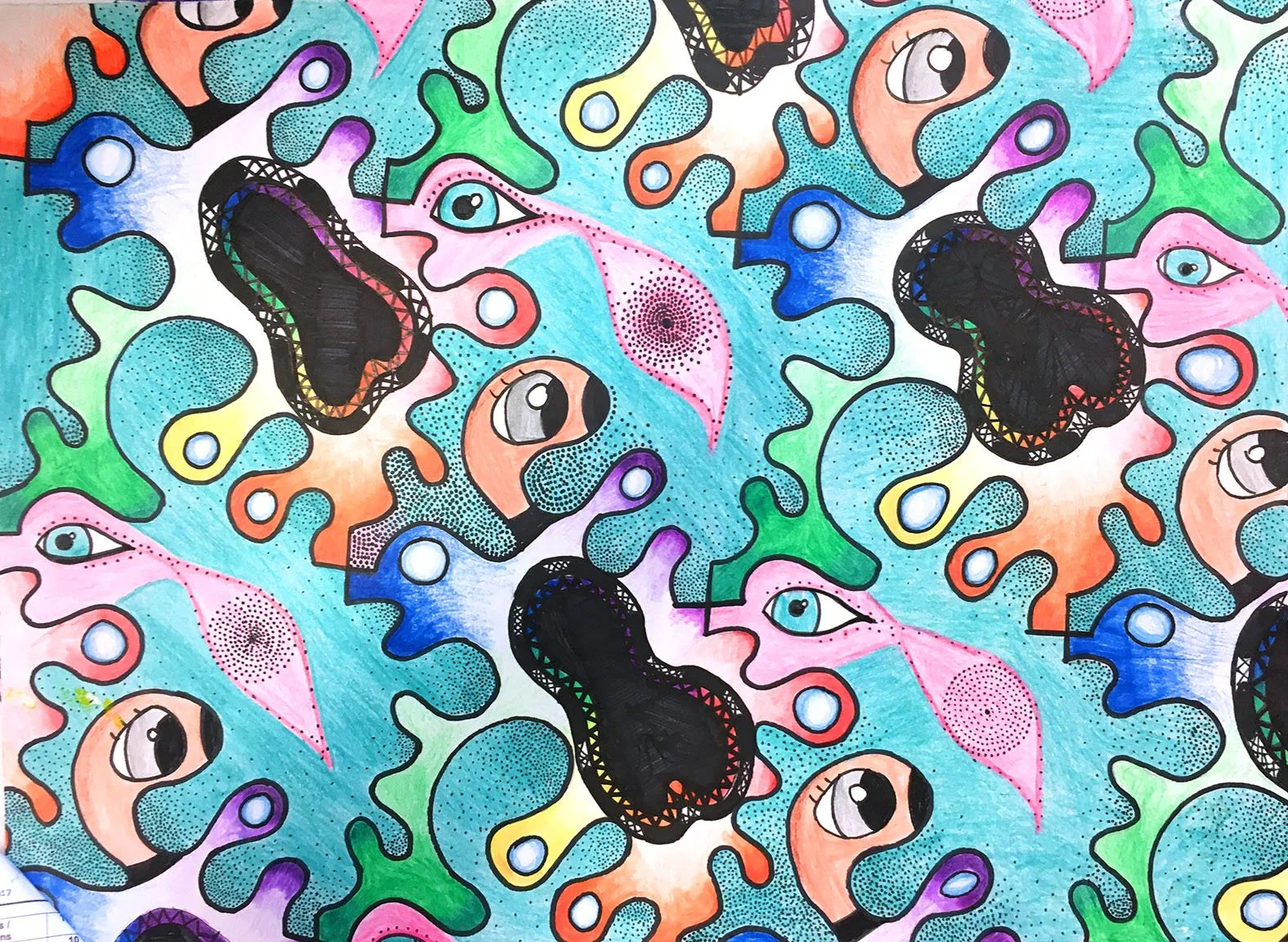
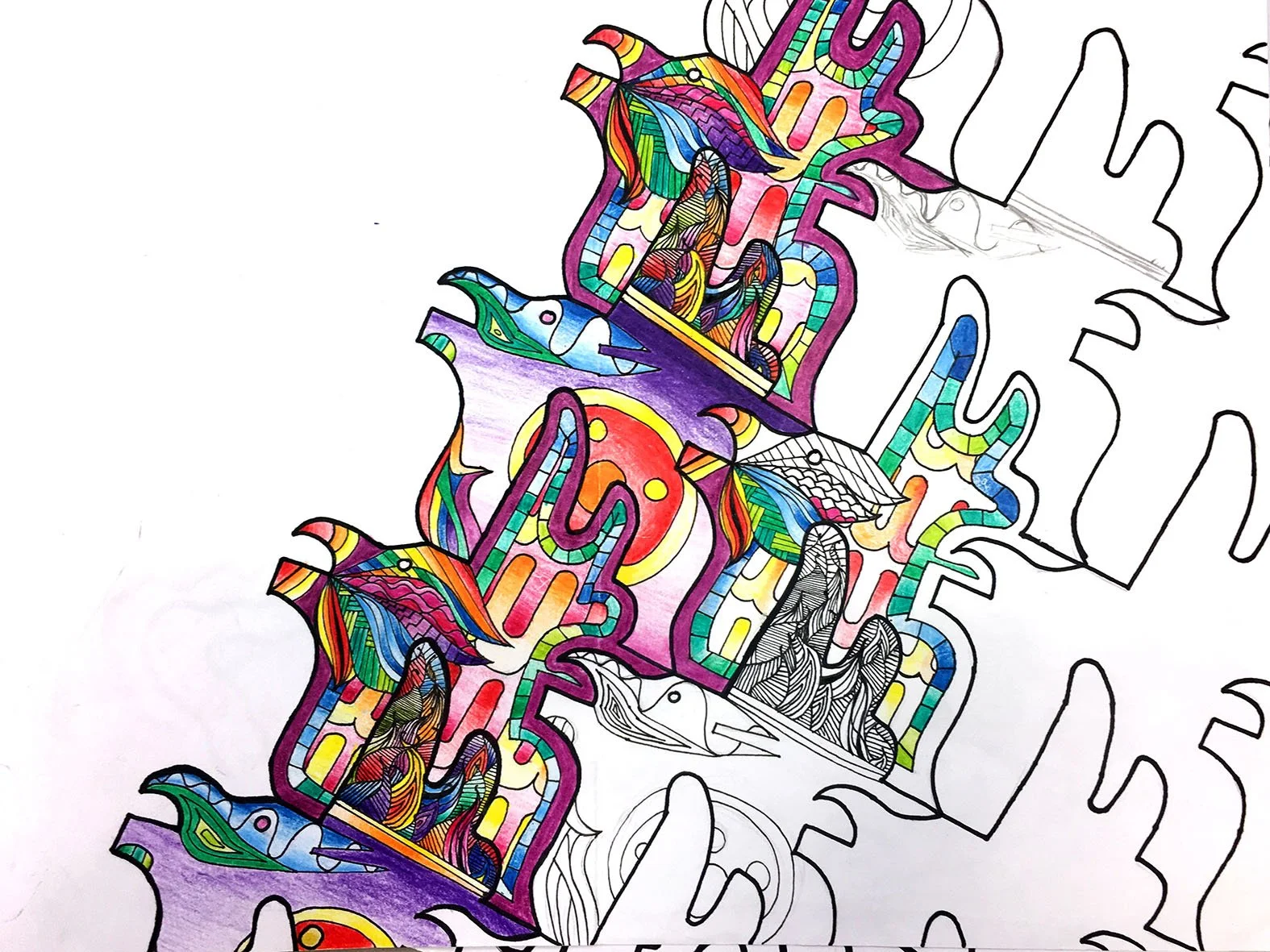
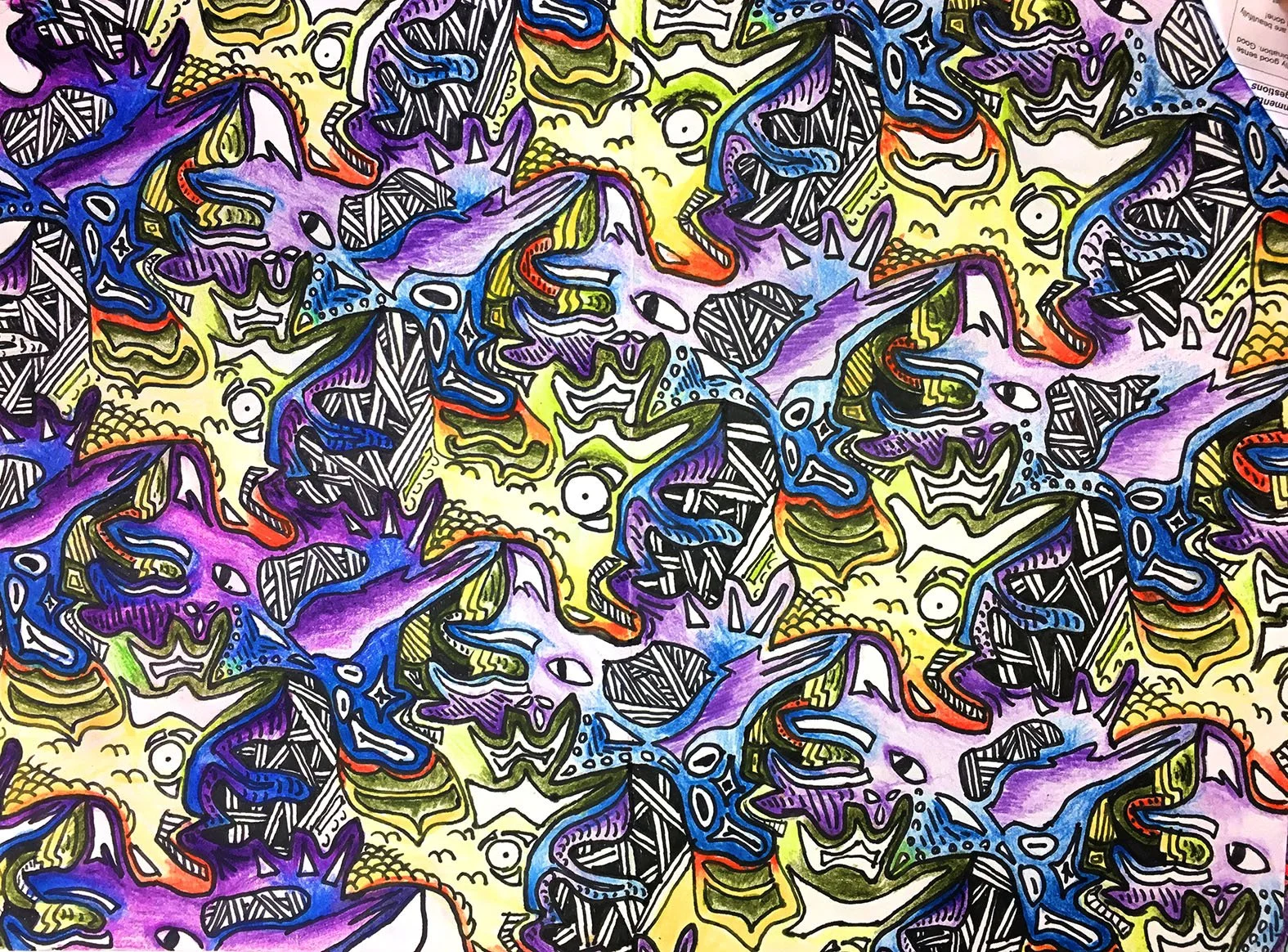
Once a character has been chosen, we return to where the activity began: tessellation. Using the original Post-it shape as a template, the children trace it repeatedly across a larger sheet of paper, fitting each new shape neatly against the last. This is where they can really see why the earlier cutting and moving of pieces mattered — every bump has a matching space, allowing the character to repeat without gaps or overlaps. Once the page is filled, the character details can be drawn back into each shape and colour added. What began as one rather odd little shape now becomes a whole pattern of repeating characters.
Check out these designs created by 12 year olds!
Taking it into printmaking
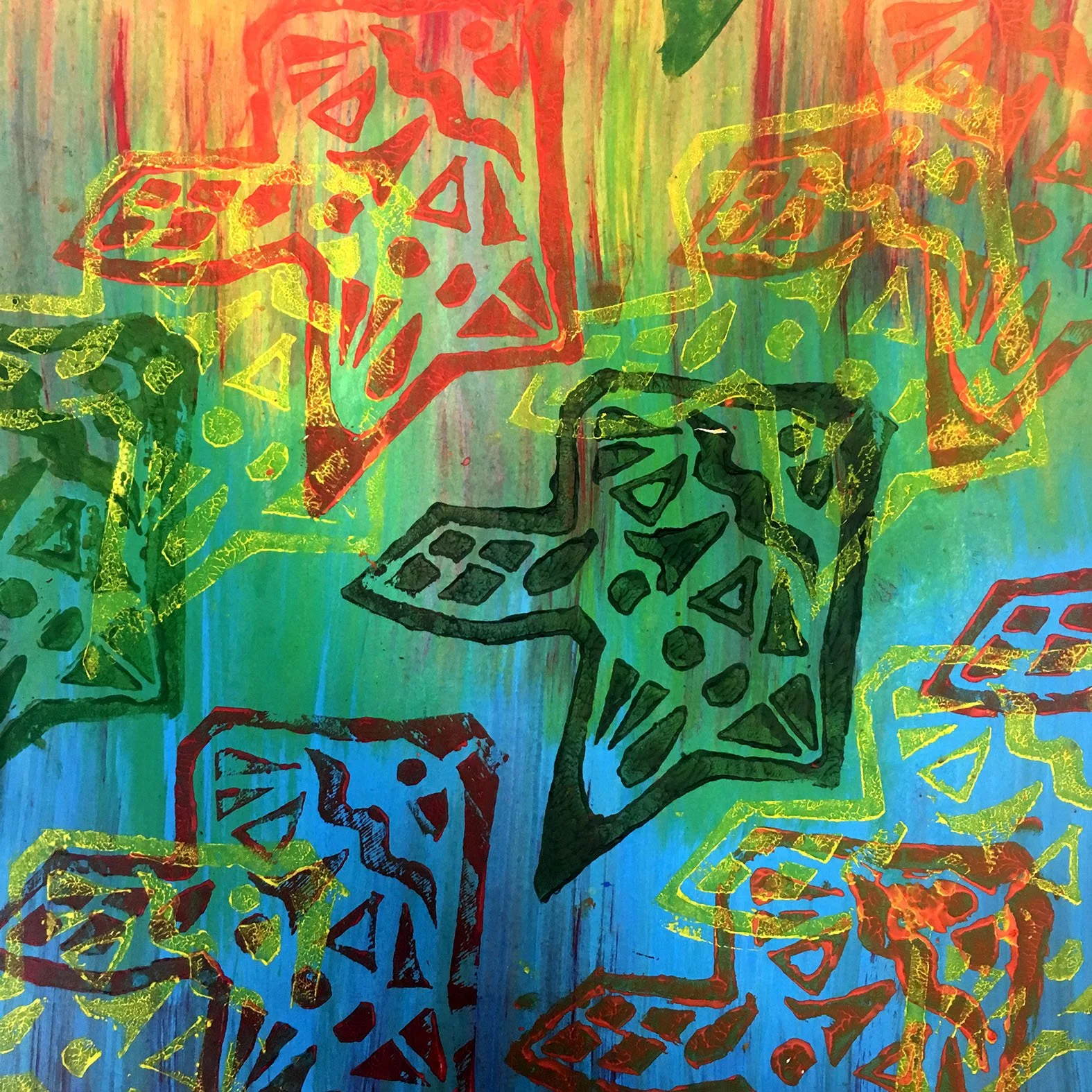
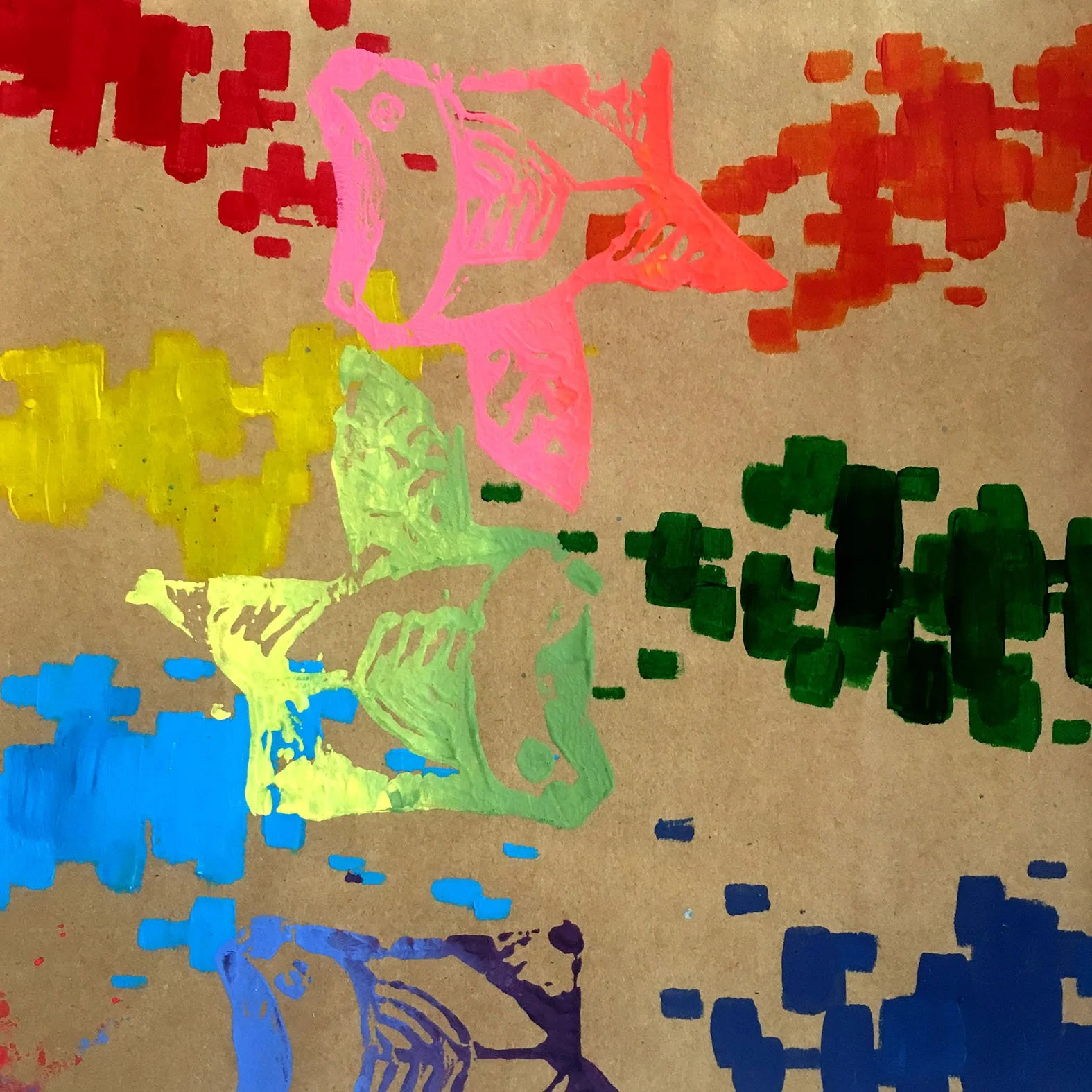
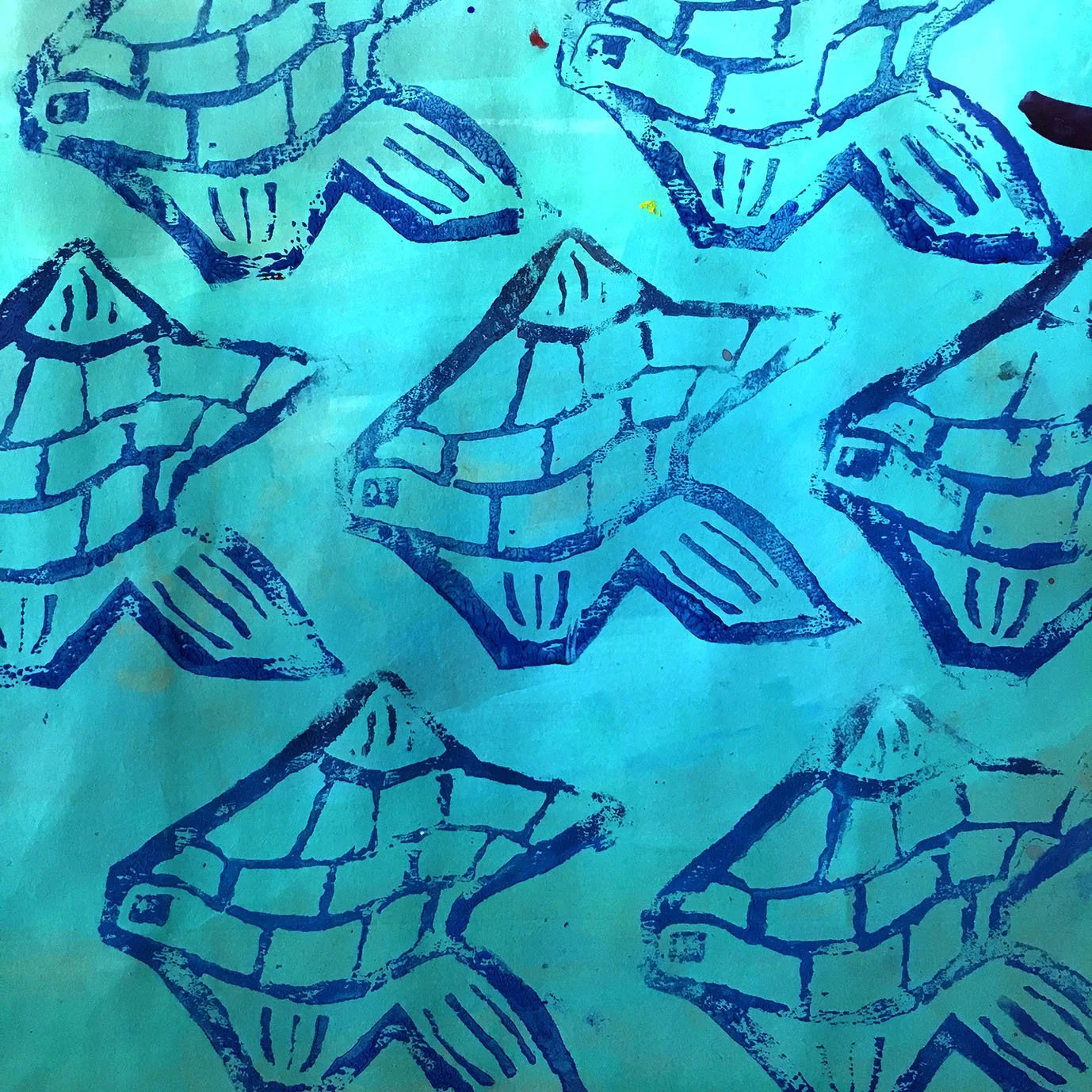
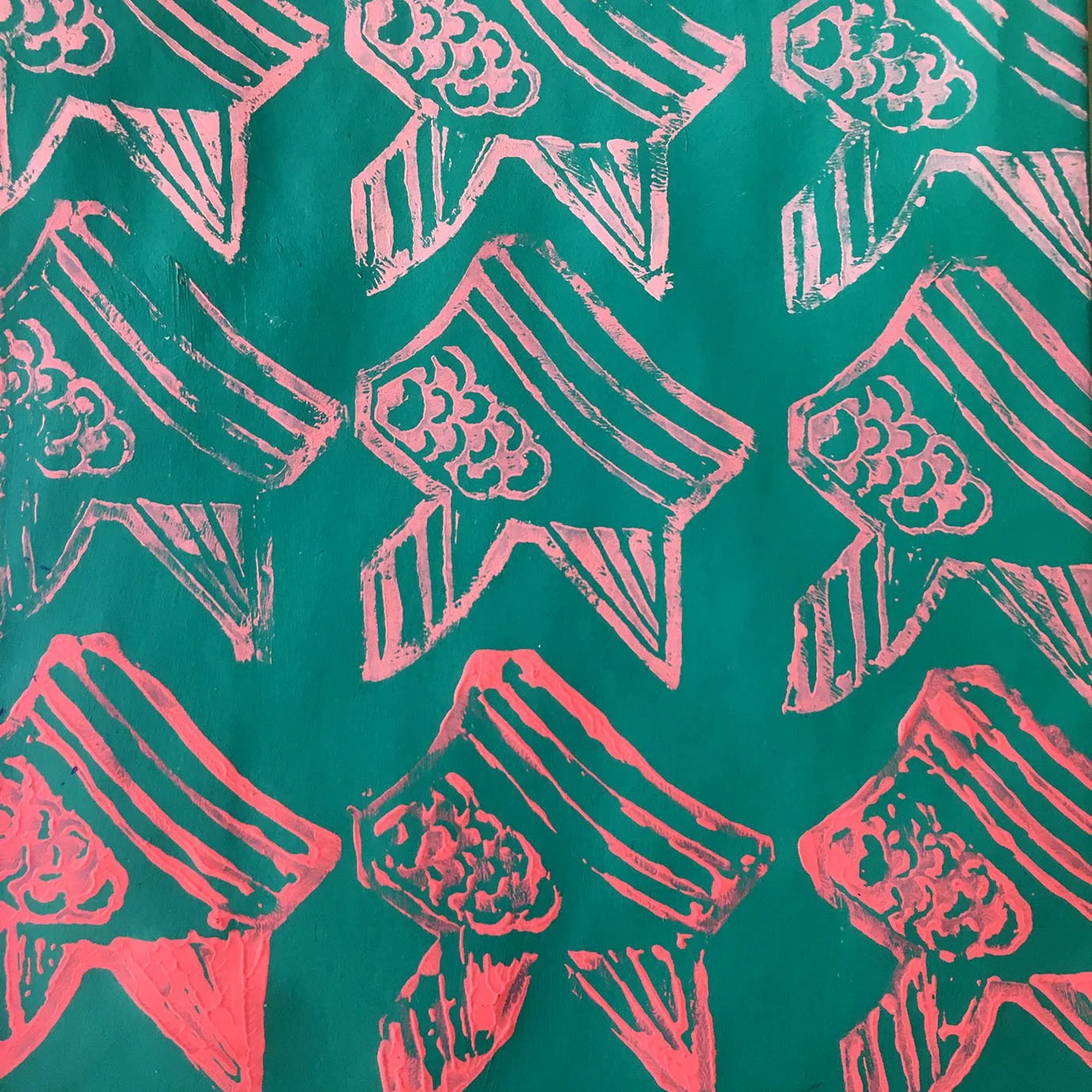
A fun way to extend the activity is to take the characters off the drawing paper and into printmaking. Kids can recreate their chosen character as a simple foam printing plate, adding the eyes, scales, hair, patterns and other details they developed earlier. Once inked, the same plate can be printed repeatedly, fitting each character beside the next to build up the tessellation. I like this extension because the repetition becomes much more physical. Instead of tracing the same shape again and again, one character can quite literally be used to create an entire pattern. It can be a more technical process, so usually if the shapes are not lined up I think it’s alright!
Check out their designs!
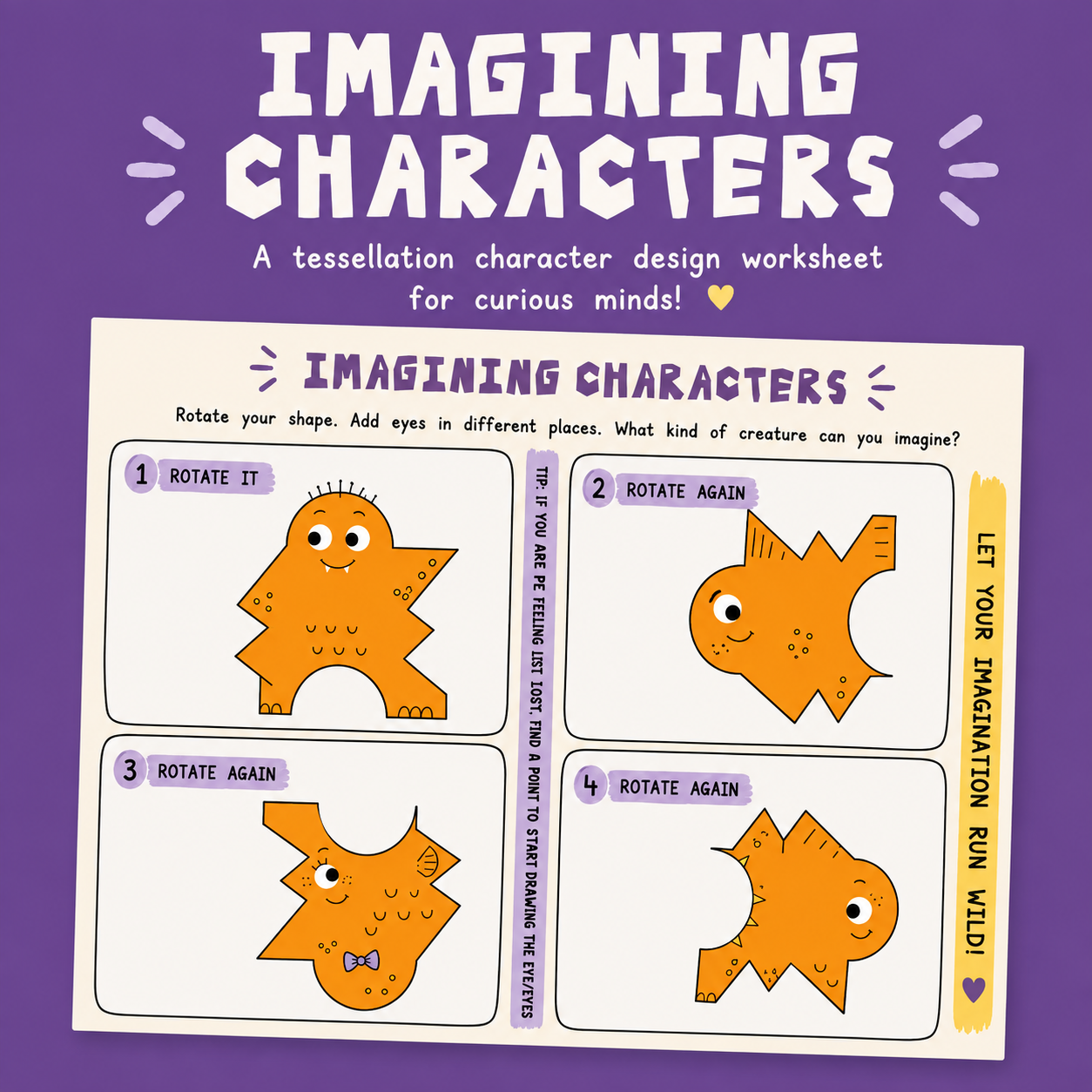
This takes children through the character-design stage of the process: rotating their tessellation shape, placing the eyes in different positions and seeing what strange creatures might emerge.
Find out more here!
Free downloadable worksheet
I’ve put together a free printable worksheet to accompany this activity. It takes kids through the character-design stage of the process: rotating their tessellation shape, placing the eyes in different positions and seeing what strange creatures might emerge. There is no need for the characters to make perfect sense; add some hair, scales, spots, teeth or even a bow tie and see where the shape takes you!
The worksheet can be printed and used with any tessellation shape you create.
